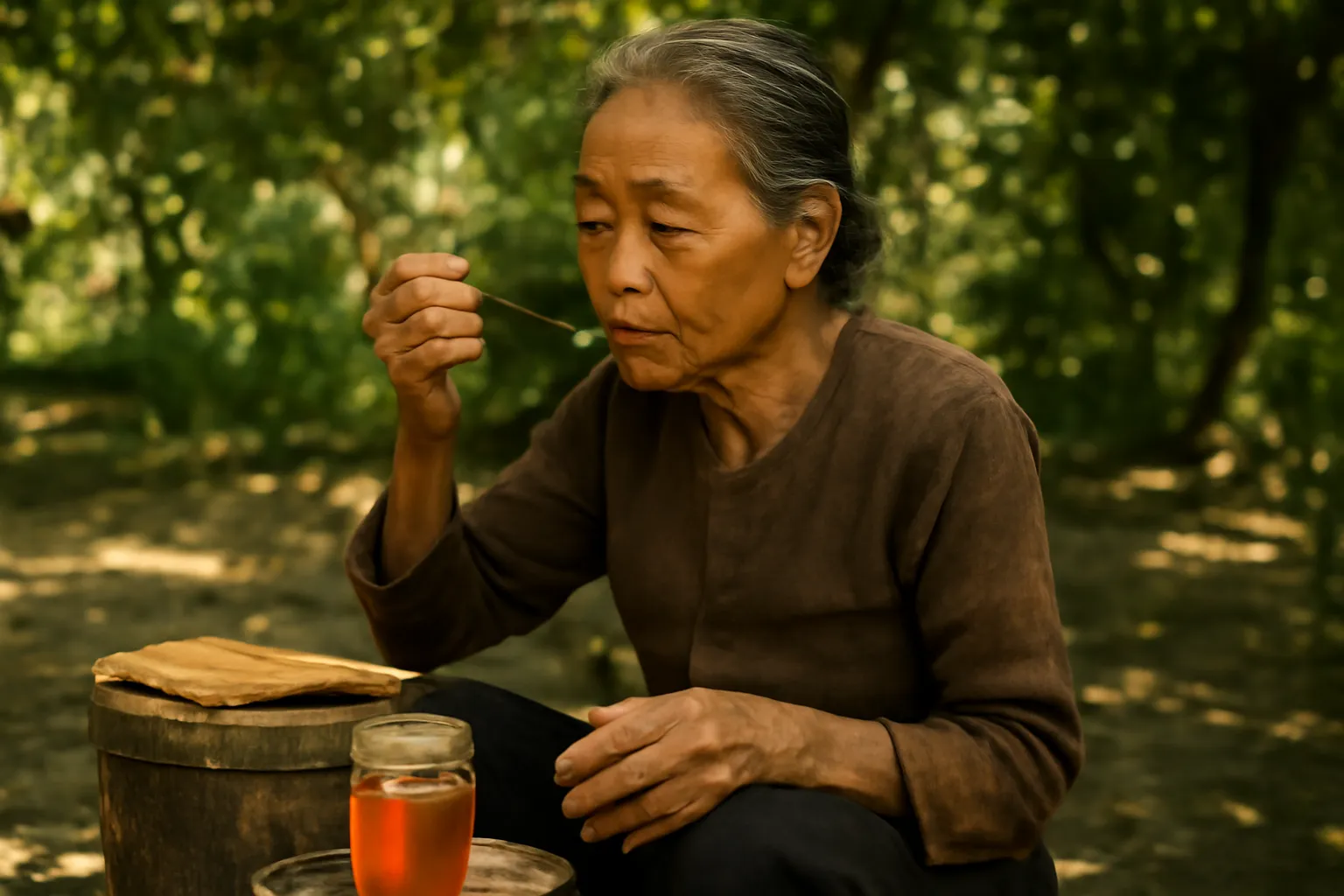
Where the tartness comes from, and why it cannot be faked
People used to ordinary honey often stop short at the first spoon. It is not sweetly one-dimensional; it is tart, faintly fermented, with a long finish. Many assume the honey has gone off. In fact that finish is exactly what puts this honey in a category of its own on international markets.
The resin is the source
Stingless bees do not build with pure wax. They mix wax with resin collected from tree buds and wounds, producing a material known as cerumen. Honey sits inside pots made of that material for its entire storage life, and phenolic compounds from the resin migrate into it. That is where the tart finish comes from — and where the biological activity that researchers study comes from too.
Natural tartness versus spoilage
Natural tartness sits in the finish. It arrives after the sweetness, fades gradually, and comes with a light aroma of wood and flowers. Fermentation tartness hits the tip of the tongue immediately, sharp like vinegar, with a smell of alcohol. The accompanying signs travel together: a bulging lid, thick foam that keeps forming, sometimes honey welling up when you open the jar. Those signs together mean discard it.
Every season tastes different
Tartness is not fixed. In a season rich in nectar it recedes; in a lean season the bees gather more resin and the honey is sharper and darker. Two jars from the same farm but different harvests will not taste identical. That variation is evidence of real honey — industrial products are the ones that are perfectly uniform.
Why sugar cannot imitate it
Adding sugar produces sweetness, not a structured sour layer. Adding acid produces a flat, one-note sourness with no accompanying aroma and no finish. Anyone who has tasted real stingless bee honey a few times recognises the difference immediately, which makes this a cheaper and more reliable test than anything you can do in a kitchen.
Frequently asked
Can children have honey this tart?
No honey of any kind for children under twelve months. Older children can have small amounts, though many dislike the tartness — mixing it into yoghurt helps.
Is more tart always better?
No. Moderate tartness with aroma and a long finish is the good sign. Tartness so sharp it is hard to swallow usually means fermentation has begun.
Does it get more tart over time?
Yes, gradually, and faster when stored warm. That is why buying a size that matches your household is worth more than buying the largest jar.
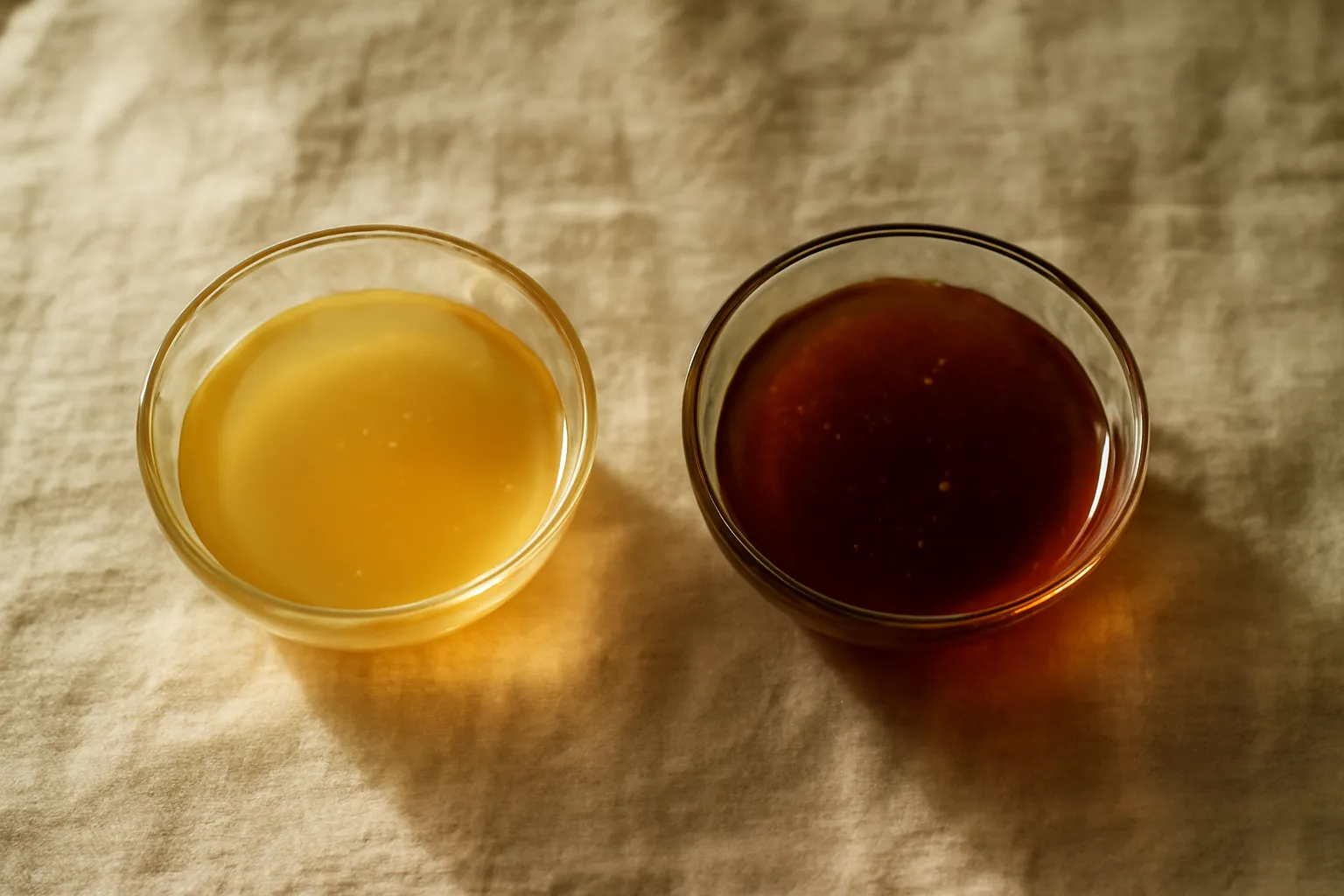
Stingless bee honey compared with ordinary honey: six real differences
Not a question of which is better, but of two products that differ in structure, yield, flavour and best use.
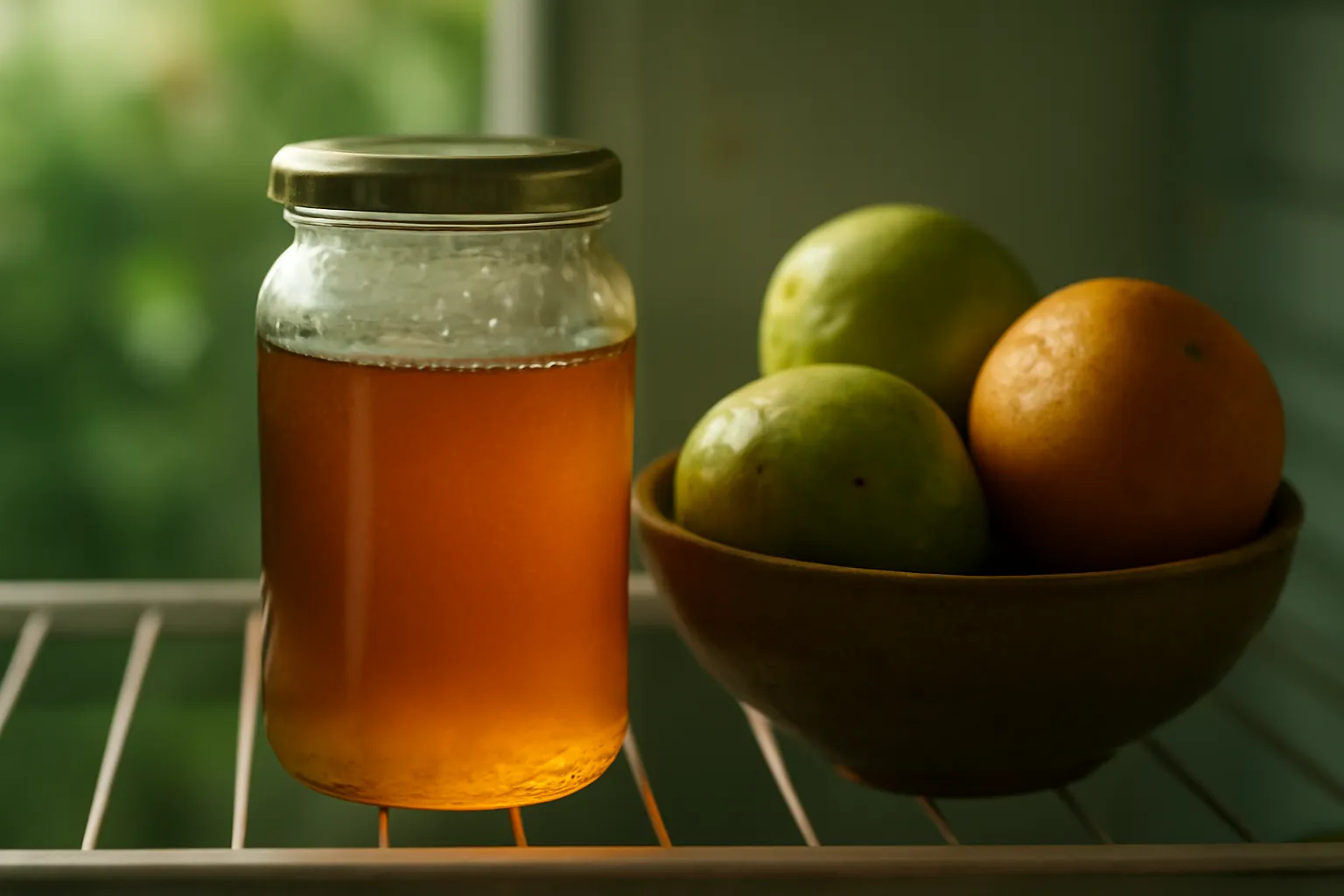
Foam in the jar: when it is normal and when to throw it out
Foam in stingless bee honey has three different causes, and only one of them means the jar has to go.
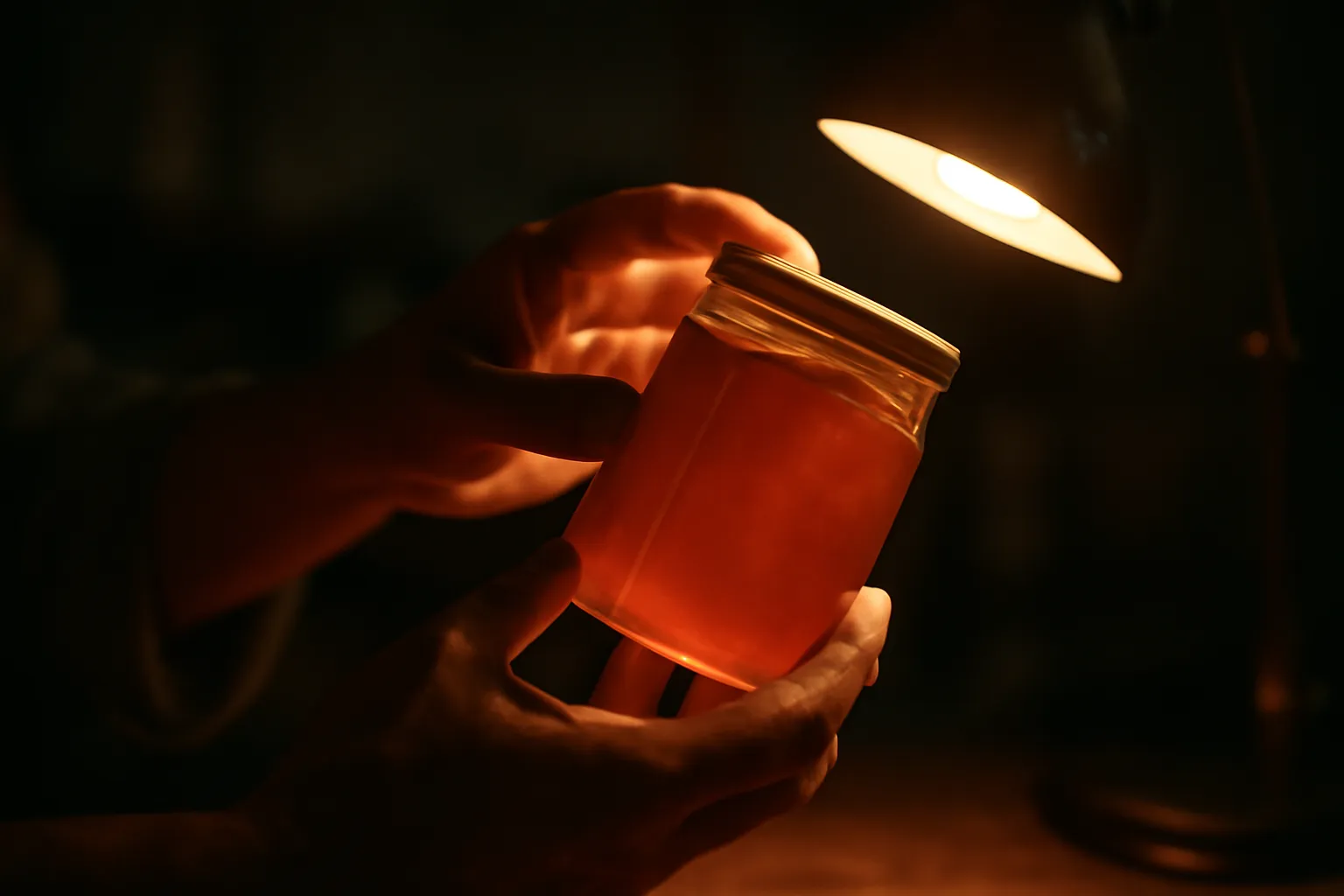
Reading the label on a jar of stingless bee honey
Some lines on a label are required, some say a great deal, and some are only decoration. How to tell them apart.

Six marketing claims about stingless bee honey to walk past
Cures, wild forest honey, surprisingly low prices — six signals that a seller is selling a story rather than honey.
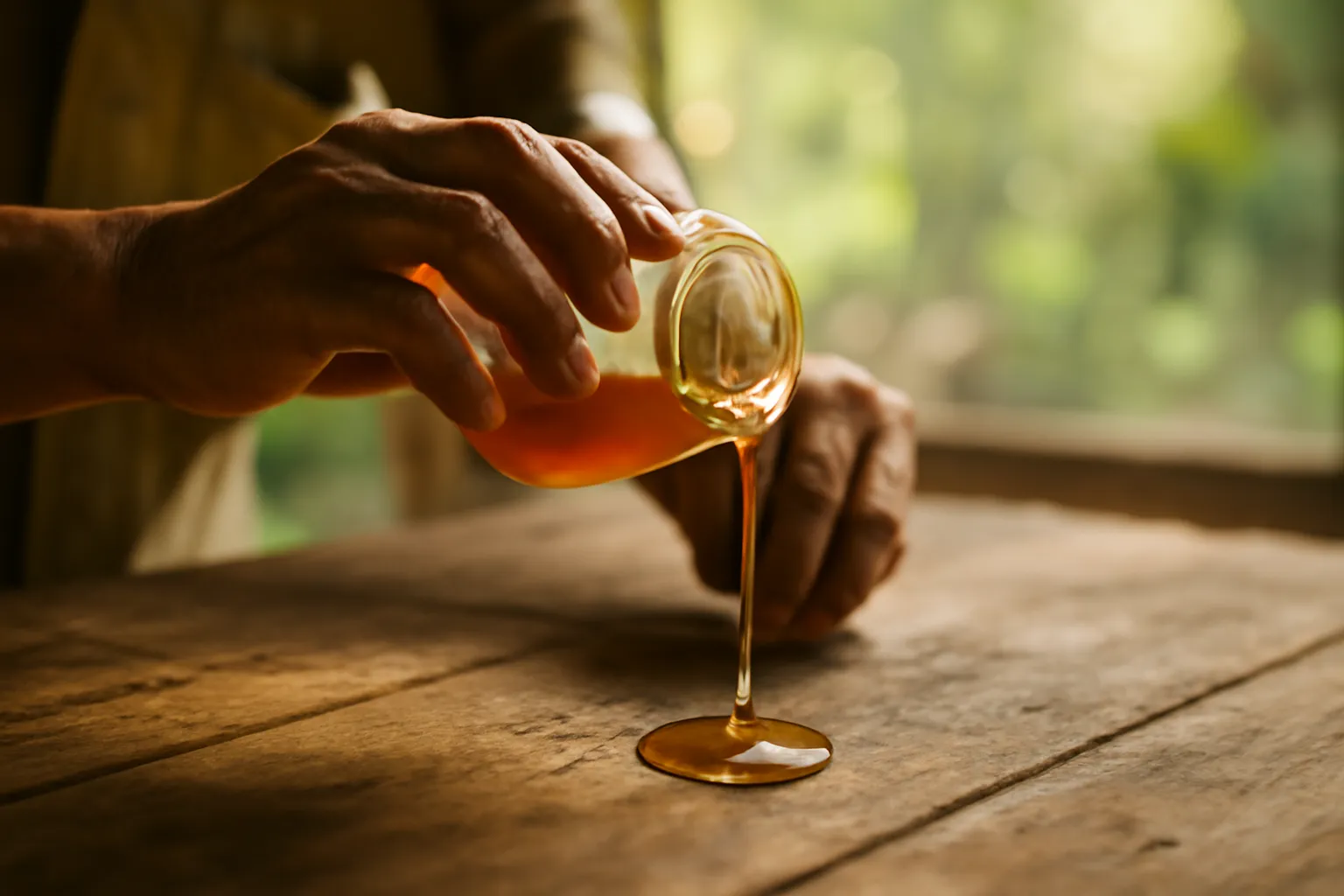
Real stingless bee honey is runny — that is not a sign of dilution
The most common complaint about this honey is also the most common misunderstanding. What thin actually means.
 ›
×
›
×
A single-origin stingless bee honey from our own apiary in Trang Bang, Tay Ninh. Harvested and bottled by batch, traceable to the colony.
Vietnamese stingless bee honey, built for export
© 2026 Aron Bee. All rights reserved. · Copyright · OD-1C4F-F69A