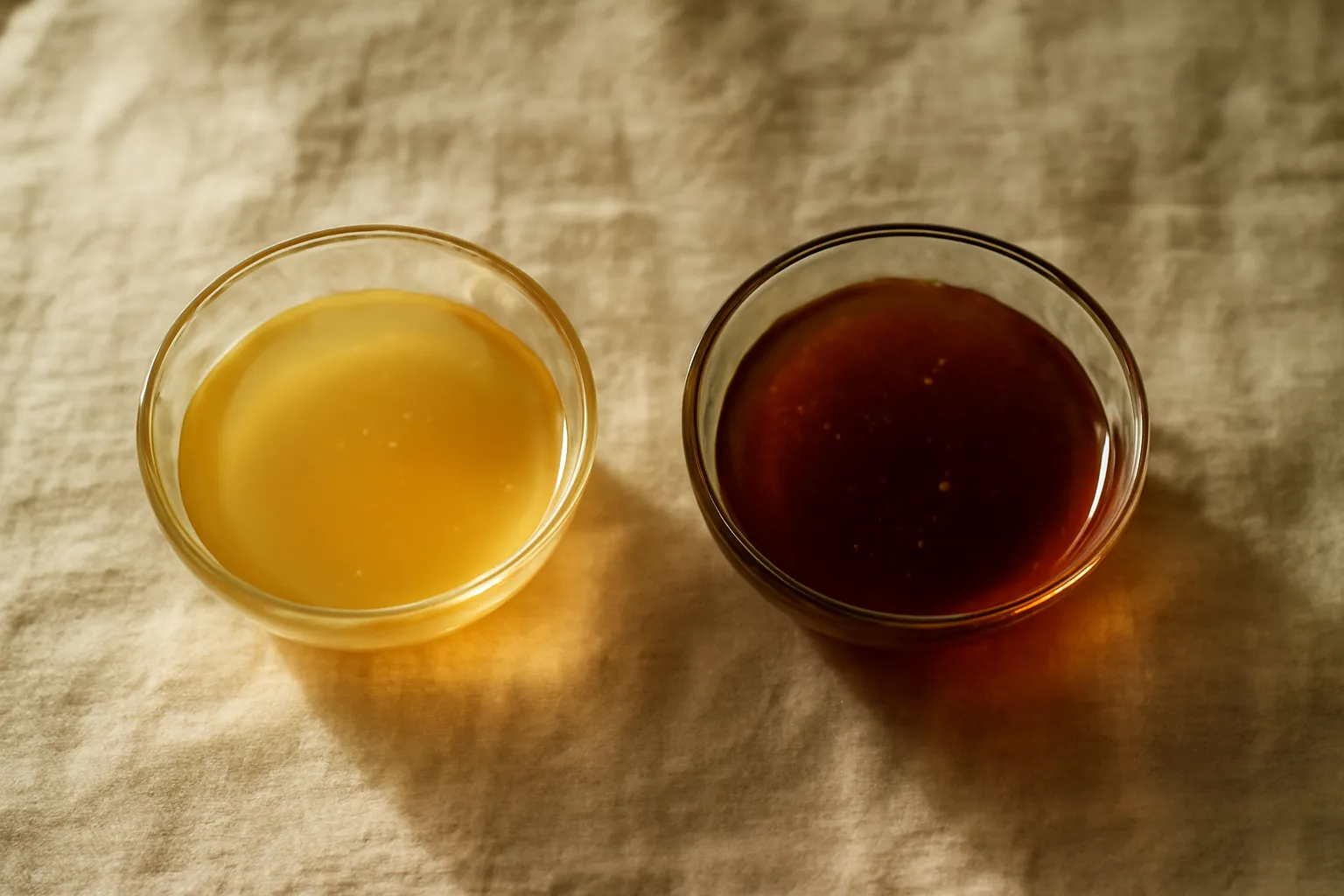
Stingless bee honey compared with ordinary honey: six real differences
The question of which is better has no answer, because the two serve different purposes. These six differences are the substantive ones, enough to choose the right product rather than the cheaper one.
1. How the honey is stored
Honey bees build combs of hexagonal cells and cap them with wax. Stingless bees store honey in separate egg-shaped wax pots, the wax blended with plant resin. Almost every other difference follows from this one.
2. Moisture and consistency
Honey-bee honey holds seventeen to twenty percent water; stingless bee honey twenty-five to thirty. It is therefore noticeably runnier and more prone to fermenting, and needs cool storage.
3. Flavour
Honey-bee honey is strongly sweet with a floral character. Stingless bee honey is moderately sweet with a distinct tart finish from the resin, and a more complex aroma. People used to intense sweetness often need a few tries to adjust.
4. Yield and price
One honey-bee colony produces tens of litres a year. One strong stingless bee colony produces a few hundred millilitres per harvest, a couple of harvests a year. That gap accounts for the entire price difference, without invoking any health claim.
5. How they are kept
Honey bees require comb management, disease control and sometimes migration between flowering seasons. Stingless bees do not sting, live in small boxes, and need almost no intervention — but they grow slowly and strongly dislike having the lid opened.
6. Where each belongs in the kitchen
Honey-bee honey suits cooking, baking and anything in volume. Stingless bee honey is expensive and delicate, and belongs in cold applications: eaten straight, stirred into yoghurt, mixed into warm water below forty degrees. Using it for cooking destroys the part you paid for.
Frequently asked
Is stingless bee honey more nutritious?
Studies find higher phenolic content in stingless bee honey, but that is a statement about composition, not a promise about health. Treat it as a speciality food, not a medicine.
Which should a newcomer buy?
For daily family use, ordinary honey makes more sense on price. Stingless bee honey suits someone wanting to try something genuinely different, or looking for a gift.
Can the two be blended?
Culinarily, yes — but blending erases everything distinctive about the stingless bee honey, and it is also the most common form of adulteration on the market.
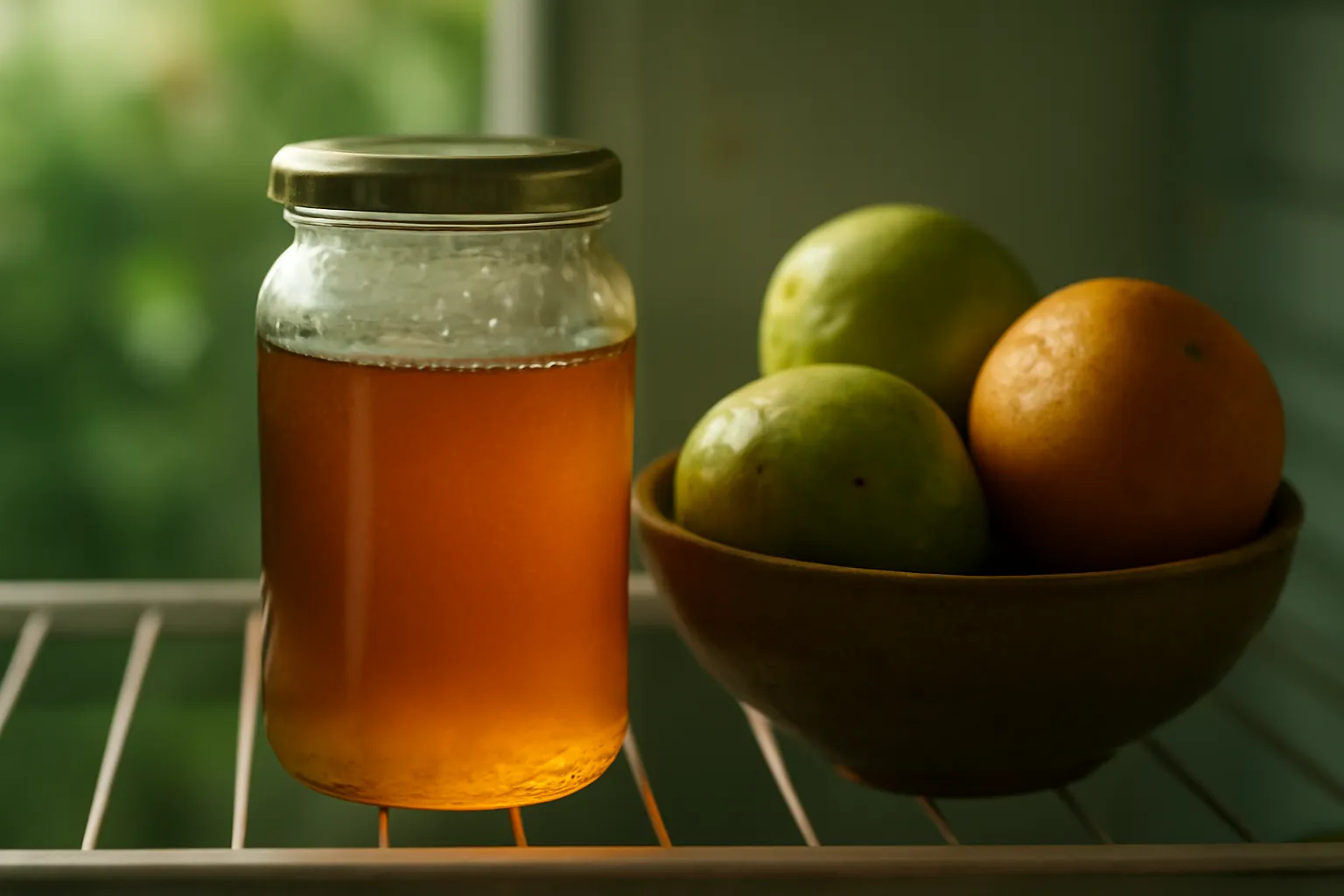
Foam in the jar: when it is normal and when to throw it out
Foam in stingless bee honey has three different causes, and only one of them means the jar has to go.
Reading the label on a jar of stingless bee honey
Some lines on a label are required, some say a great deal, and some are only decoration. How to tell them apart.

Six marketing claims about stingless bee honey to walk past
Cures, wild forest honey, surprisingly low prices — six signals that a seller is selling a story rather than honey.
Where the tartness comes from, and why it cannot be faked
The sour finish is the fingerprint of real stingless bee honey. How it forms, and how to tell it from fermentation.
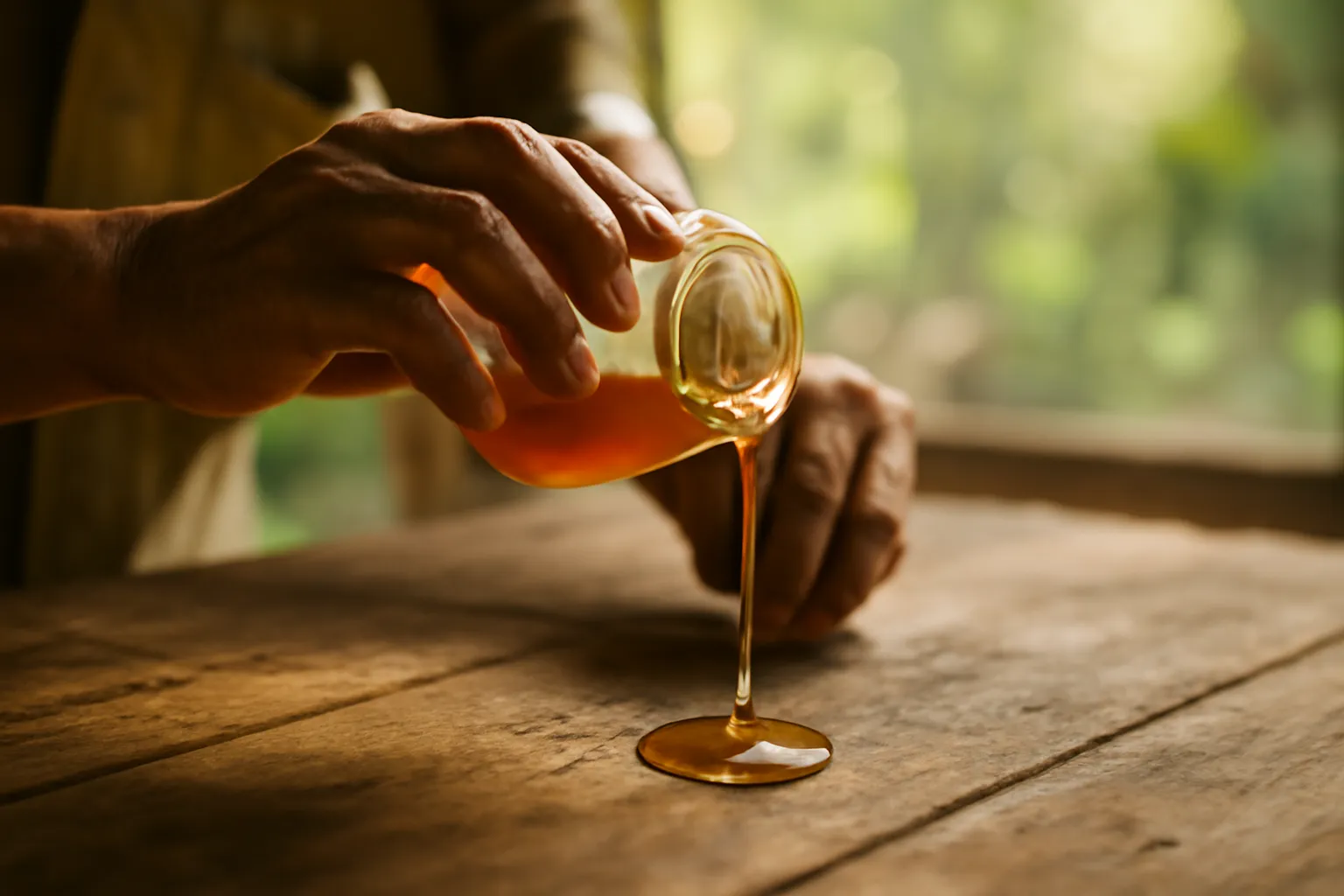
Real stingless bee honey is runny — that is not a sign of dilution
The most common complaint about this honey is also the most common misunderstanding. What thin actually means.
 ›
×
›
×
A single-origin stingless bee honey from our own apiary in Trang Bang, Tay Ninh. Harvested and bottled by batch, traceable to the colony.
Vietnamese stingless bee honey, built for export
© 2026 Aron Bee. All rights reserved. · Copyright · OD-1C4F-F69A