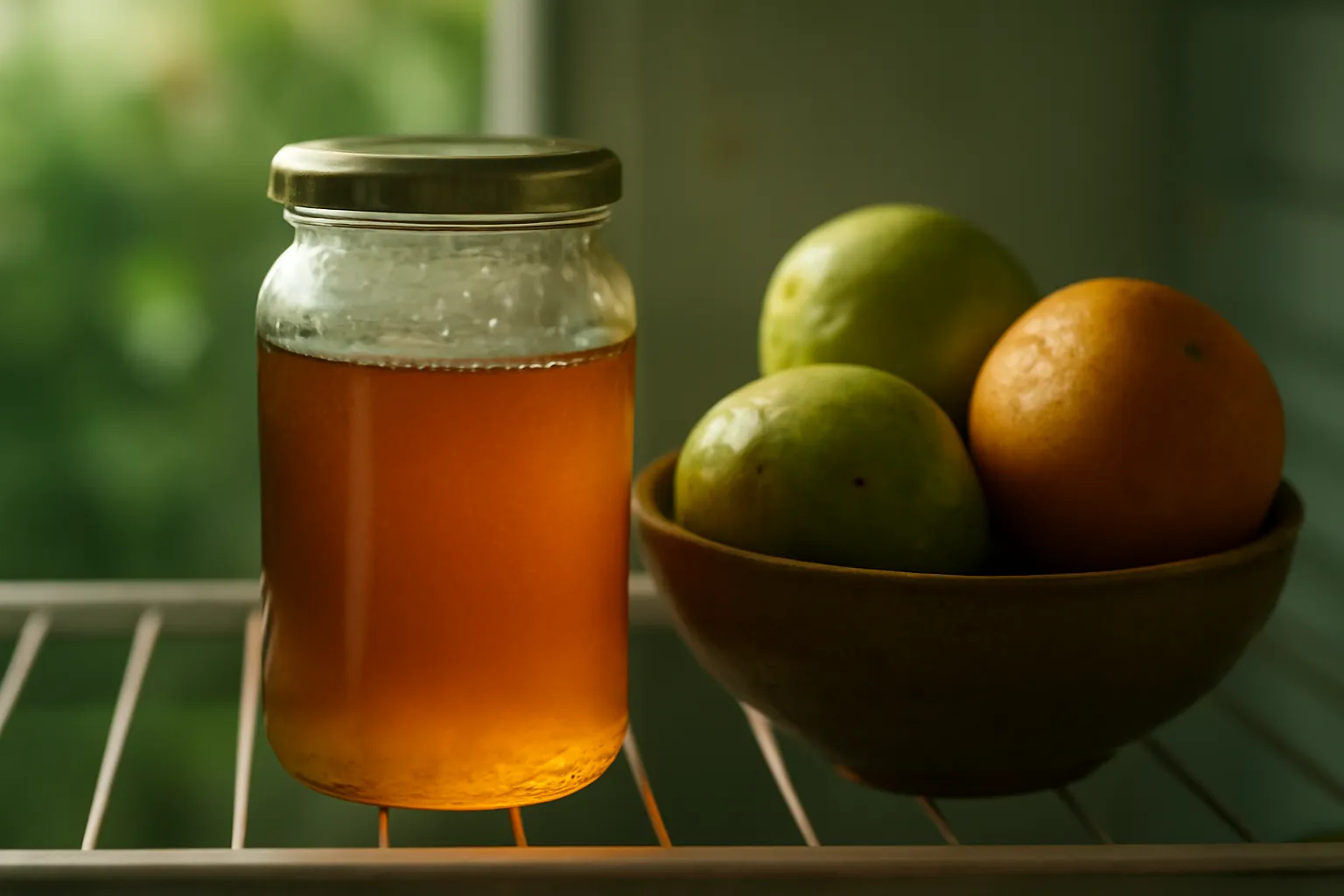
Foam in the jar: when it is normal and when to throw it out
Nearly everyone who buys this honey eventually opens a jar and finds a layer of foam. The first reaction is usually to assume it has spoiled. Of the three common causes, only one actually requires discarding it.
Cause 1: air trapped at packing
Pouring honey into a jar carries small air bubbles, and because stingless bee honey is thin they rise and gather at the surface. This layer is fine, thin, disperses over a few days and carries no unusual smell. It is normal and harmless.
Cause 2: temperature swings
Taking a jar from the fridge into hot air and back again, repeatedly, drives dissolved gas out of solution. Foam appears after each swing and settles once the jar is left alone. The fix is simply to keep the jar in one place and return it promptly after use.
Cause 3: fermentation — this one goes in the bin
Yeasts naturally present in honey become active at high moisture and warm temperatures, producing carbon dioxide and alcohol. The signs travel together rather than alone: thick foam that keeps regenerating, a lid that bulges or pops when opened, honey welling up, a sharp smell of alcohol, and sourness that hits the tip of the tongue immediately. Three or more of these together mean discard the jar — do not reheat it, do not re-filter it.
Why this honey ferments more readily
Moisture. Capped honey-bee honey sits at seventeen to twenty percent water; stingless bee honey at twenty-five to thirty. The safe threshold for yeast activity is around twenty-one percent, so this honey is always on the vulnerable side. The resin in the wax holds it back somewhat, but it does not replace proper storage.
Four habits that keep a jar sound
- Refrigerate after opening.
- Use a dry spoon only. A wet spoon introduces water and yeast.
- Close the lid immediately; do not leave the jar open on the table.
- Buy a size that matches how fast your household actually uses it.
Frequently asked
Can fermented honey be saved by heating?
No. Heat kills the yeast but destroys the enzymes, and the flavour does not come back. What makes this honey valuable is exactly what heat removes.
Does refrigeration damage the honey?
No. Cold only thickens it and slows yeast. It returns to normal at room temperature.
How long should an opened jar last?
Two to three months refrigerated. At tropical room temperature, considerably less.
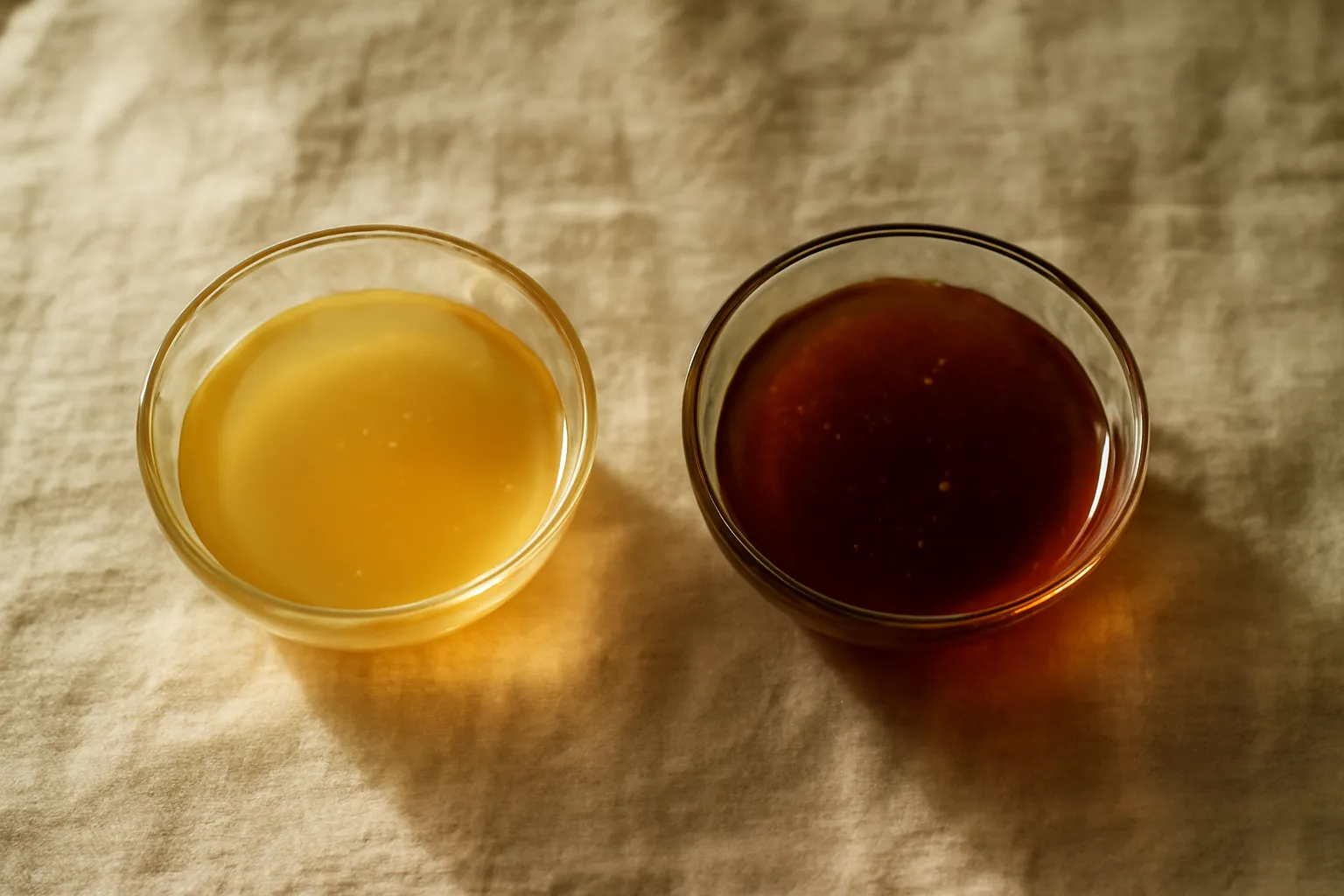
Stingless bee honey compared with ordinary honey: six real differences
Not a question of which is better, but of two products that differ in structure, yield, flavour and best use.
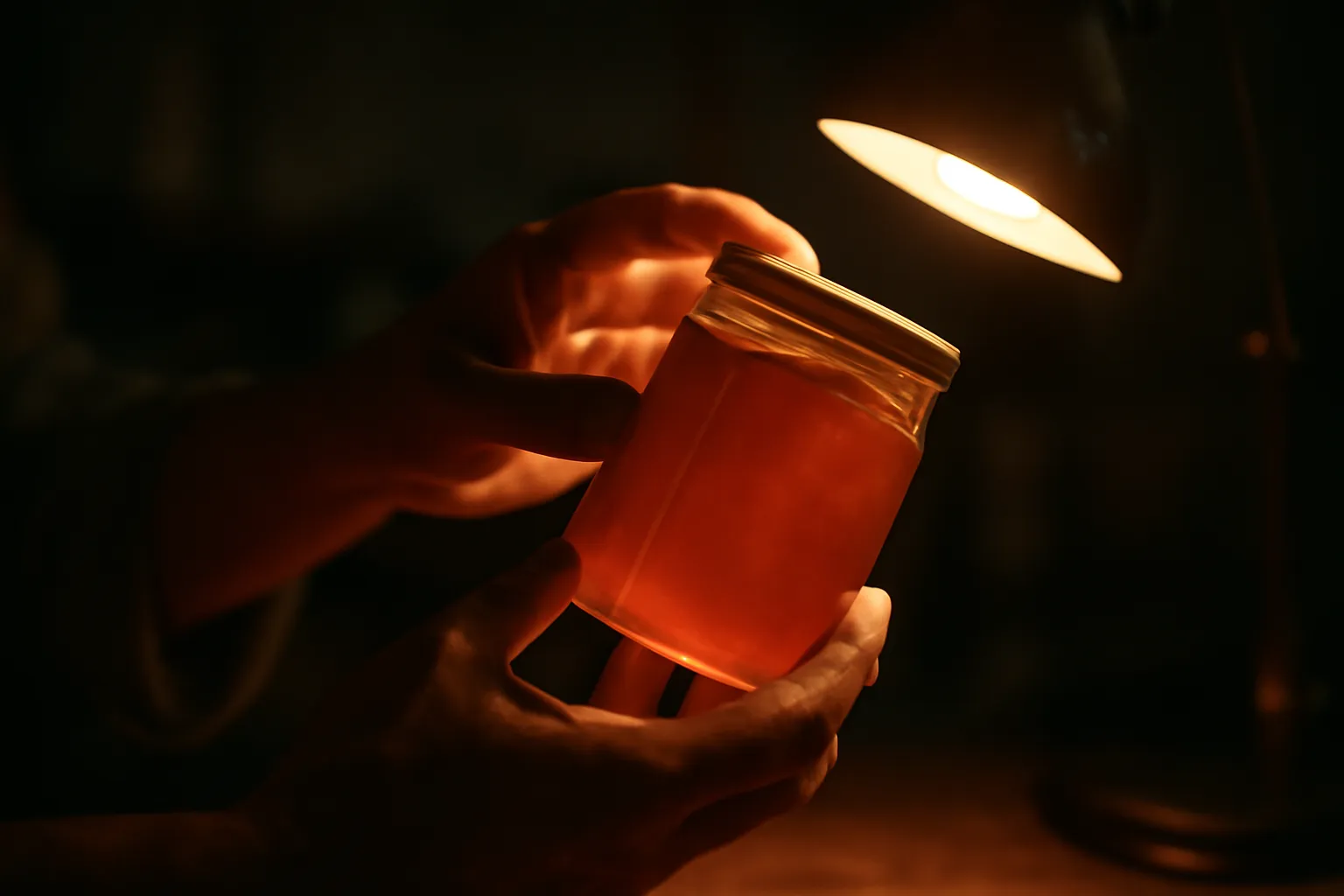
Reading the label on a jar of stingless bee honey
Some lines on a label are required, some say a great deal, and some are only decoration. How to tell them apart.

Six marketing claims about stingless bee honey to walk past
Cures, wild forest honey, surprisingly low prices — six signals that a seller is selling a story rather than honey.

Where the tartness comes from, and why it cannot be faked
The sour finish is the fingerprint of real stingless bee honey. How it forms, and how to tell it from fermentation.
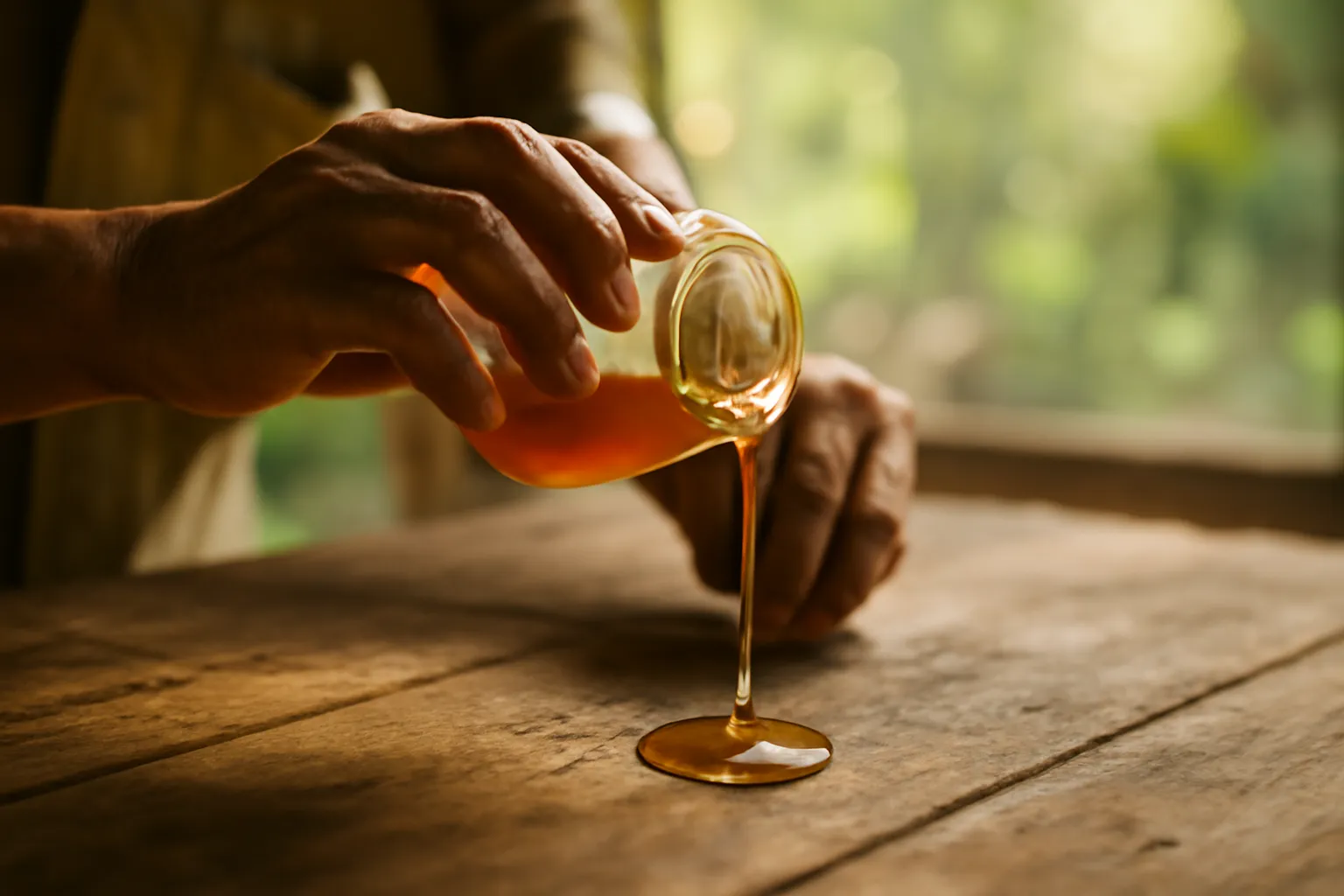
Real stingless bee honey is runny — that is not a sign of dilution
The most common complaint about this honey is also the most common misunderstanding. What thin actually means.
 ›
×
›
×
A single-origin stingless bee honey from our own apiary in Trang Bang, Tay Ninh. Harvested and bottled by batch, traceable to the colony.
Vietnamese stingless bee honey, built for export
© 2026 Aron Bee. All rights reserved. · Copyright · OD-1C4F-F69A