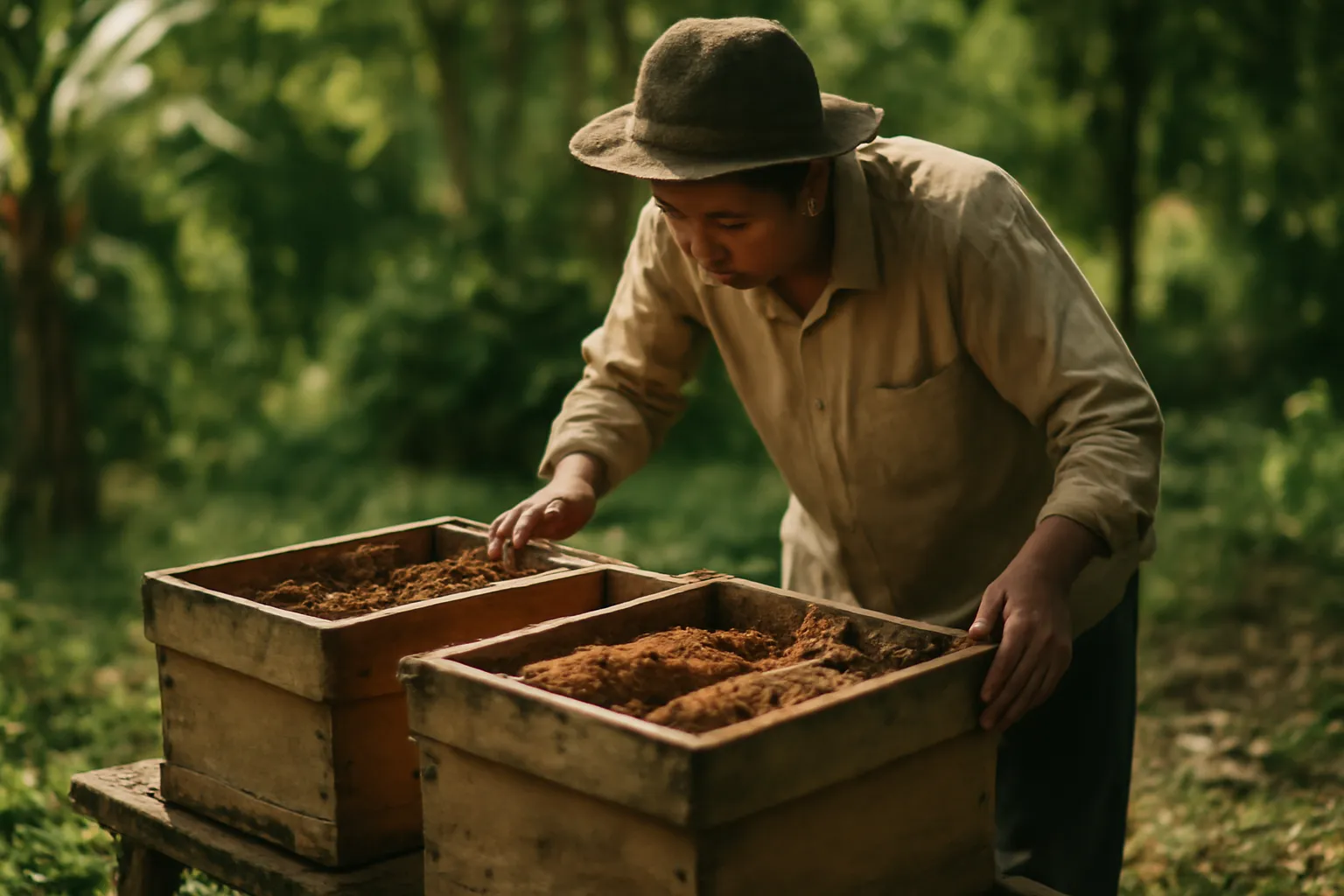
When to split a stingless bee colony and when to wait
With stingless bees, colonies are usually worth more than honey. But splitting is the strongest intervention a keeper can make, and doing it at the wrong moment costs both the mother and the daughter.
Three signs the mother colony is ready
- The nest fills the box. Structure reaching close to the walls, no large empty space.
- A large, continuous brood mass. Larval cells at several stages, meaning the queen is laying steadily.
- Queen cells present. Cells noticeably larger than the rest, usually at the edge of the brood — the colony is preparing to raise a new queen itself.
The third is decisive. Without queen cells, the daughter colony will have no queen and will dwindle.
The season to split
Early wet season, roughly May to July in southern Vietnam. Both halves are temporarily weakened and need abundant forage to recover. Splitting in the dry season almost guarantees losing one of the two.
When to postpone
A colony harvested within the last three months, one recently moved, one under ant pressure, or one that has not yet been through a full wet season. All are reasons to wait.
How often
A strong colony in good conditions can be split once or twice a year. More frequently and the mother never recovers, so both produce poorly. The rule: split only when the mother has filled its box again.
Prepare before you open anything
A clean, dry box with a little old wax inside; the new position already chosen with shade and ant defence in place; work in the early morning. Improvising halfway through is how splits go wrong.
Frequently asked
If I do not split, will the colony split itself?
Yes. When it runs out of room, part of the colony leaves with a new queen to find another cavity. Not splitting means losing that part.
How long before the daughter settles?
Usually three to six months before it behaves normally, and typically a full wet season before it is strong enough to consider harvesting.
Does the mother colony weaken?
Yes, for several weeks. That is why harvesting and splitting the same colony in one season is a bad idea.
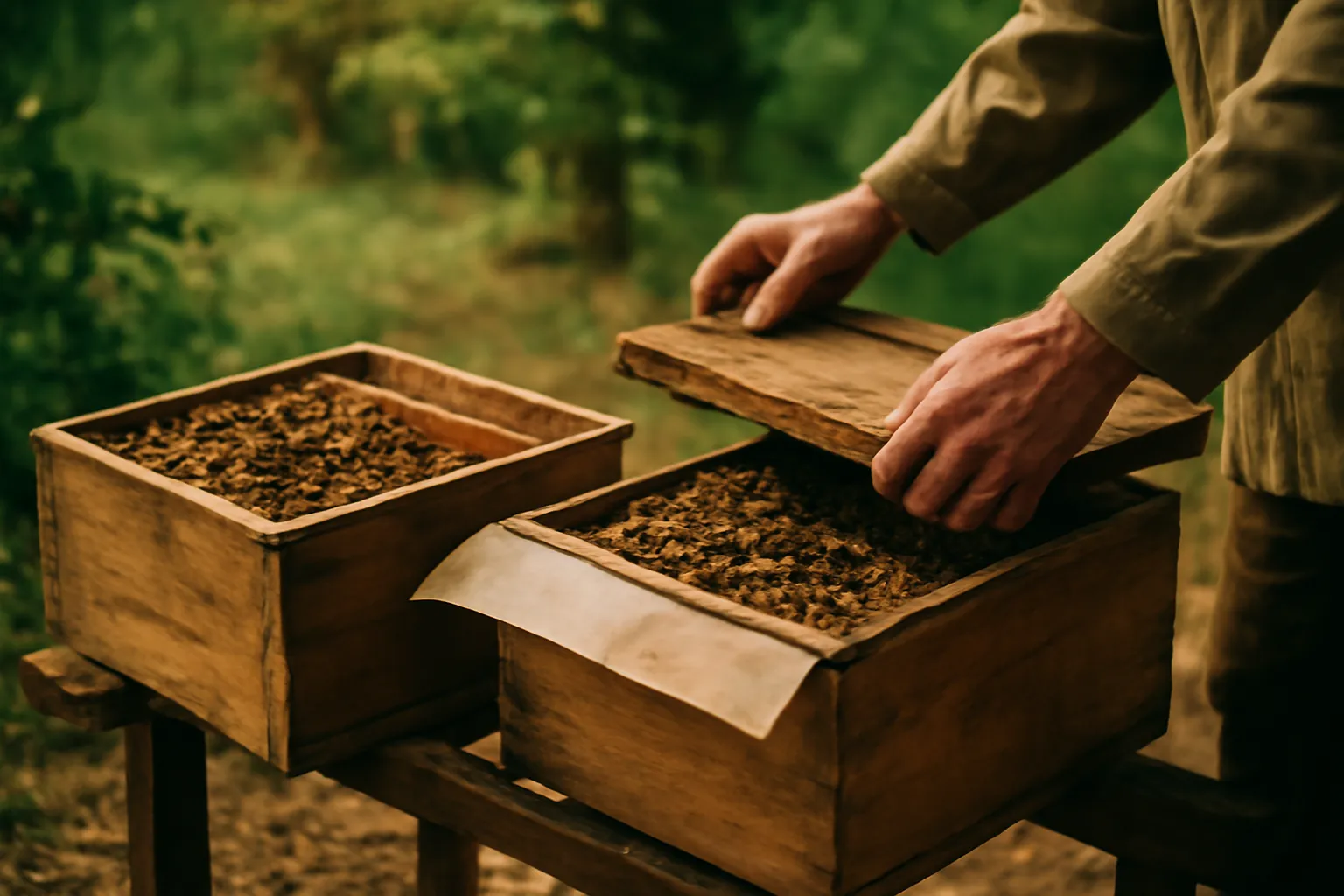
Merging two colonies into one
When a colony is too weak to survive alone, merging saves what is left. Done wrong, the two fight and both are lost.
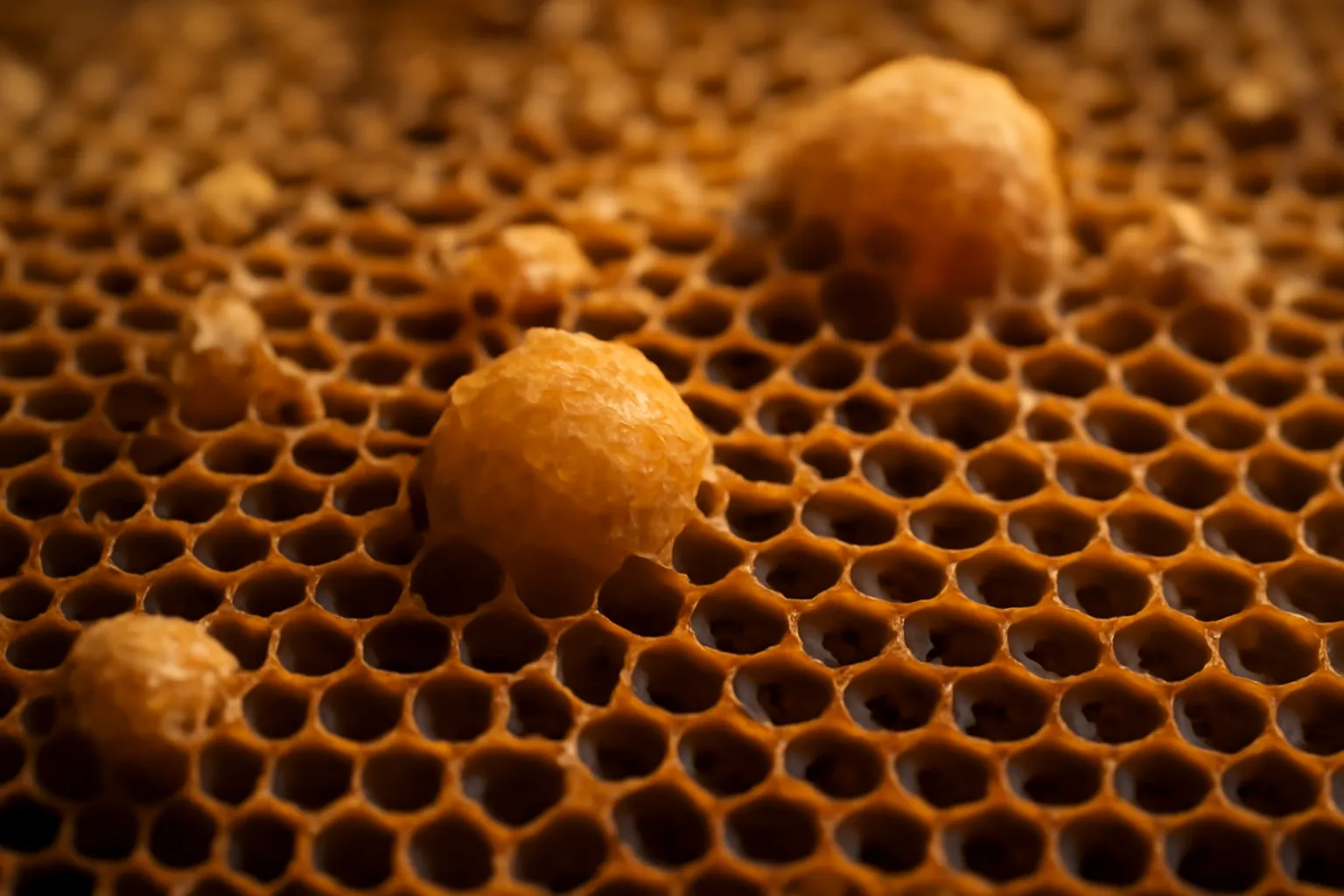
The queen: her role, queen cells, and spotting a queenless colony
You do not need to see the queen to know she is there. Three indirect signs more reliable than searching the nest.
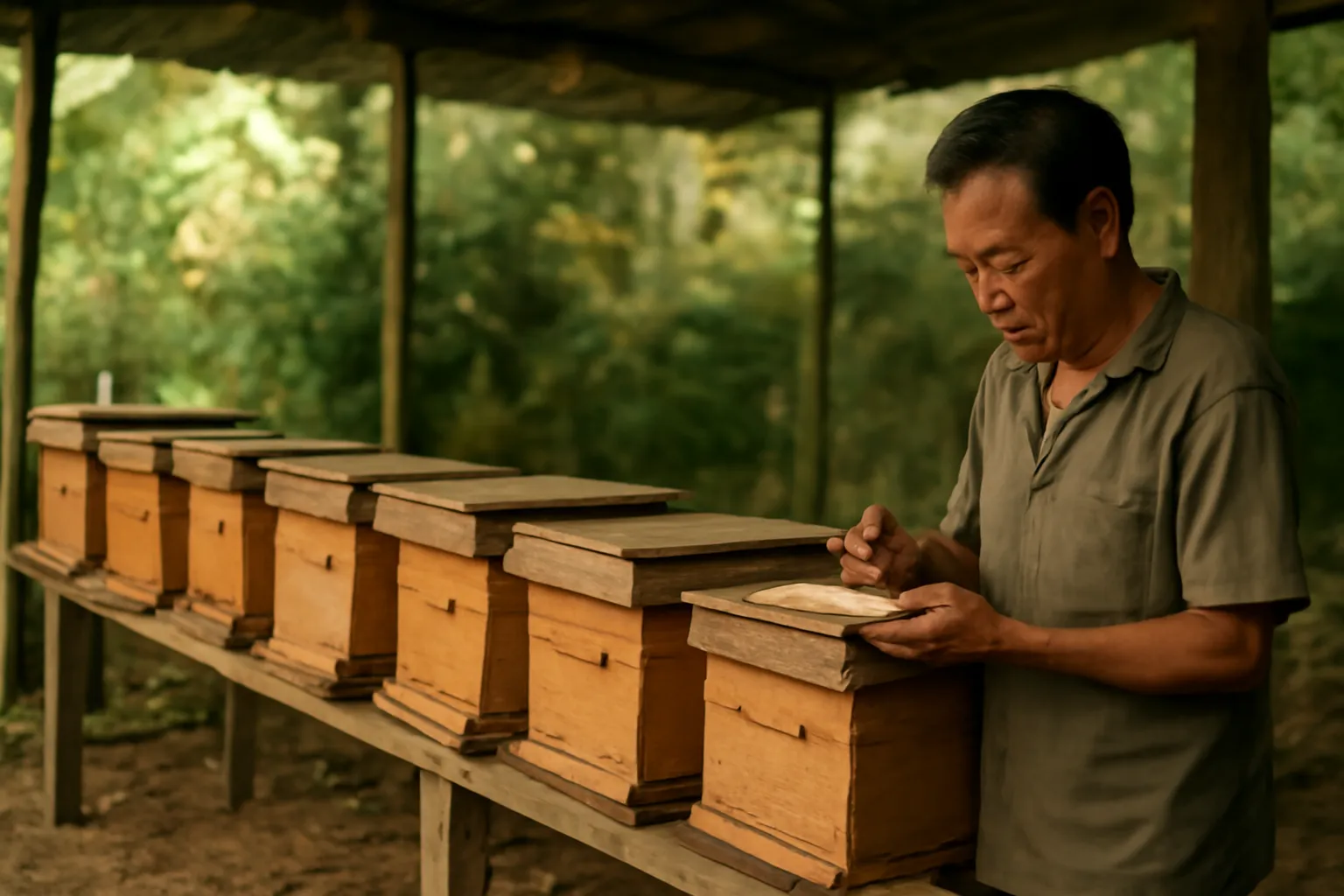
Propagating colonies for sale: the arithmetic and the obligations
Selling colonies usually pays better than selling honey. What the growth rate really looks like, and what you owe the buyer.
Absconding: why colonies leave and how to stop it happening again
Colonies rarely leave suddenly. They signal for days beforehand, and most causes trace back to the keeper.
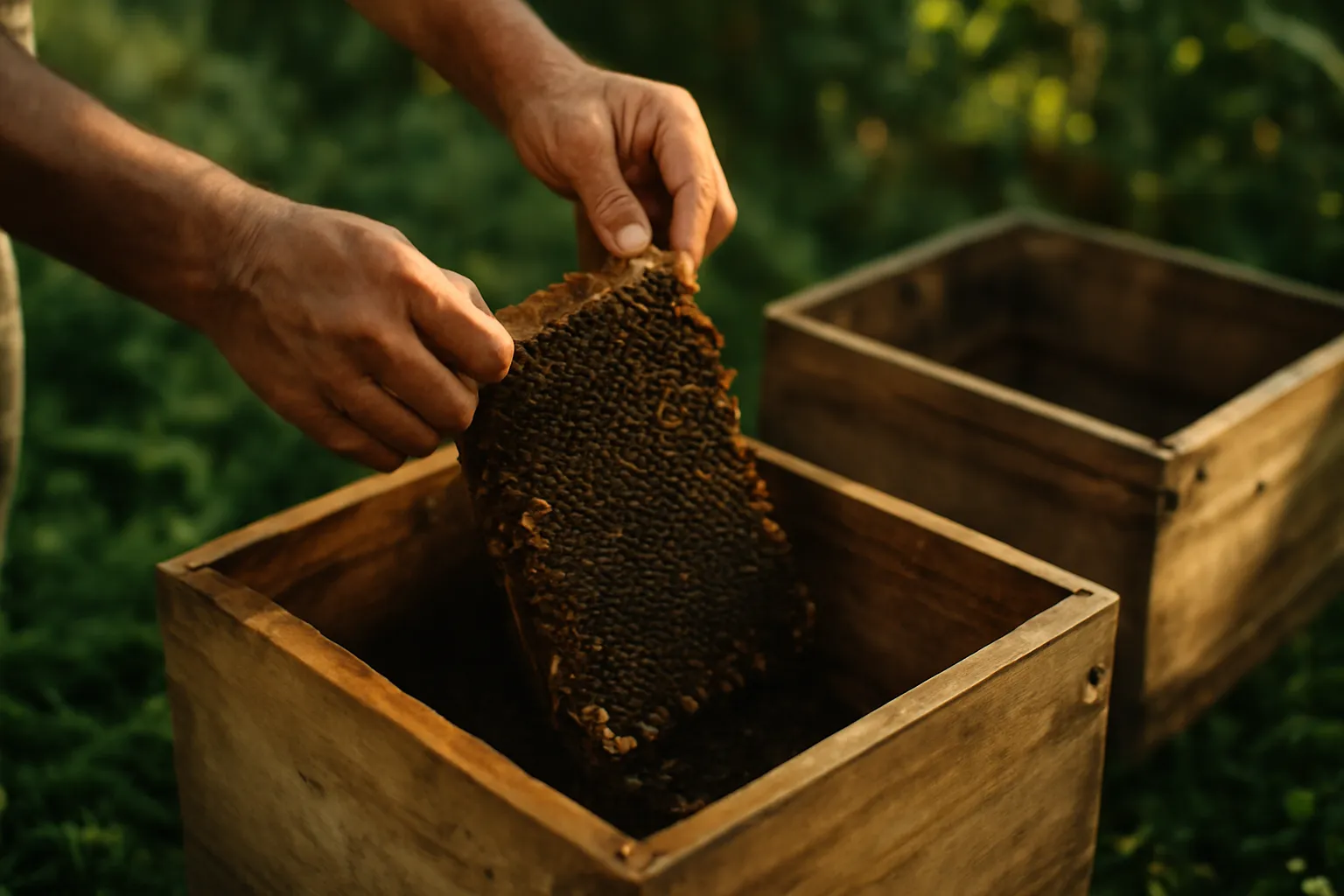
Splitting a colony step by step
Dividing the brood, making sure the daughter has a queen cell, and handling the first seven days. No special equipment needed.
 ›
×
›
×
A single-origin stingless bee honey from our own apiary in Trang Bang, Tay Ninh. Harvested and bottled by batch, traceable to the colony.
Vietnamese stingless bee honey, built for export
© 2026 Aron Bee. All rights reserved. · Copyright · OD-1C4F-F69A