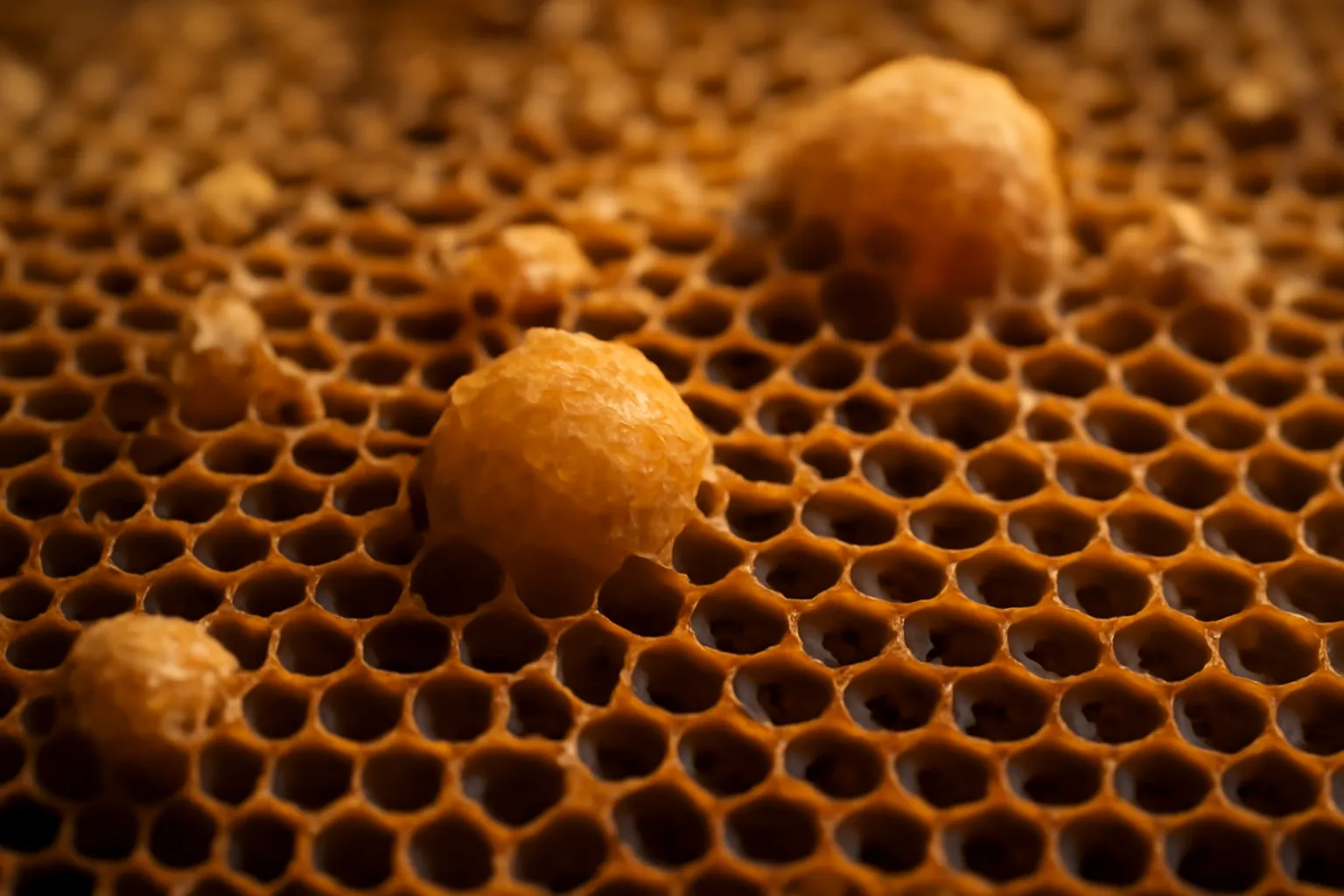
The queen: her role, queen cells, and spotting a queenless colony
The queen determines whether a colony lives or fades, and she is also the hardest thing to see. Fortunately you never need to see her to know whether she is there.
How a stingless bee queen differs
She is noticeably larger than the workers with a swollen abdomen. Unlike honey bees, stingless bee colonies often keep several unmated virgin queens in reserve inside the nest. That is why they tolerate the loss of a queen considerably better than honey bees do.
What queen cells are
Cells noticeably larger than the surrounding brood cells, usually at the edge of the brood mass. The colony builds them when preparing to split or when the existing queen is ageing. Several queen cells is a sign of a healthy colony approaching the point where it can be split.
Three signs the queen is present
- The brood contains larvae at several stages, with fresh layers appearing.
- Foragers return steadily with pollen — pollen means larvae to feed.
- The colony is stable, holding or growing in numbers month to month.
With all three, there is no need to find the queen, and no reason to dig through the nest looking for her.
Signs the colony is queenless
The brood contracts and then stops producing new layers, pollen traffic thins markedly, numbers fall week by week, and activity at the entrance becomes listless. Left for a few months without a new queen, the colony fades.
Rescuing a queenless colony
The most reliable method is to transfer a piece of brood containing a queen cell from a strong colony. The bees will rear it and produce a new queen. If the colony is already very weak, merging it into another is the more sensible option.
Frequently asked
How long does a stingless bee queen live?
Several years, far longer than a worker. Colonies replace an ageing queen themselves, usually without the keeper knowing.
Can queens be bought separately?
Rarely, and it is not the normal practice. With stingless bees, keepers transfer brood containing queen cells instead.
Is searching for the queen harmful?
Yes. Digging through the nest breaks structure and alarms the colony. The three indirect signs above are enough.
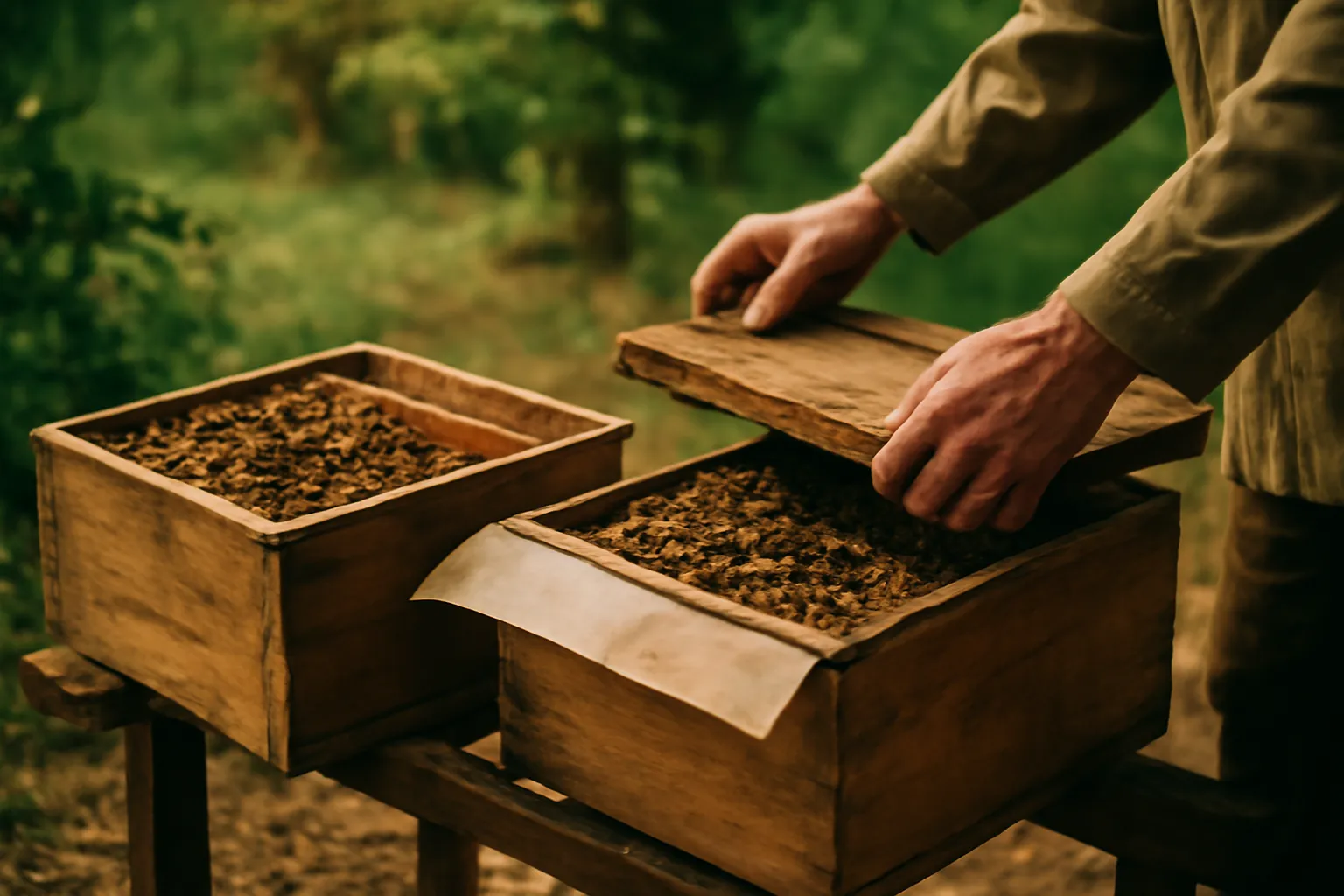
Merging two colonies into one
When a colony is too weak to survive alone, merging saves what is left. Done wrong, the two fight and both are lost.

Propagating colonies for sale: the arithmetic and the obligations
Selling colonies usually pays better than selling honey. What the growth rate really looks like, and what you owe the buyer.
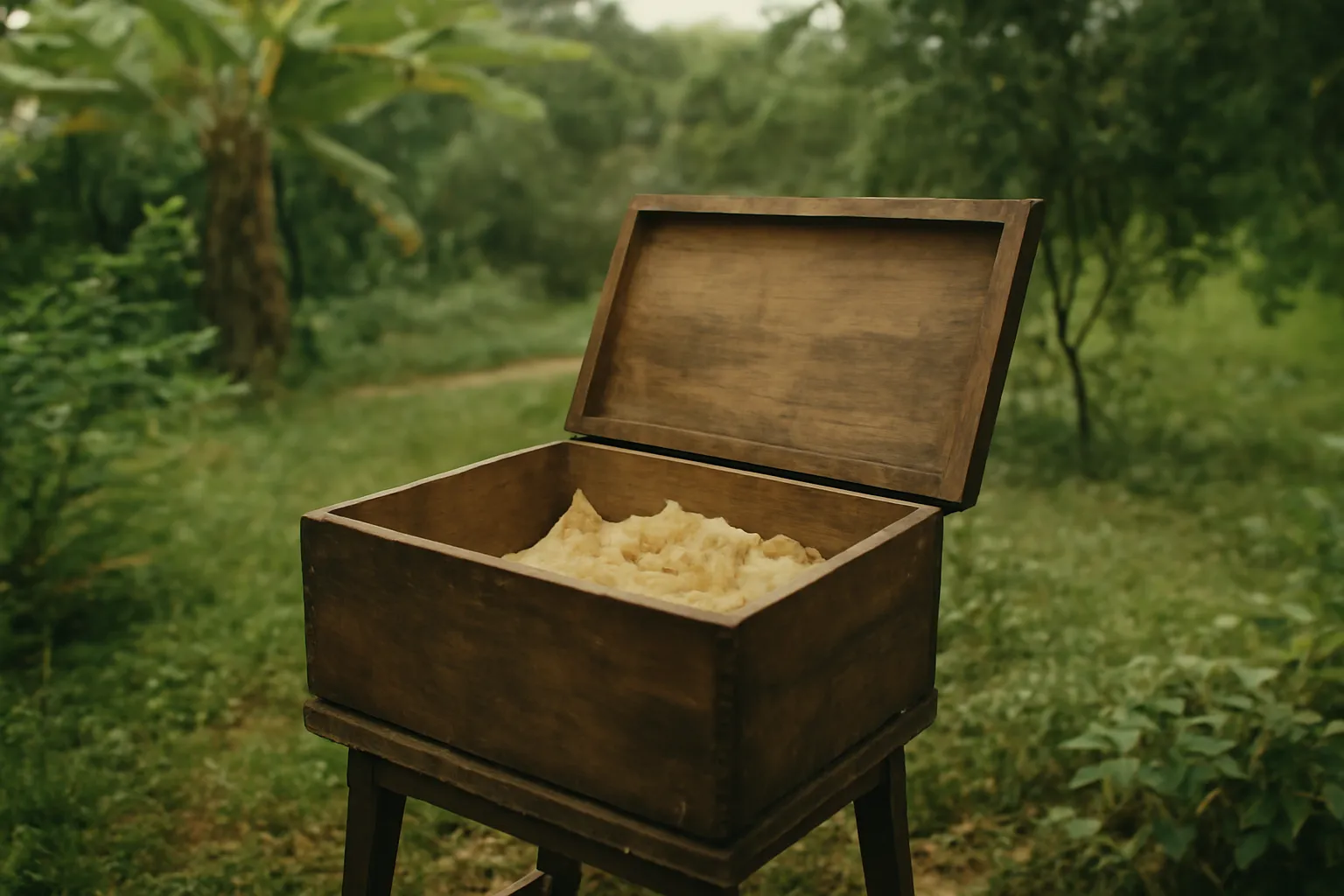
Absconding: why colonies leave and how to stop it happening again
Colonies rarely leave suddenly. They signal for days beforehand, and most causes trace back to the keeper.
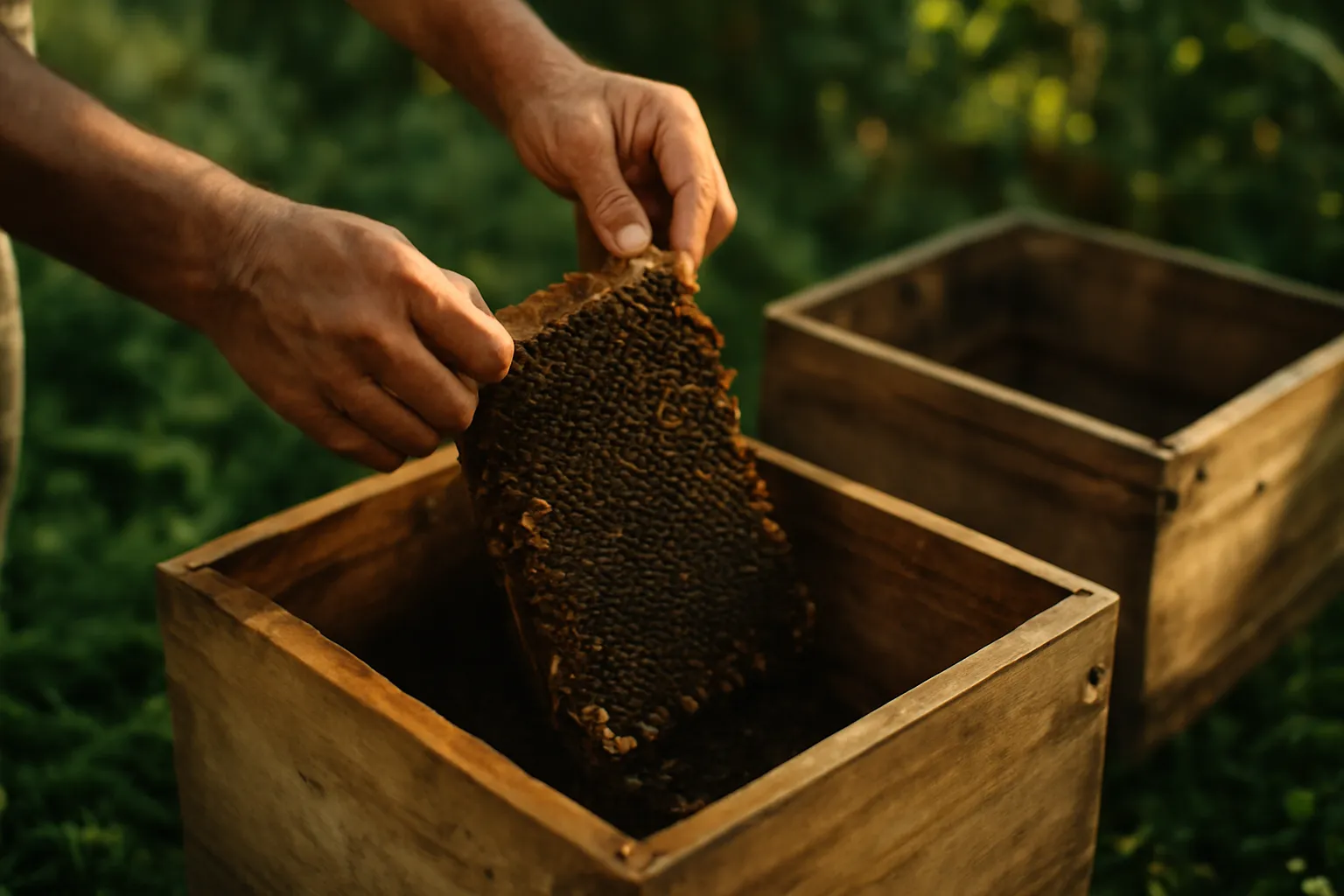
Splitting a colony step by step
Dividing the brood, making sure the daughter has a queen cell, and handling the first seven days. No special equipment needed.
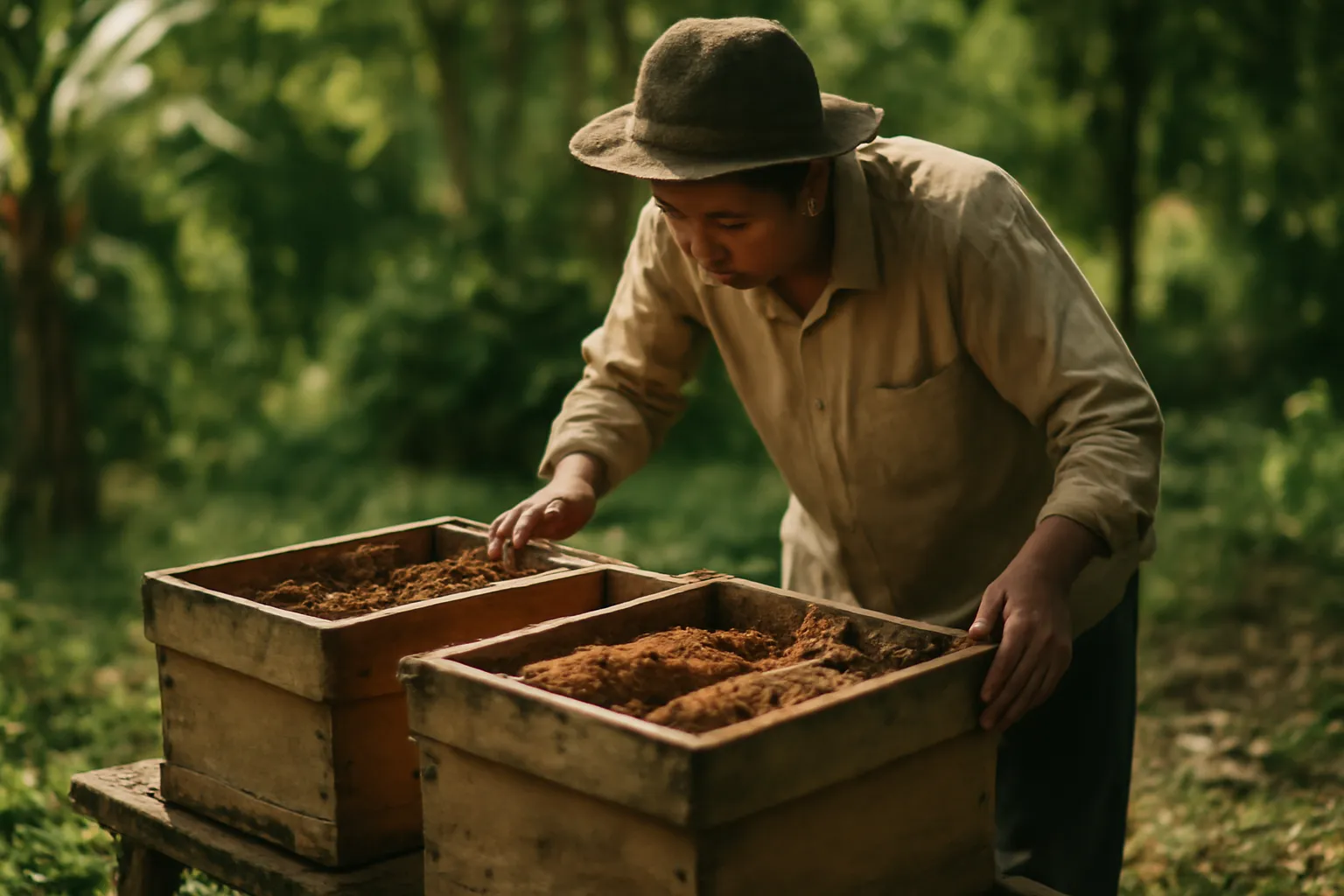
When to split a stingless bee colony and when to wait
Split at the right moment and you get two strong colonies. Split too early and you damage both.
 ›
×
›
×
A single-origin stingless bee honey from our own apiary in Trang Bang, Tay Ninh. Harvested and bottled by batch, traceable to the colony.
Vietnamese stingless bee honey, built for export
© 2026 Aron Bee. All rights reserved. · Copyright · OD-1C4F-F69A