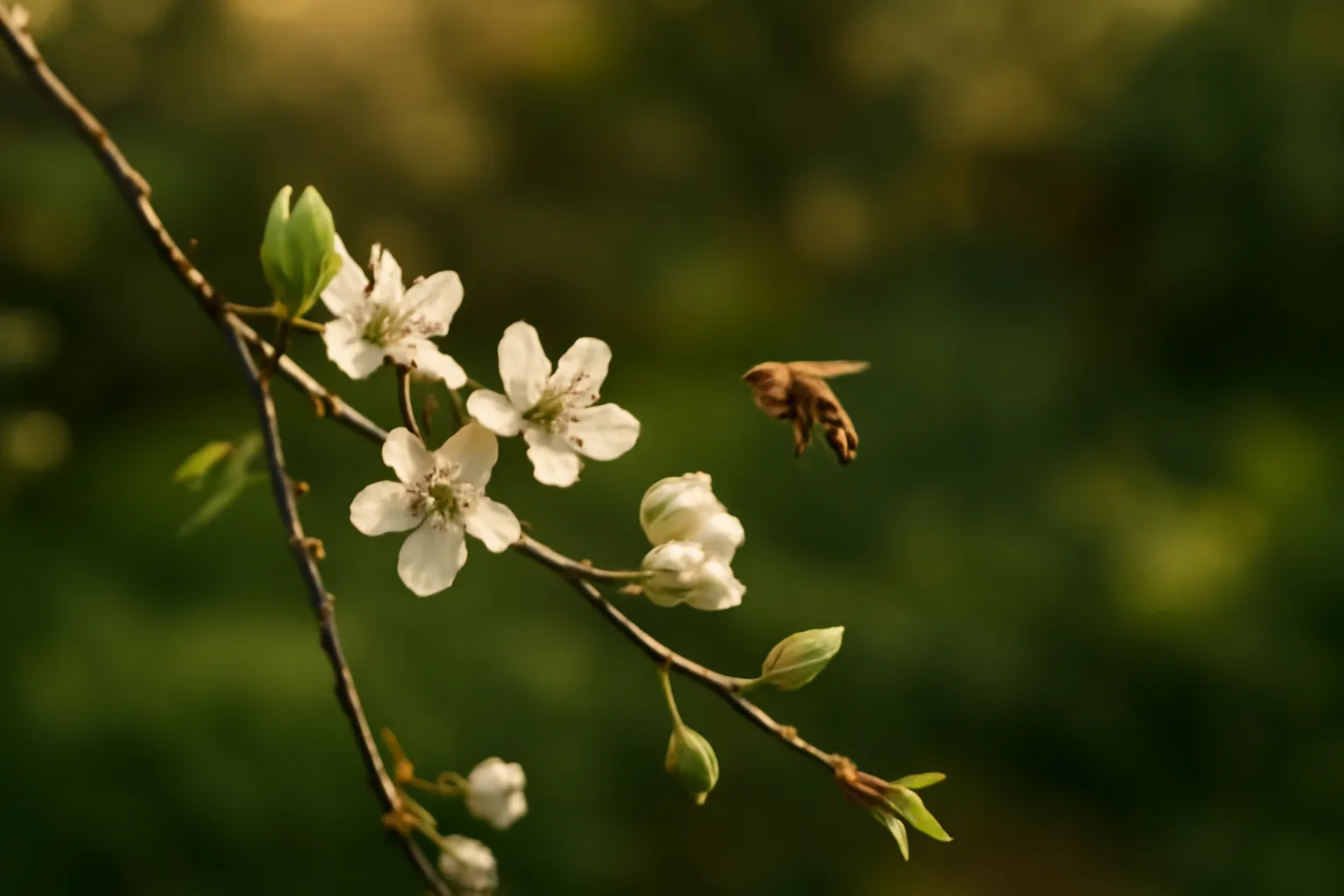
What to plant so the colony has forage all year
It is easy to fuss over the box and overlook the thing that matters more: what is flowering nearby. Stingless bees forage within a few hundred metres — far less than honey bees — which means your garden is close to their entire diet.
The principle: sequence, not quantity
You do not need many species, you need the right ones so that something is in flower every month. A garden with one crop that blooms heavily for two months and then nothing leaves the colony to survive the other ten. The goal is overlapping flowering.
Fruit trees — the backbone
Mango, longan, rambutan, jackfruit, guava, lime, pomelo. These give both flowers and fruit, and suit tropical home gardens. Lime and guava flower irregularly through the year, which makes them especially valuable even though each flush is small.
Shrubs and small flowers — filling the gaps
Ixora, periwinkle, cosmos, portulaca, and culinary herbs allowed to bolt — basil in particular. This group is cheap, grows fast, and importantly keeps flowering through the dry months when the fruit trees rest. A small bed close to the hive stand makes a real difference.
Resin trees — the group most often forgotten
Stingless bees need more than nectar and pollen; they need plant resin to build. Jackfruit, cashew, acacia and dipterocarp species all supply it. A garden without a resin source produces colonies that build slowly and stay weak even when nectar is abundant.
What to avoid
A garden sprayed with insecticide on a schedule is the end of a colony, and that includes spraying at a neighbouring property a few dozen metres away. Before placing hives, ask around about spraying — this question matters more than any keeping technique.
Frequently asked
What can I plant on a balcony?
Basil allowed to flower, periwinkle and portulaca in pots help noticeably. But if there is no greenery for several hundred metres around, the colony will weaken regardless.
How far do stingless bees fly?
Typically three hundred to five hundred metres, much less than honey bees. That is why placement matters more than technique.
Should I feed sugar water instead of planting?
Only as emergency support in a prolonged dry season. Regular feeding lowers honey quality and should not be done with colonies whose honey is sold.
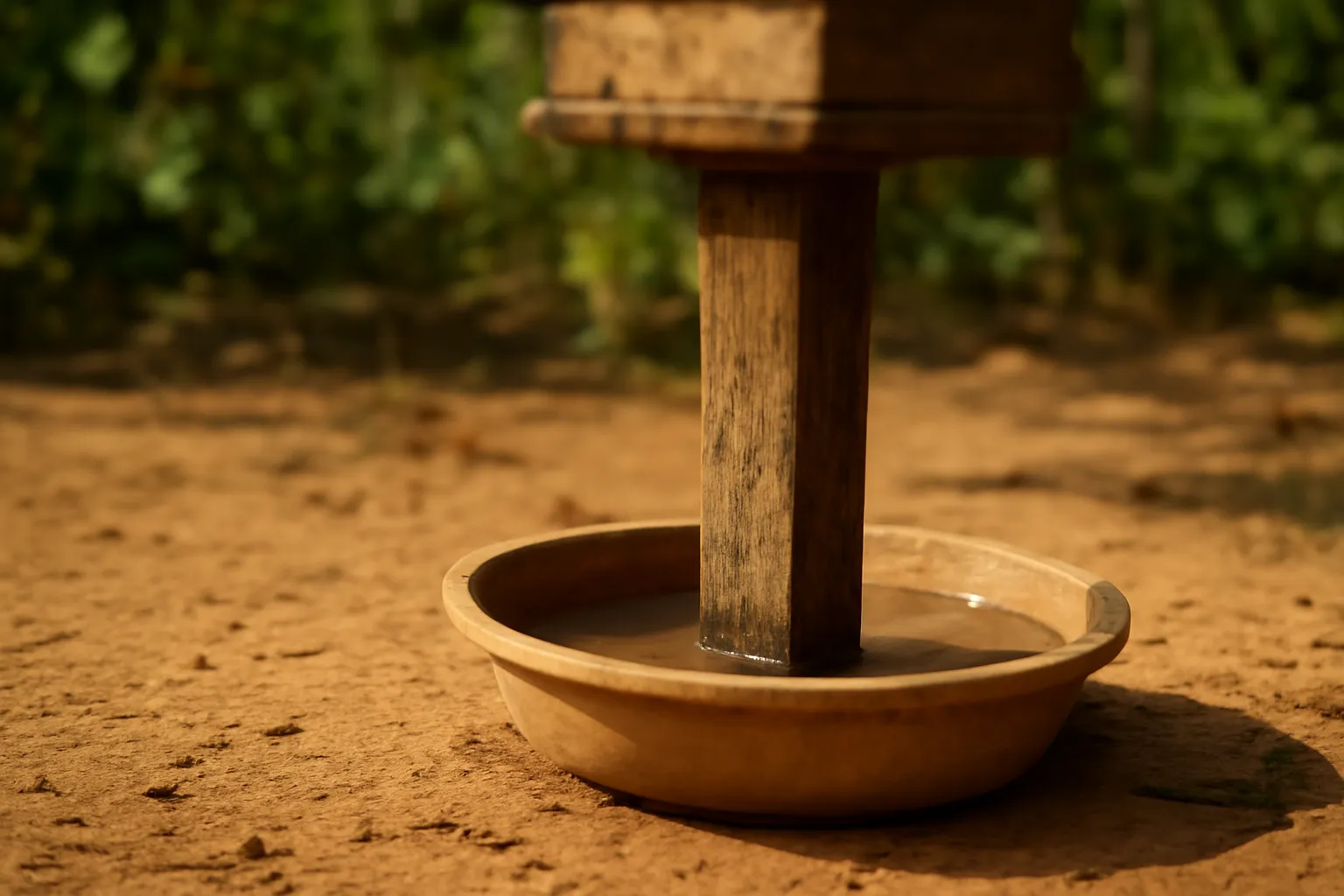
Ants, geckos and spiders: the three that take colonies
In the tropics, predators cause far more colony loss than disease. How to spot each early and what actually works.
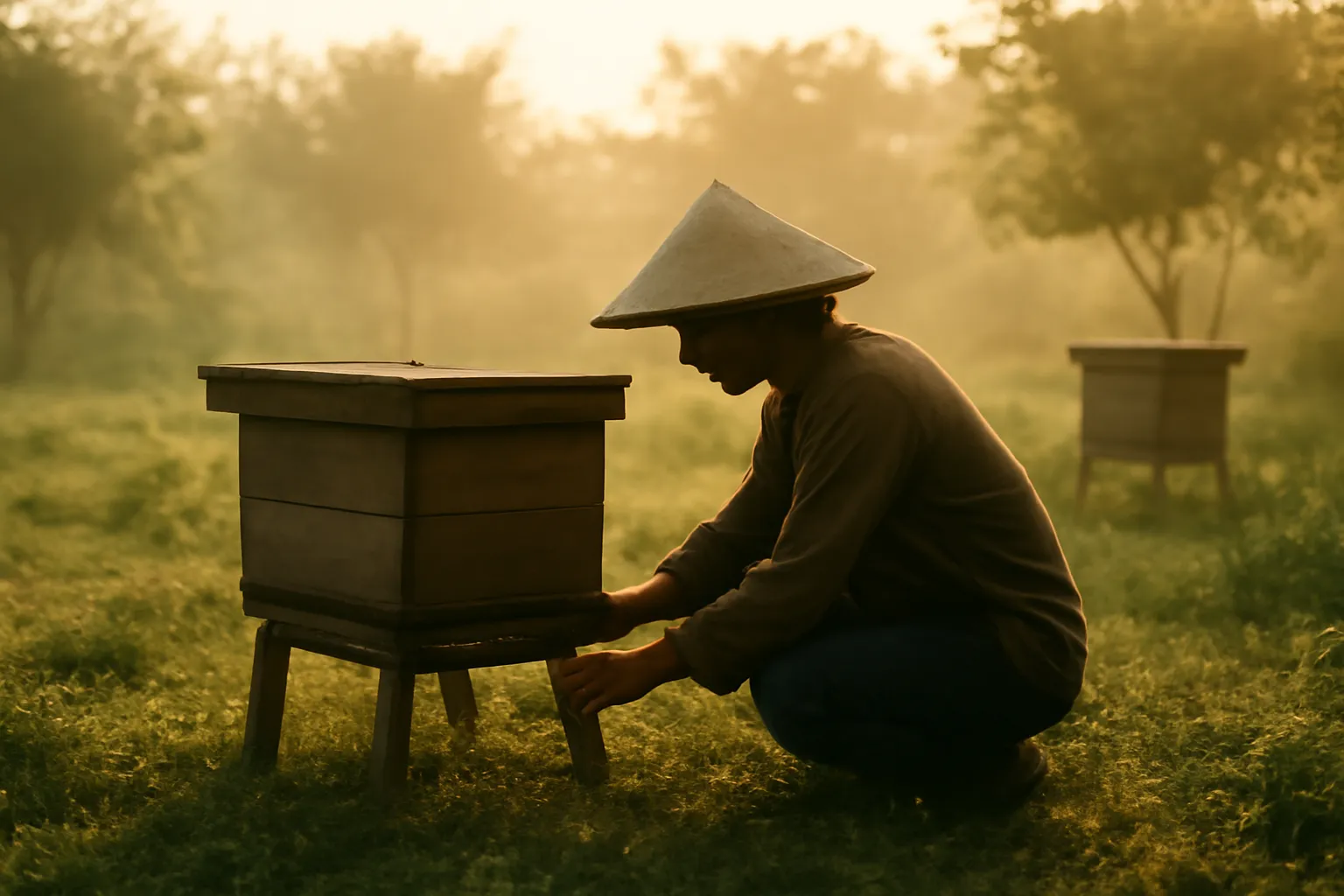
A year at a tropical stingless bee apiary, month by month
Which months need work, which months need nothing, and when the main harvest falls.
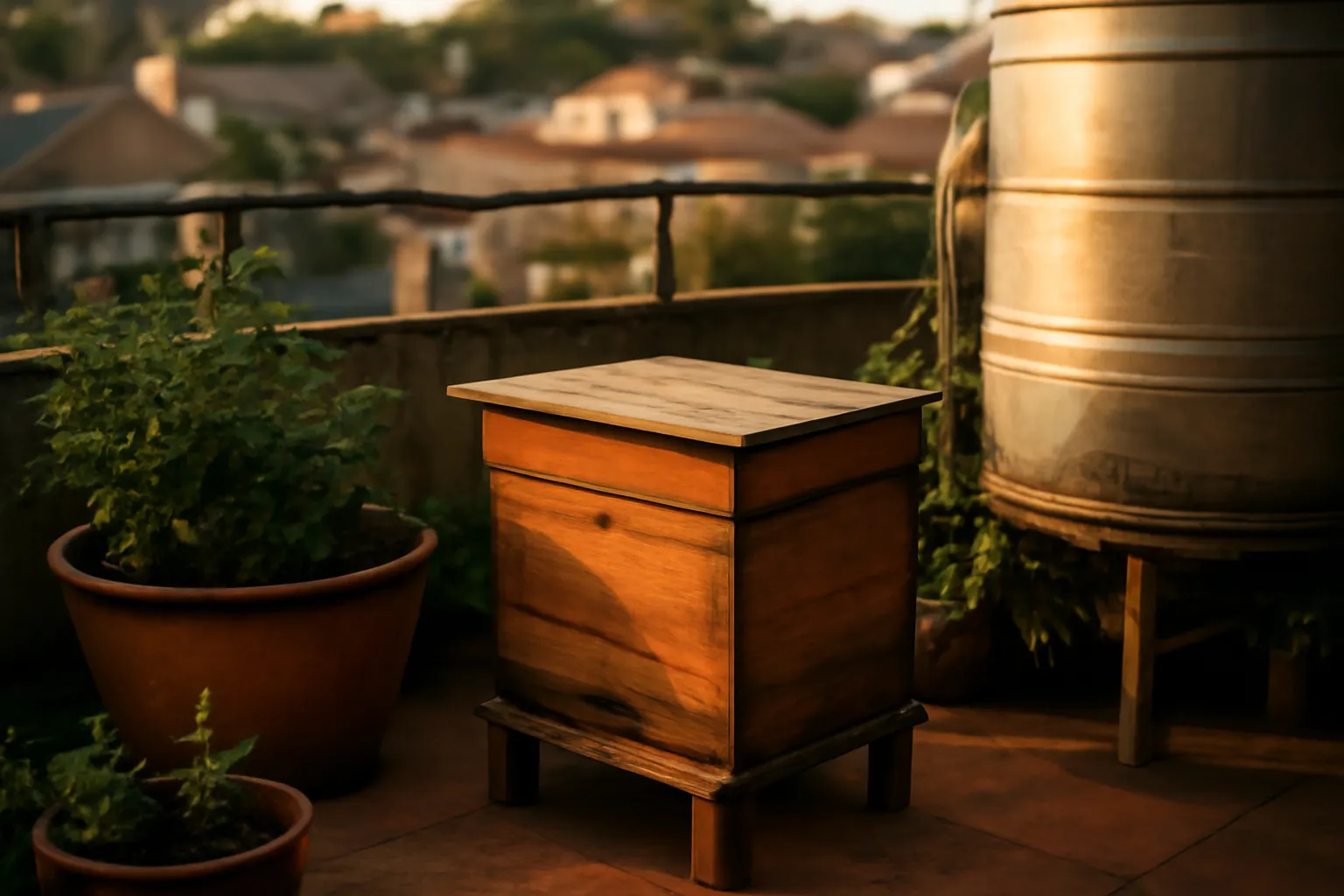
Keeping stingless bees on a rooftop or balcony in town
No garden is not a barrier, but three problems have to be solved: heat, wind and forage.
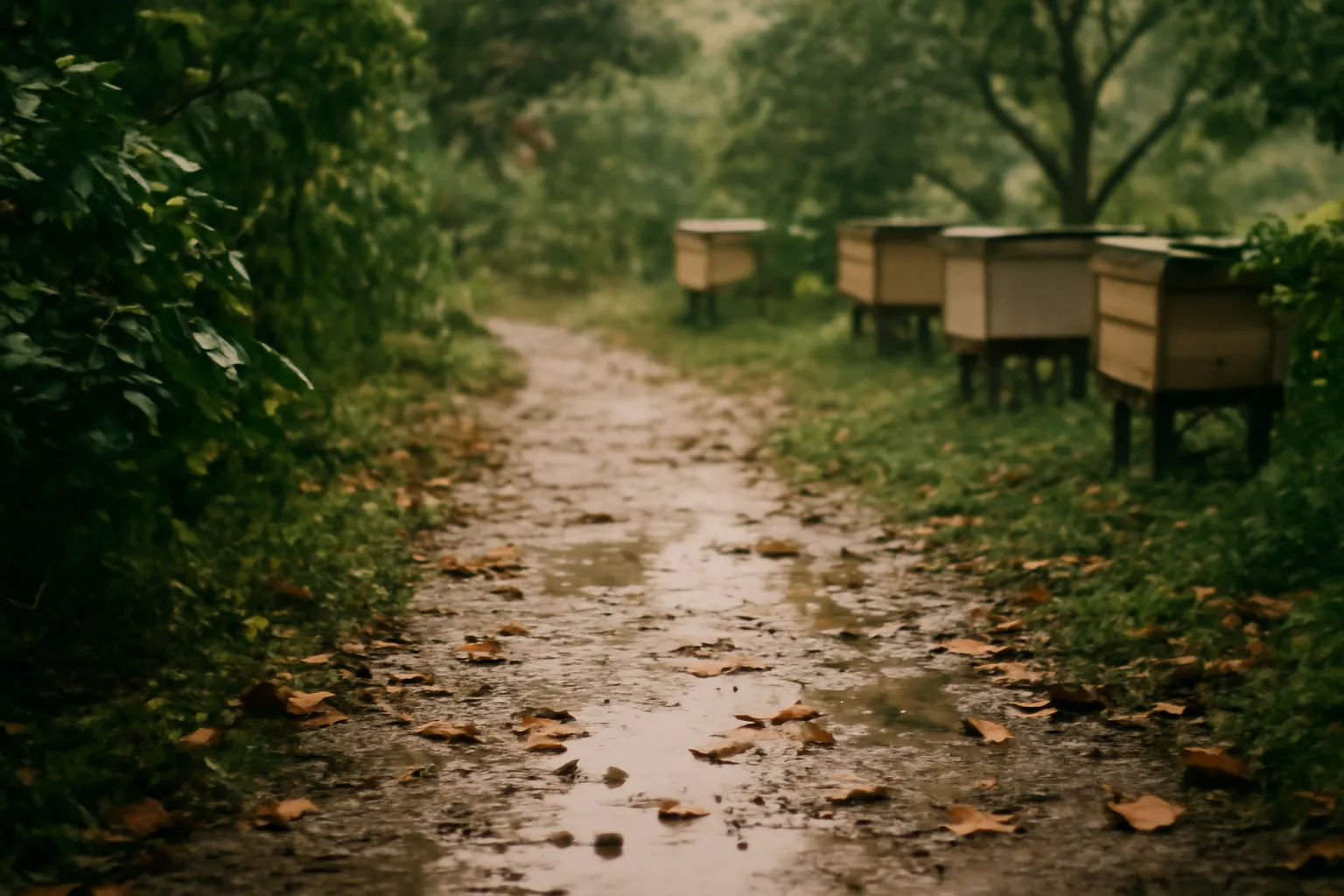
The rainy season: growth, splits and standing water
The easy half of the year, if drainage and rain deflection are handled. What to do and what to leave alone.
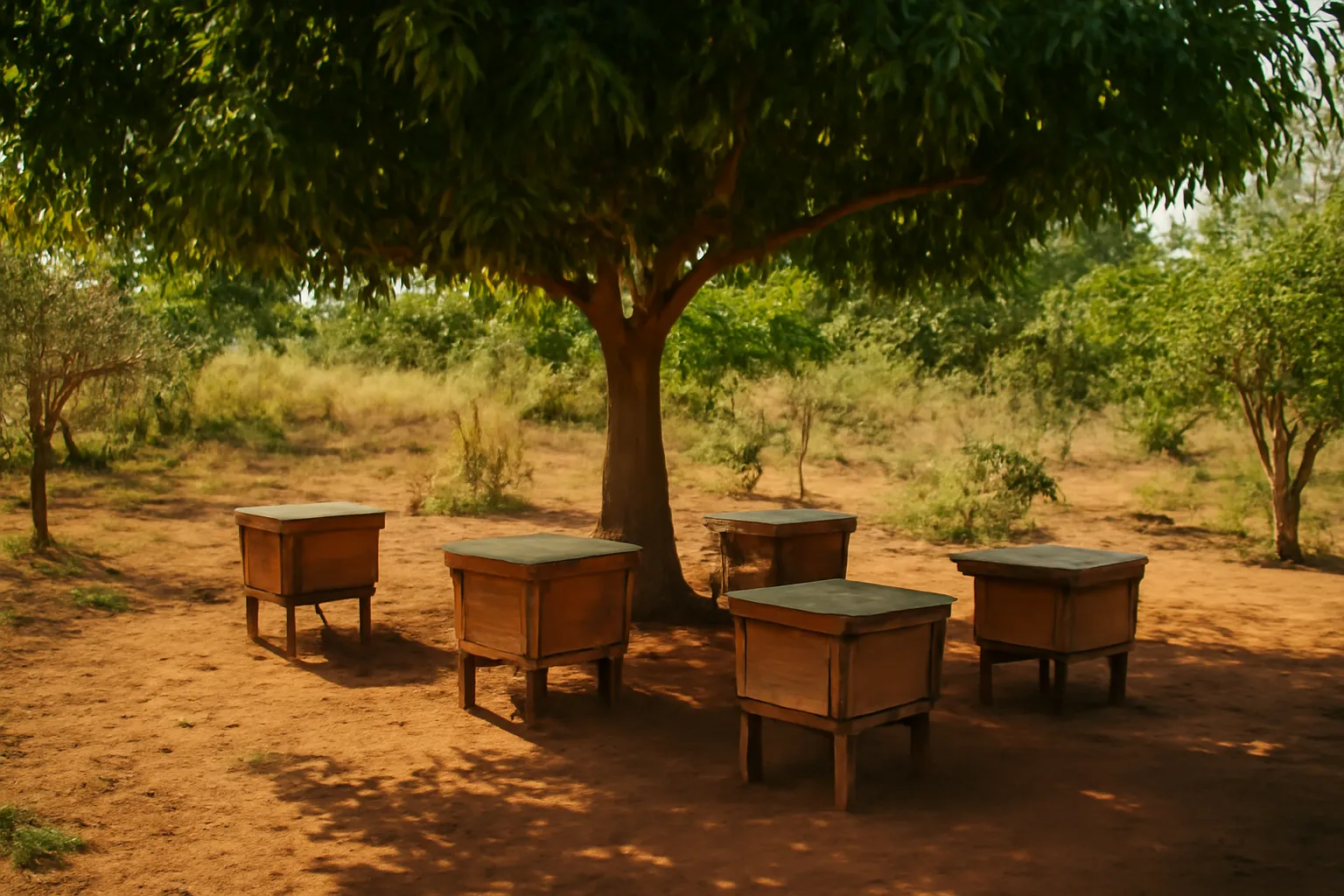
Keeping stingless bees through a tropical dry season
Heat and ants cause most colony losses in the dry months. What changes, and what to do about it.
 ›
×
›
×
A single-origin stingless bee honey from our own apiary in Trang Bang, Tay Ninh. Harvested and bottled by batch, traceable to the colony.
Vietnamese stingless bee honey, built for export
© 2026 Aron Bee. All rights reserved. · Copyright · OD-1C4F-F69A