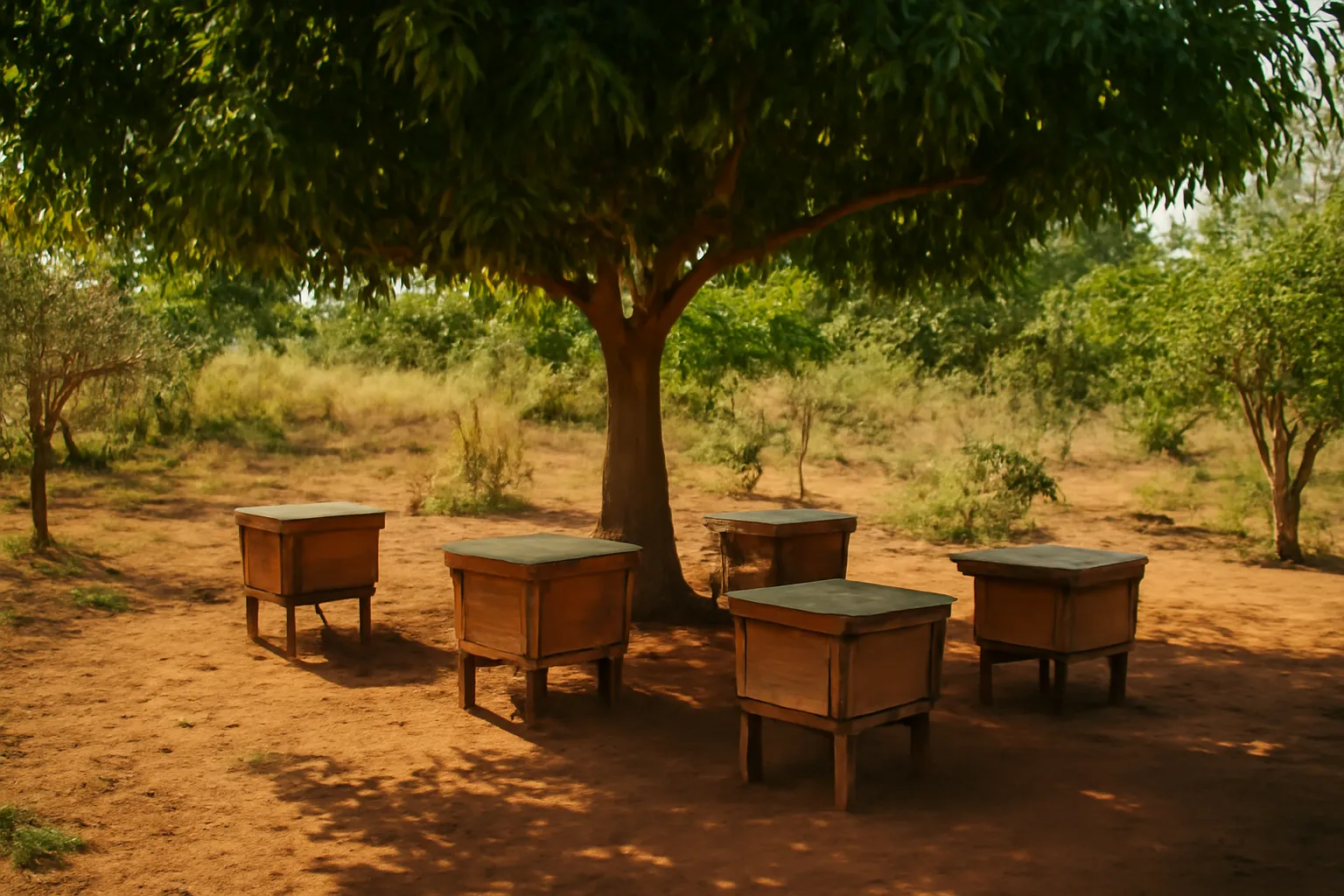
Keeping stingless bees through a tropical dry season
Stingless bees are tropical animals, so the question is never whether they survive the climate but which half of the year is easy and which needs attention. In southern Vietnam the year splits cleanly, and each half sets a different problem.
What changes in the dry months
From roughly December to April, sun is intense and flowering thins out. Colonies naturally contract, which is not a fault. Two specific threats account for most losses in this period.
Threat one: heat
Stingless bee wax is blended with resin and softens at high temperature. A box in direct midday sun can reach a point where honey pots slump and the nest collapses. When that happens the colony leaves, sometimes within one afternoon.
The fix is shade during the ten-to-three window. Natural tree shade is best because it stays ventilated. A built roof should sit at least ten centimetres above the lid so there is an air gap; a metal sheet resting directly on the box is worse than no roof at all.
Threat two: ants
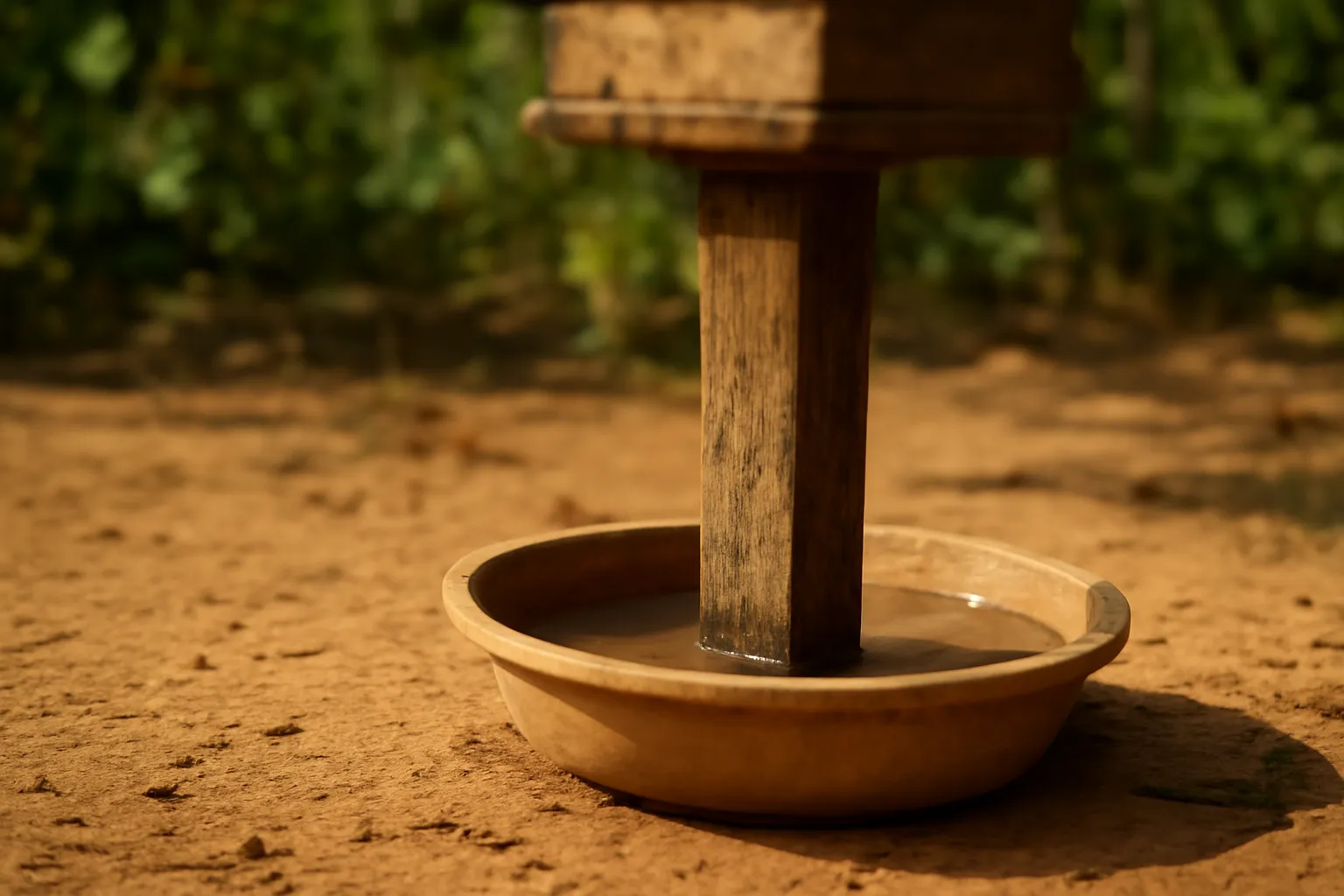
Dry ground sends ants looking for water and sugar, and a stingless bee nest is an ideal target. Stand each leg of the hive stand in a cup of water, or apply a grease band. In dry weather the cups evaporate within days — check weekly. One empty cup is enough.
Never spray insecticide near the hive. Stingless bees are more sensitive than honey bees, and the spray kills the colony faster than the ants would.
Water
Provide a shallow water source with pebbles or floating material nearby so bees do not have to travel far. This reduces stress and keeps foragers closer to home.
Feeding: last resort only
If flowering fails completely and a colony is clearly starving, light sugar water placed outside the box can carry it through. Stop as soon as flowering returns, and never feed a colony whose honey you intend to sell.
What not to do
Do not open boxes for inspection during the hottest months. Every opening raises internal temperature at exactly the wrong time. Read the entrance instead.
Frequently asked
My colony has shrunk over the dry season. Is it sick?
Usually not. Contracting with forage is normal. Worry only if numbers fall sharply alongside ants in the box or an unusual smell.
How much shade is enough?
Shade from about ten in the morning to three in the afternoon. Early and late sun is fine and even helpful.
Can I move a colony somewhere cooler?
Only carefully — stingless bees navigate by landmarks and moving a box a few metres loses foragers. Move under a metre at a time, or over three kilometres.
Ants, geckos and spiders: the three that take colonies
In the tropics, predators cause far more colony loss than disease. How to spot each early and what actually works.
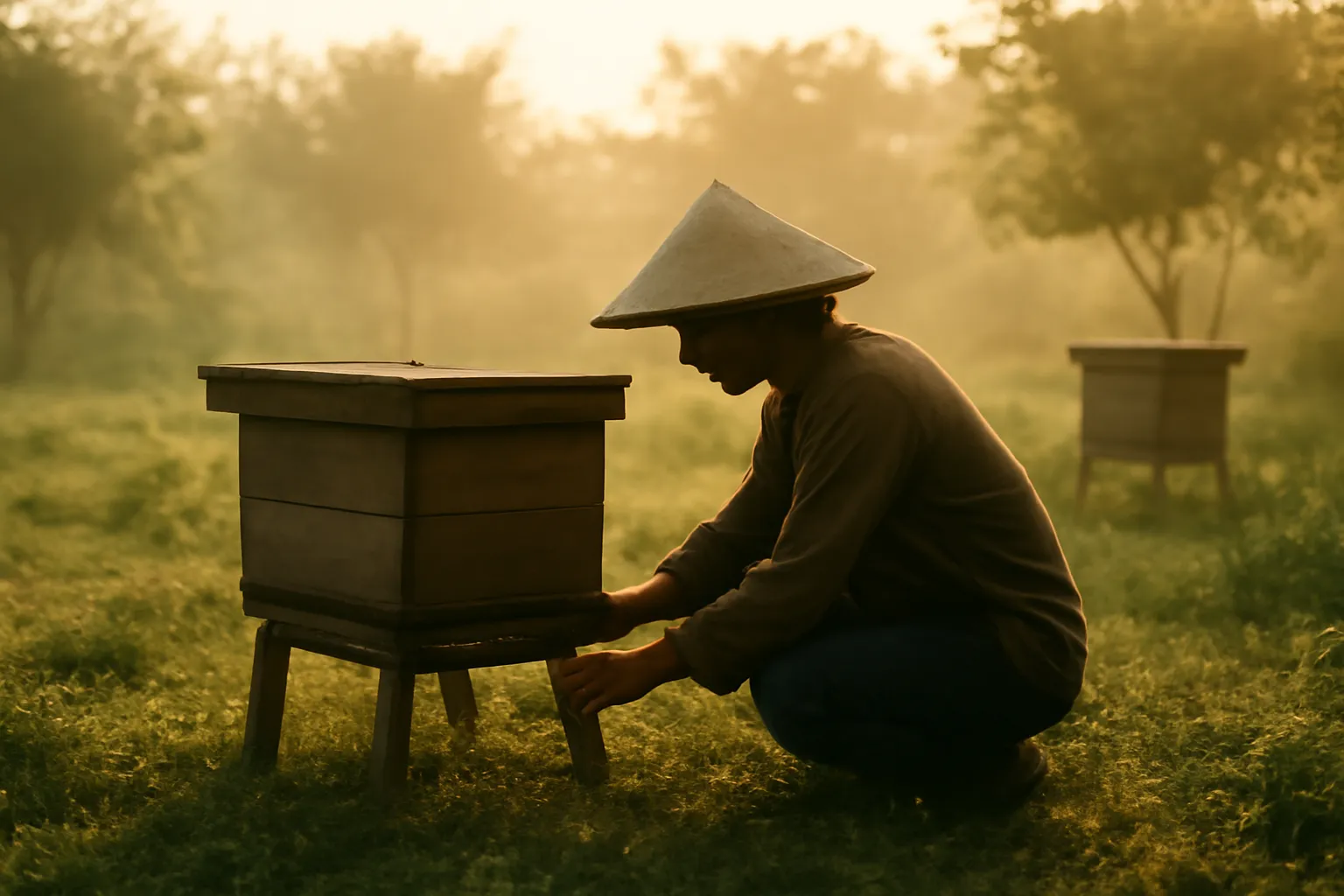
A year at a tropical stingless bee apiary, month by month
Which months need work, which months need nothing, and when the main harvest falls.
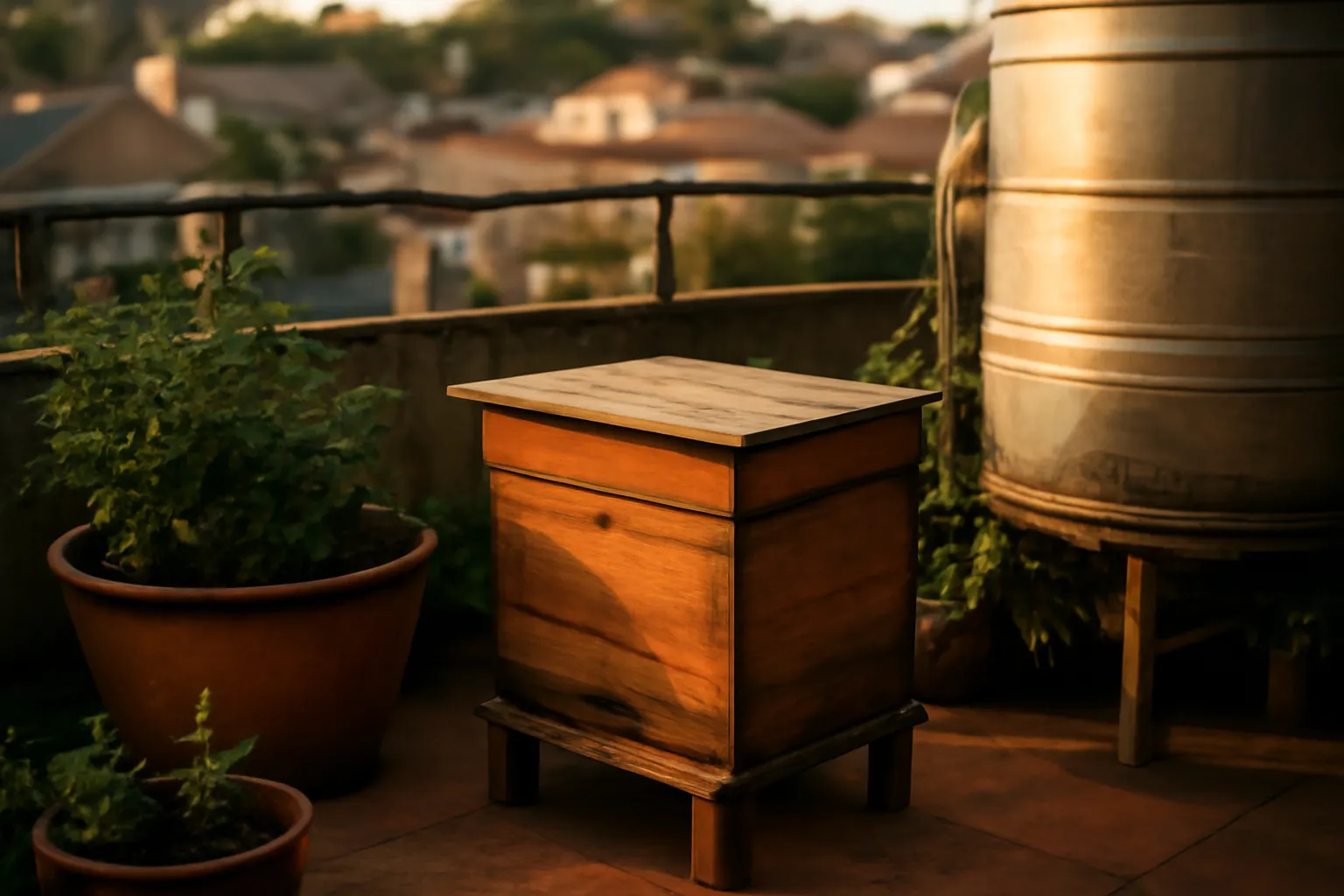
Keeping stingless bees on a rooftop or balcony in town
No garden is not a barrier, but three problems have to be solved: heat, wind and forage.
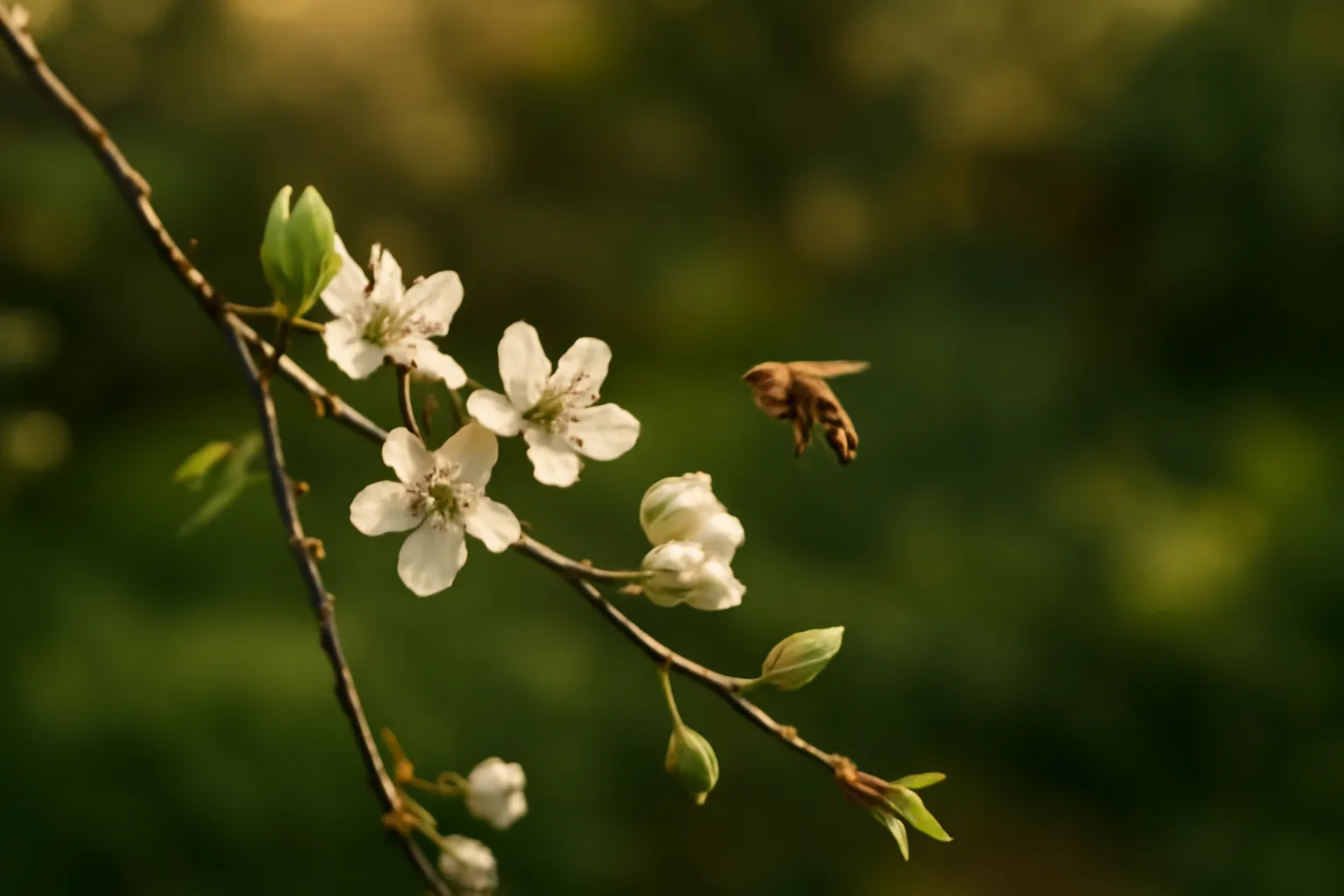
What to plant so the colony has forage all year
Stingless bees forage within a few hundred metres, so your garden is nearly their whole diet. How to sequence flowering.
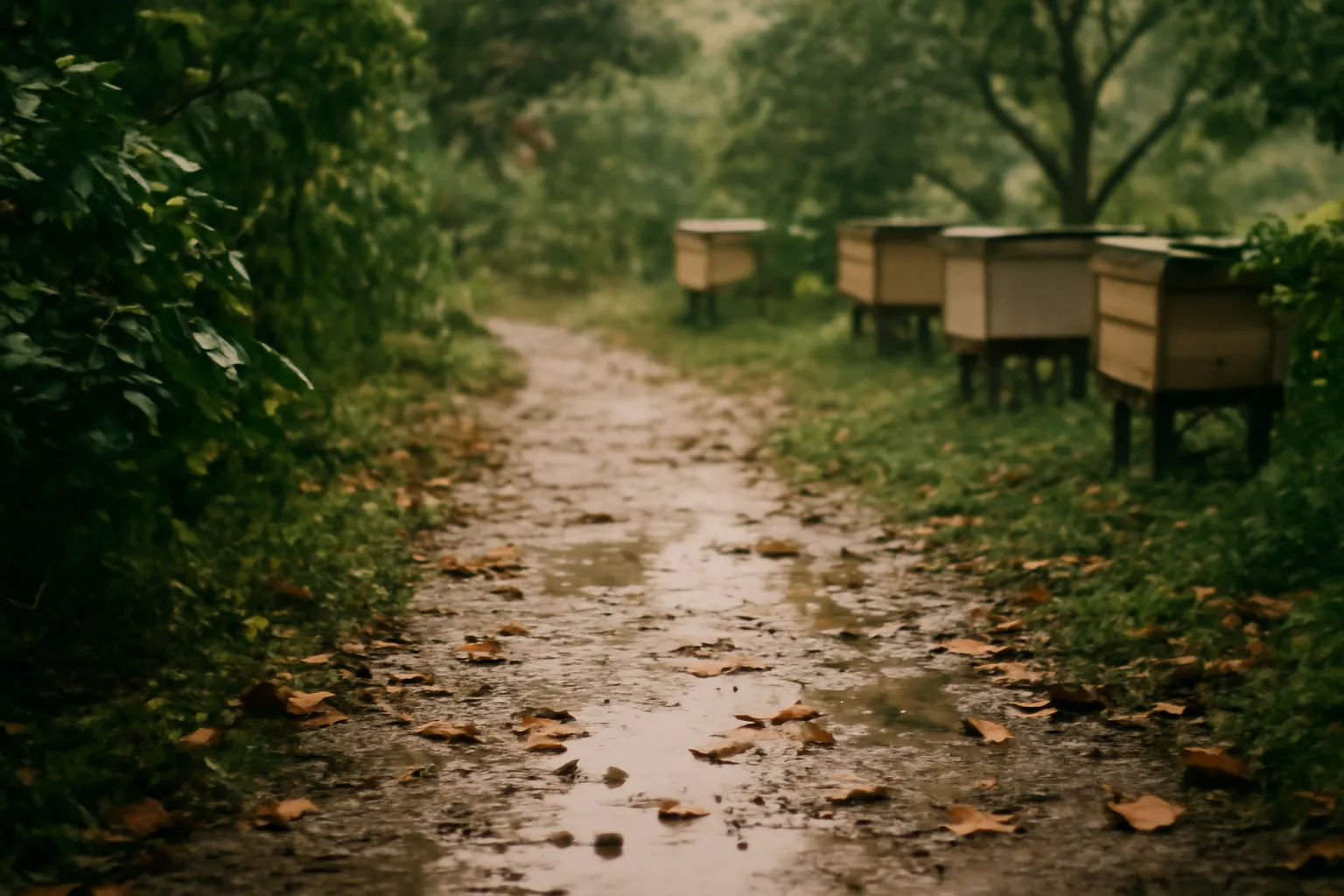
The rainy season: growth, splits and standing water
The easy half of the year, if drainage and rain deflection are handled. What to do and what to leave alone.
 ›
×
›
×
A single-origin stingless bee honey from our own apiary in Trang Bang, Tay Ninh. Harvested and bottled by batch, traceable to the colony.
Vietnamese stingless bee honey, built for export
© 2026 Aron Bee. All rights reserved. · Copyright · OD-1C4F-F69A