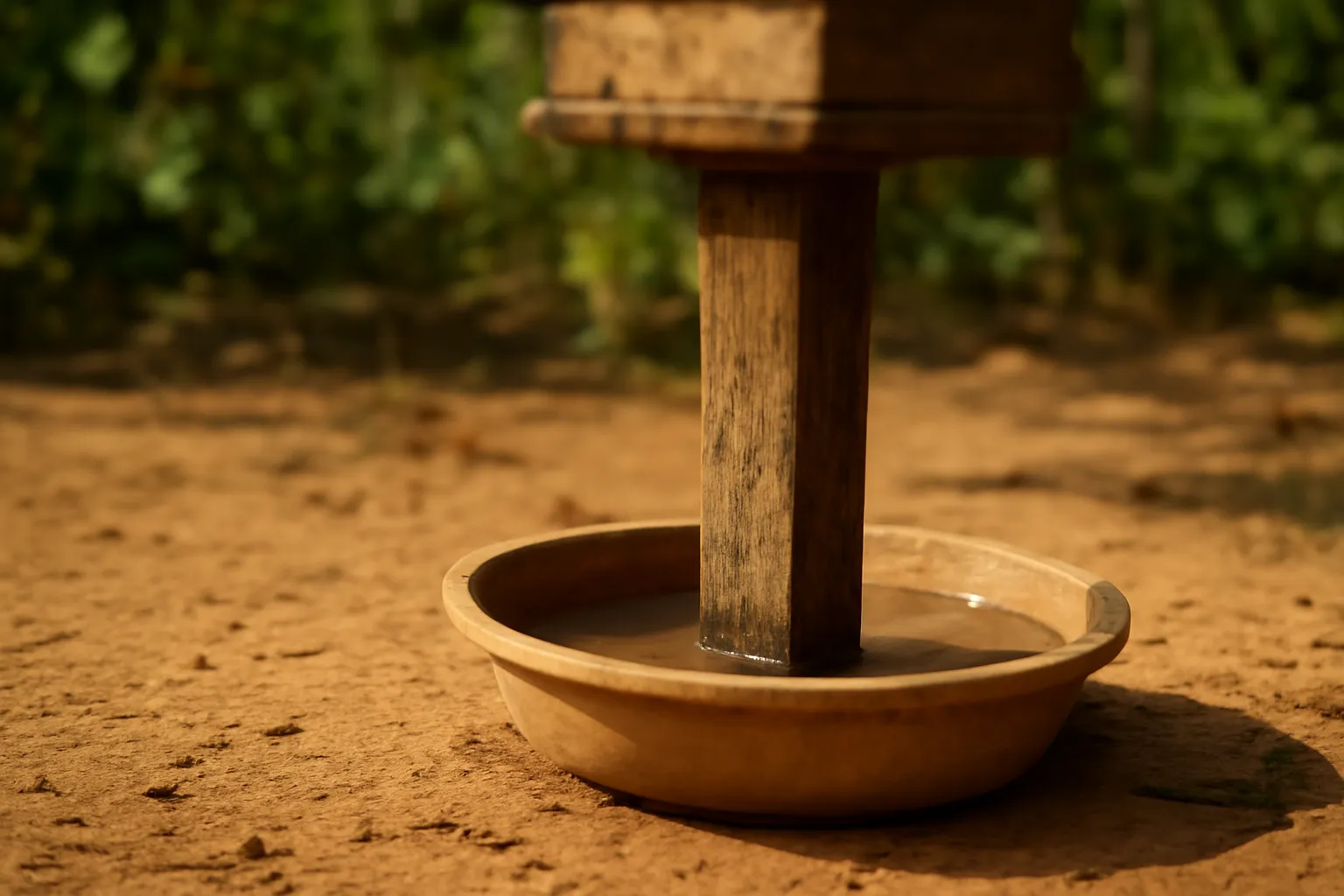
Ants, geckos and spiders: the three that take colonies
Beginners worry about disease. In practice, colonies in the tropics are lost to being eaten and being invaded far more often than to illness. These three account for most of the damage.
Ants — the most dangerous
Once ants are inside a box it can be over in a night. They take honey, eat larvae, and a stingless bee colony has almost no defence. Early signs: an ant trail up a stand leg, small dead bees scattered around the box, disordered entrance traffic.
The fix is mechanical. Stand each leg in a cup of water — the cheapest and most effective method there is. The cups evaporate quickly in dry weather, so top them up weekly. A grease band around each leg works too. Never spray insecticide near the hive.
Geckos and lizards
They sit beside the entrance and pick off bees as they come and go, a few at a time over months. The colony declines with no obvious cause. Signs: lizards around the box in the evening, droppings near the entrance.
The fix: clear away dry leaves and anything they can hide behind, and keep the box at least a hand's width from any wall.
Spiders
Webs across the entrance catch bees as they leave. Individually minor, cumulatively real. Clear webs weekly when you pass the stand.
The general rule: keep the ground clear
Most predators need cover. A clean ring of bare ground around the stand — no dry leaves, no tall grass, no piled-up objects — removes most of the risk at no cost.
Frequently asked
Should I use ant powder around the stand?
No. Stingless bees are highly sensitive to chemicals, and ant treatments kill the colony faster than the ants. Water cups and grease bands are the only methods to use.
Ants are already inside — can the colony be saved?
If caught early and the colony still has numbers, yes: move it to a clean box on a clean stand, redo the ant defence, then leave it alone for several weeks. If most of the brood is gone, usually not.
Do stingless bees get diseases?
They do, but far less often than honey bees. Most cases described as disease turn out on inspection to be the consequence of predators, damp or lack of forage.
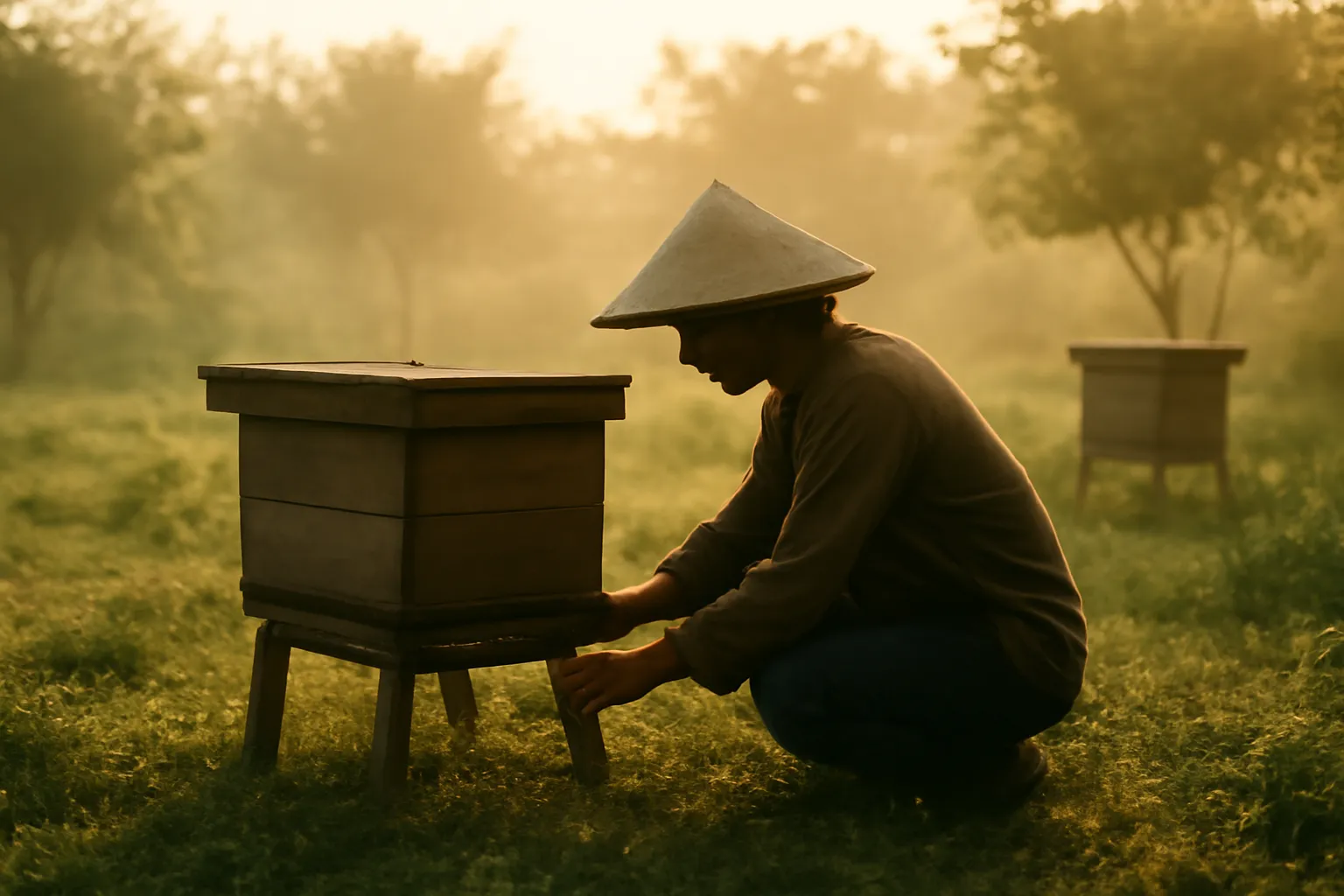
A year at a tropical stingless bee apiary, month by month
Which months need work, which months need nothing, and when the main harvest falls.
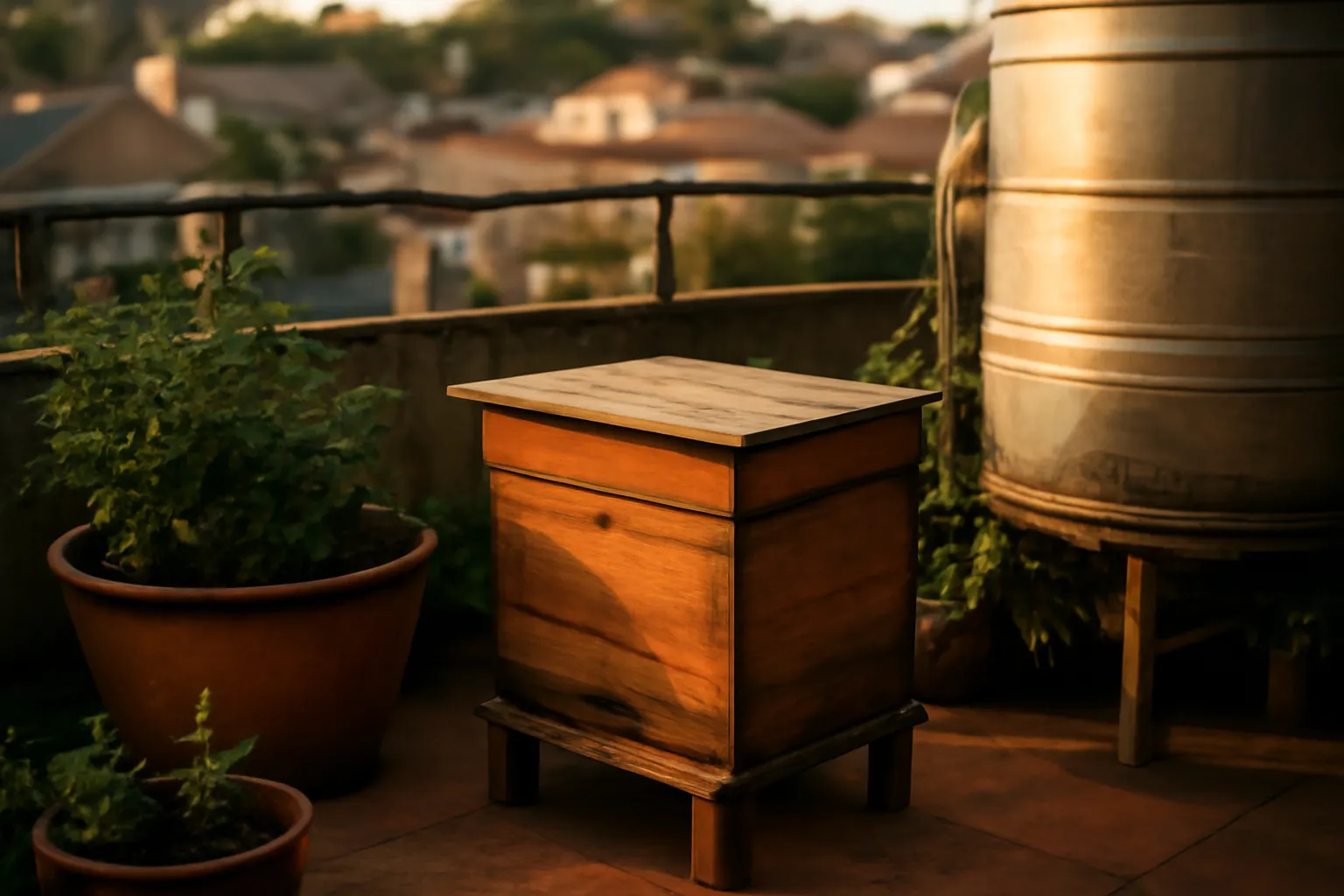
Keeping stingless bees on a rooftop or balcony in town
No garden is not a barrier, but three problems have to be solved: heat, wind and forage.
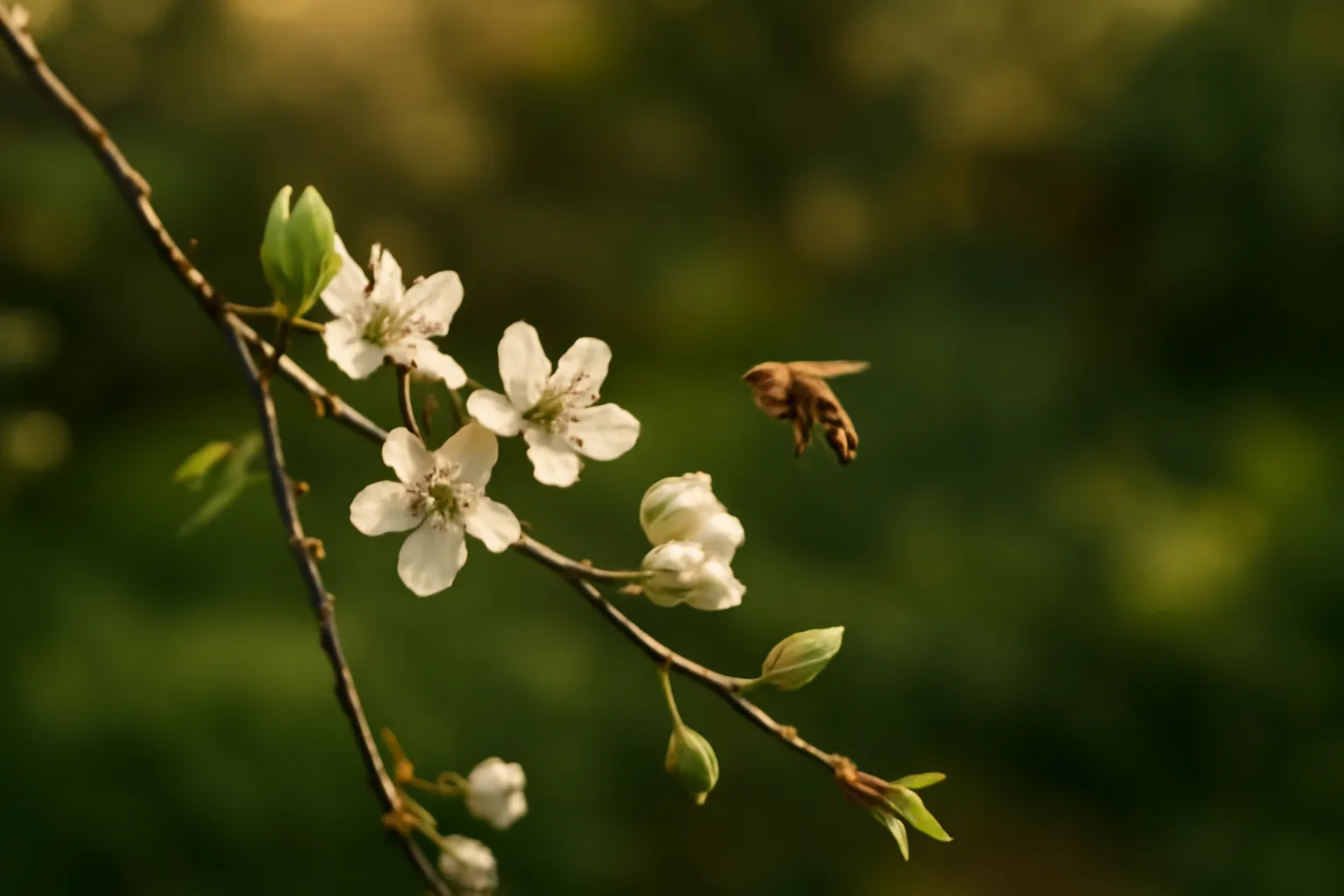
What to plant so the colony has forage all year
Stingless bees forage within a few hundred metres, so your garden is nearly their whole diet. How to sequence flowering.
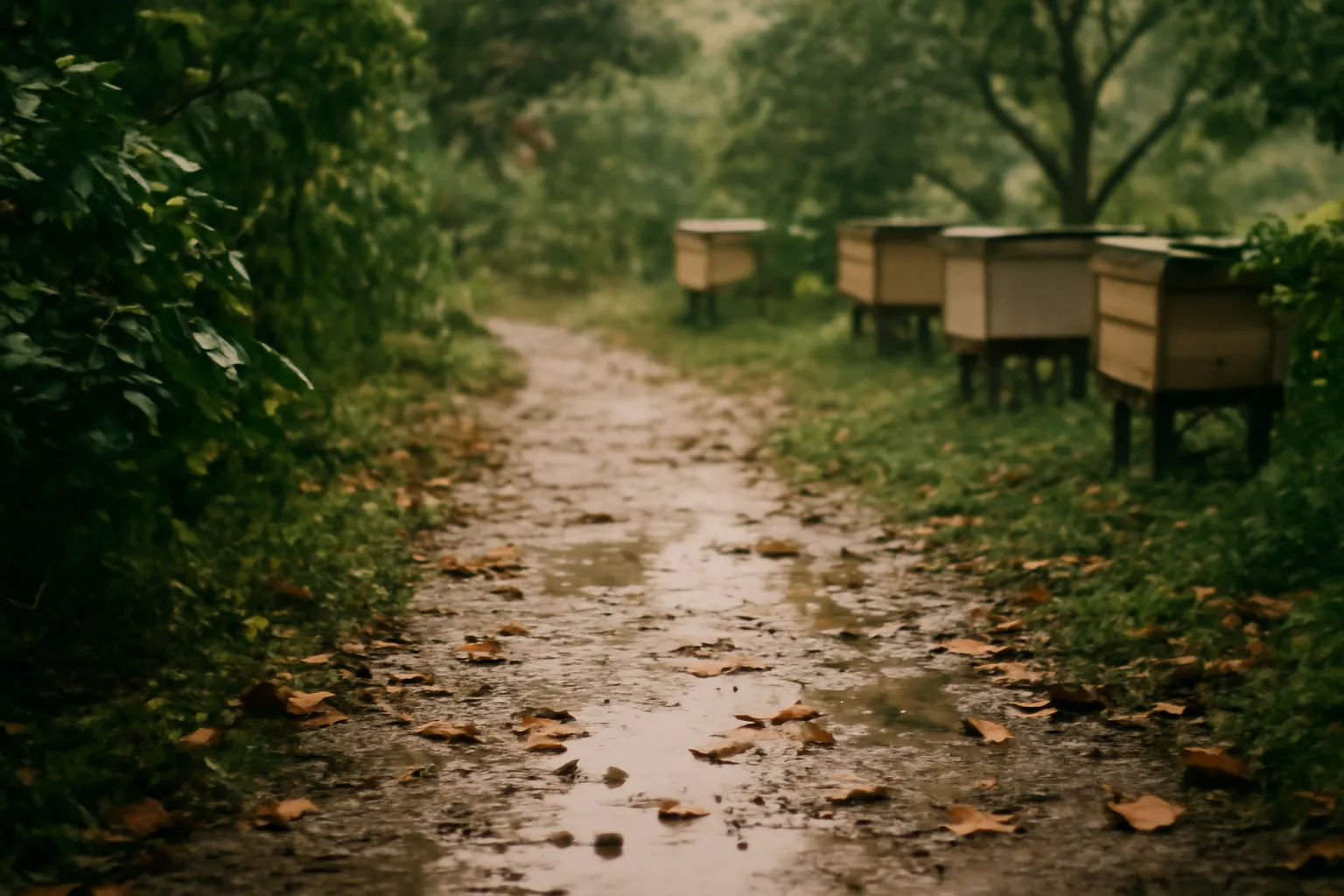
The rainy season: growth, splits and standing water
The easy half of the year, if drainage and rain deflection are handled. What to do and what to leave alone.
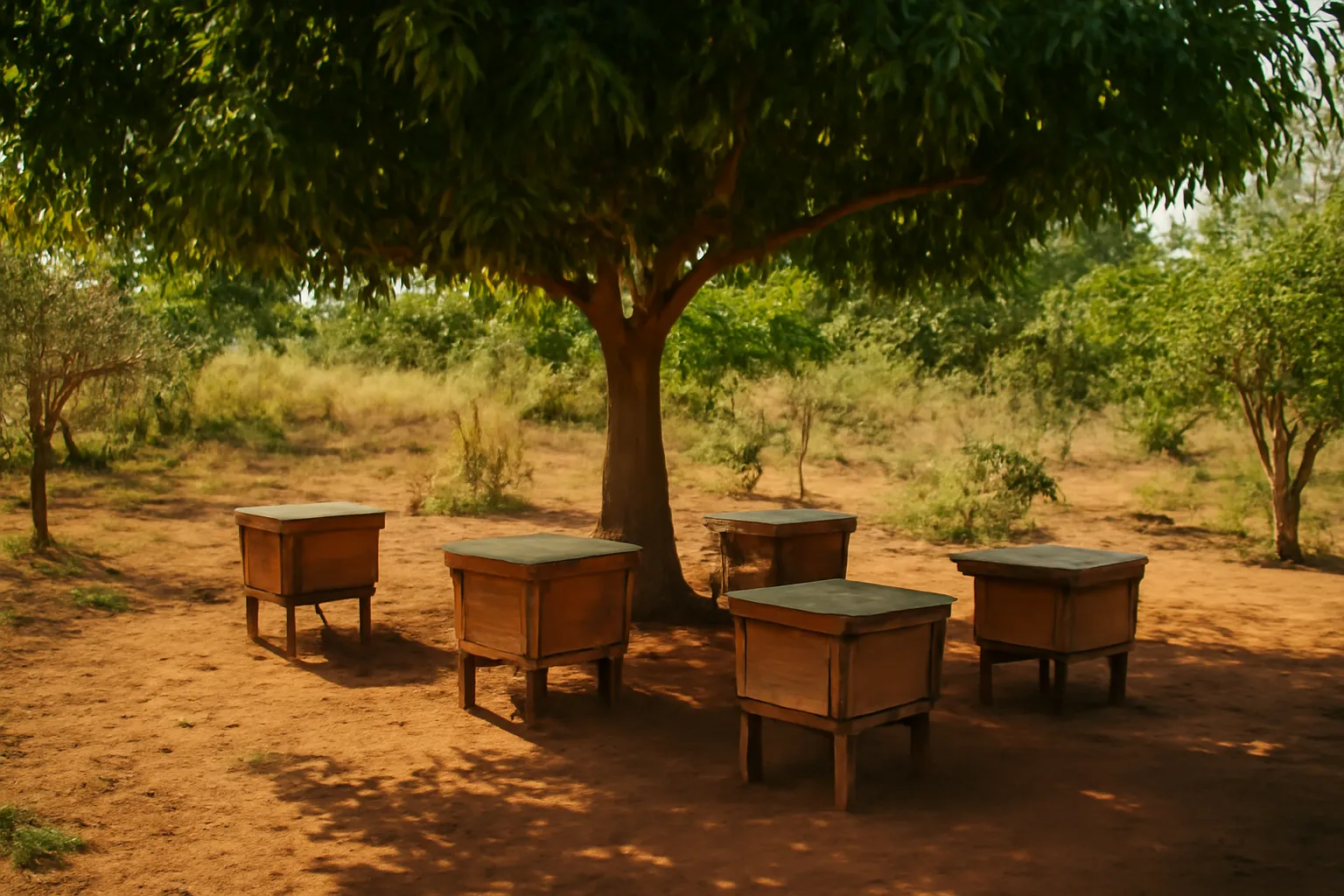
Keeping stingless bees through a tropical dry season
Heat and ants cause most colony losses in the dry months. What changes, and what to do about it.
 ›
×
›
×
A single-origin stingless bee honey from our own apiary in Trang Bang, Tay Ninh. Harvested and bottled by batch, traceable to the colony.
Vietnamese stingless bee honey, built for export
© 2026 Aron Bee. All rights reserved. · Copyright · OD-1C4F-F69A