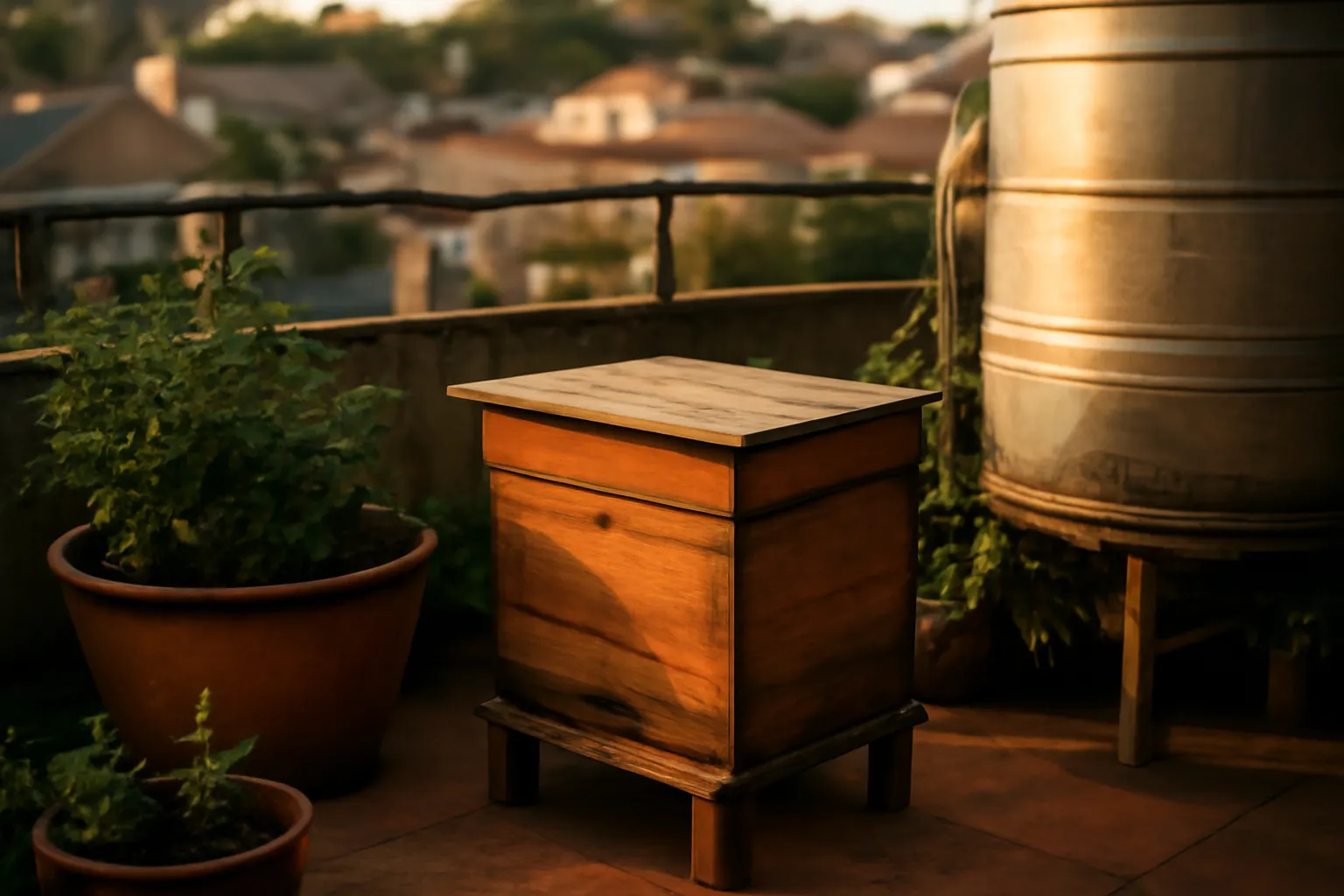
Keeping stingless bees on a rooftop or balcony in town
Stingless bees do not sting, live in a small box and are practically odourless — three reasons they are one of the very few bees that can be kept at a town house. But a rooftop poses three problems a garden does not.
Problem one: surface heat
A concrete roof at midday is far hotter than garden soil, and that heat radiates into the box all afternoon. Raise the box at least twenty centimetres off the surface, put it under a roof or a plant frame, and avoid any corner that catches sun between ten and three.
Problem two: wind
Wind at height is stronger and more constant, making it harder for bees to return and over-cooling the box at night. Tuck the hive against a wall or behind a row of tall pots, and face the entrance away from the prevailing wind.
Problem three: forage
This is the hard one. Stingless bees fly only a few hundred metres, so if everything within that radius is concrete the colony will decline no matter how well it is tended. Partial solution: a row of continuously flowering pots right there — basil allowed to bolt, periwinkle, portulaca, ixora. If there is a park, a line of street trees or a neighbour's garden within range, prospects are much better.
Ants matter more up here, not less
People assume there are no ants on a roof. In practice they climb water pipes and walls. Stand the legs in water cups or use a grease band, and check weekly through the dry season.
Start with one colony
Limited space and limited forage mean several colonies simply compete. One stable colony through a year is a good result; if you want more, split from that one.
Frequently asked
Will neighbours be bothered?
Stingless bees are tiny, do not sting and make no noise. Most neighbours never notice. Still worth telling them beforehand to avoid misunderstandings.
Can I keep them on an apartment building roof?
Technically yes, but ask building management first. Many buildings prohibit keeping animals in shared areas.
How long before I can harvest?
Longer than in a garden, often more than a year, and with a much smaller yield. Treat urban keeping as a hobby with a small household supply rather than a source of income.
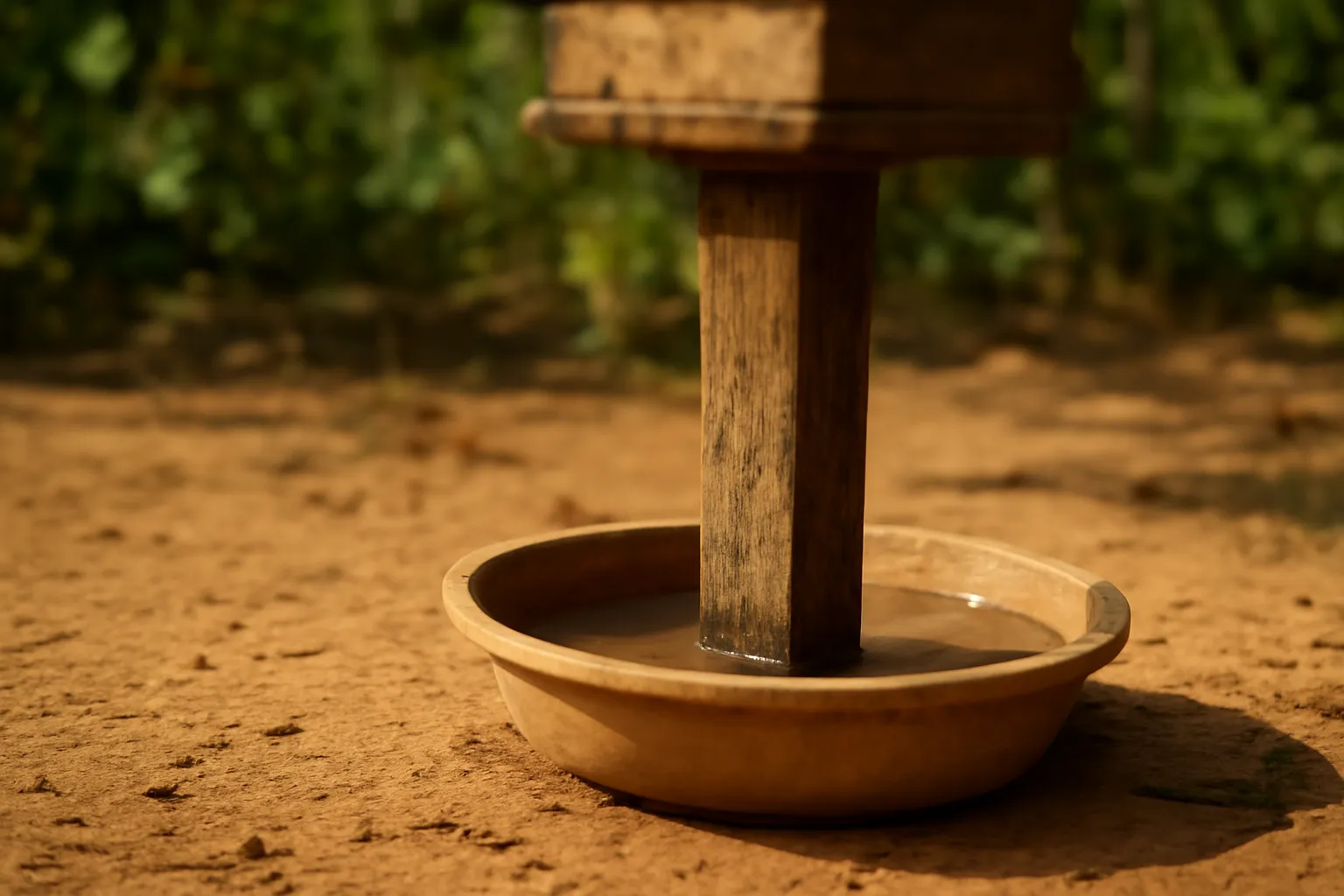
Ants, geckos and spiders: the three that take colonies
In the tropics, predators cause far more colony loss than disease. How to spot each early and what actually works.
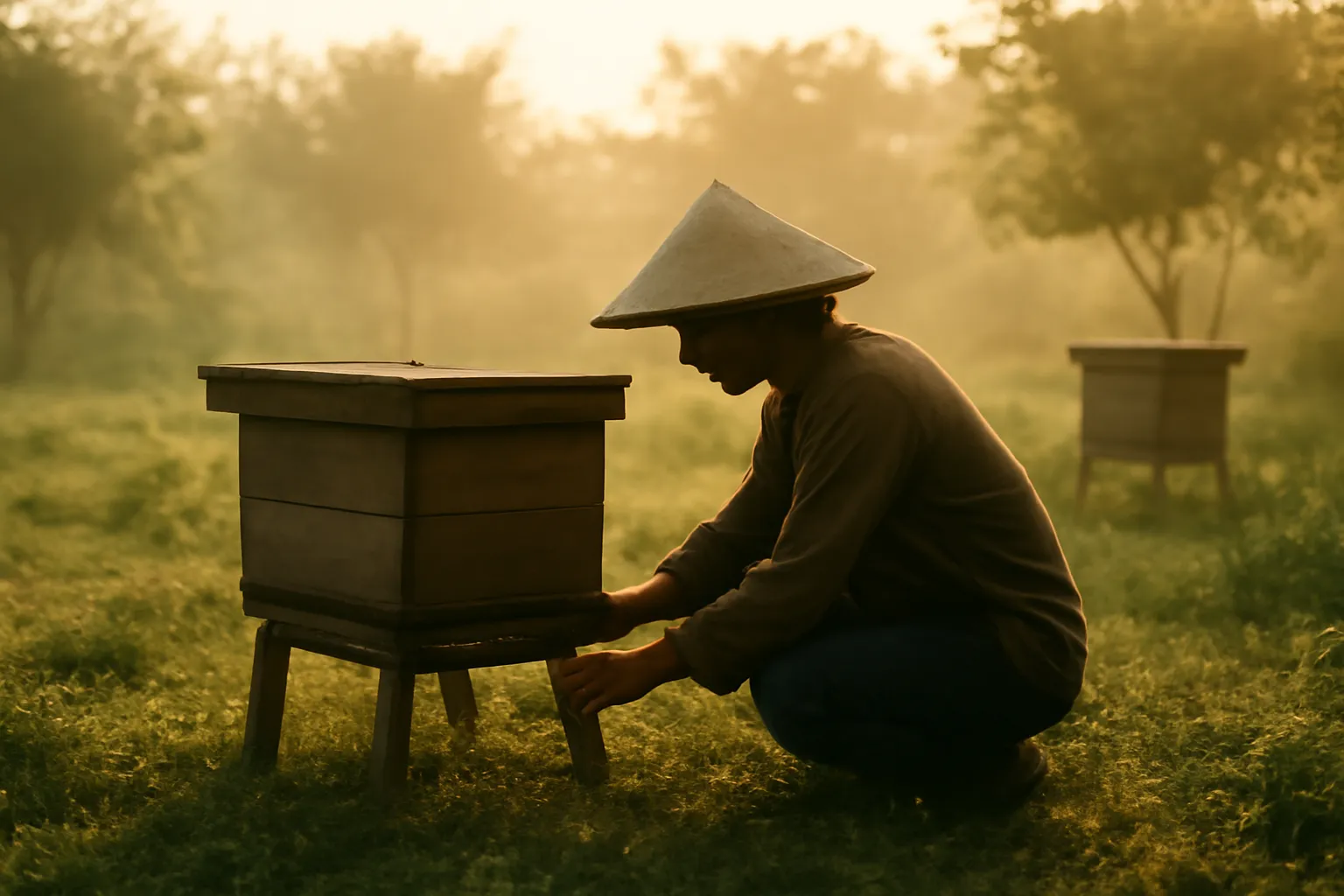
A year at a tropical stingless bee apiary, month by month
Which months need work, which months need nothing, and when the main harvest falls.
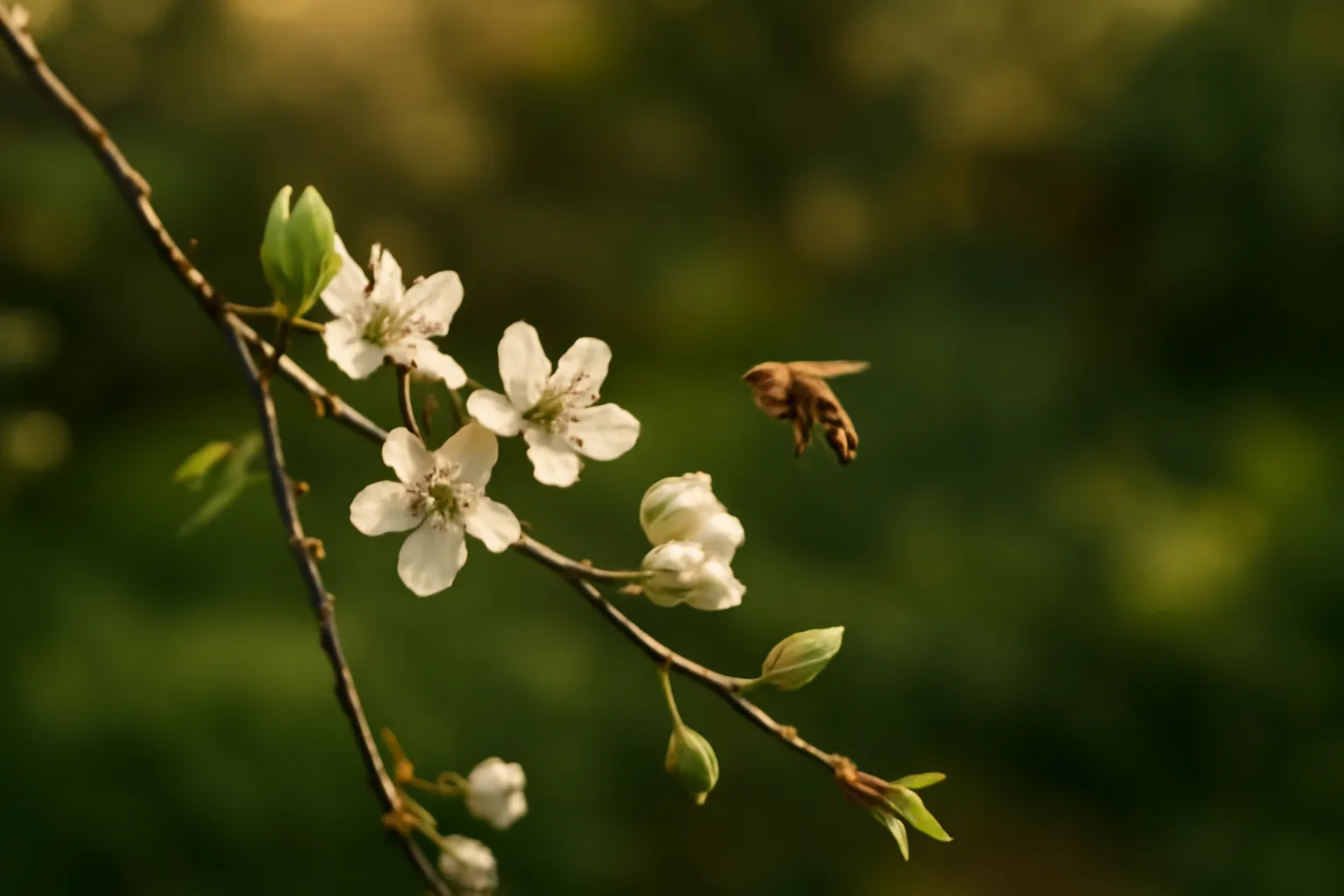
What to plant so the colony has forage all year
Stingless bees forage within a few hundred metres, so your garden is nearly their whole diet. How to sequence flowering.
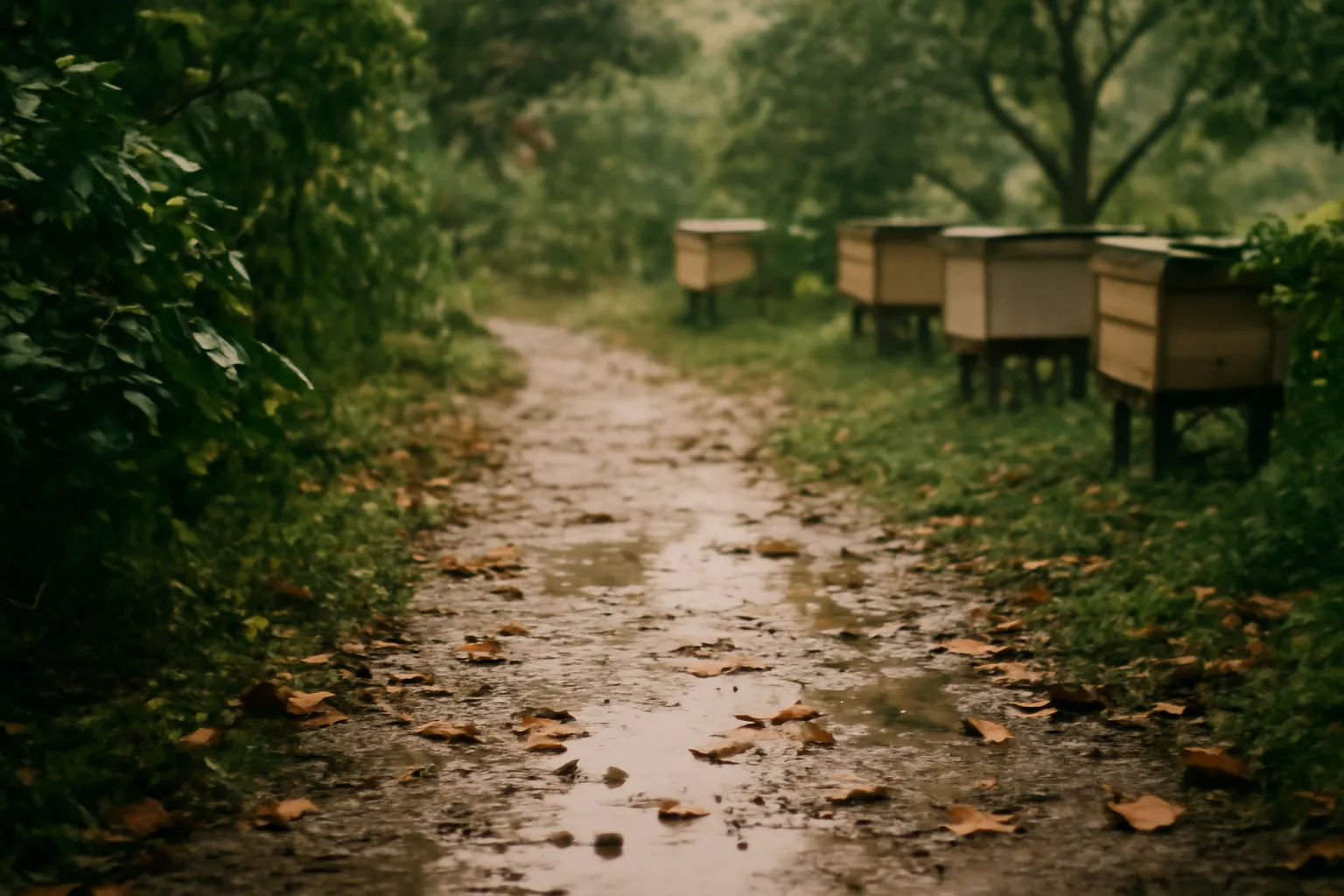
The rainy season: growth, splits and standing water
The easy half of the year, if drainage and rain deflection are handled. What to do and what to leave alone.
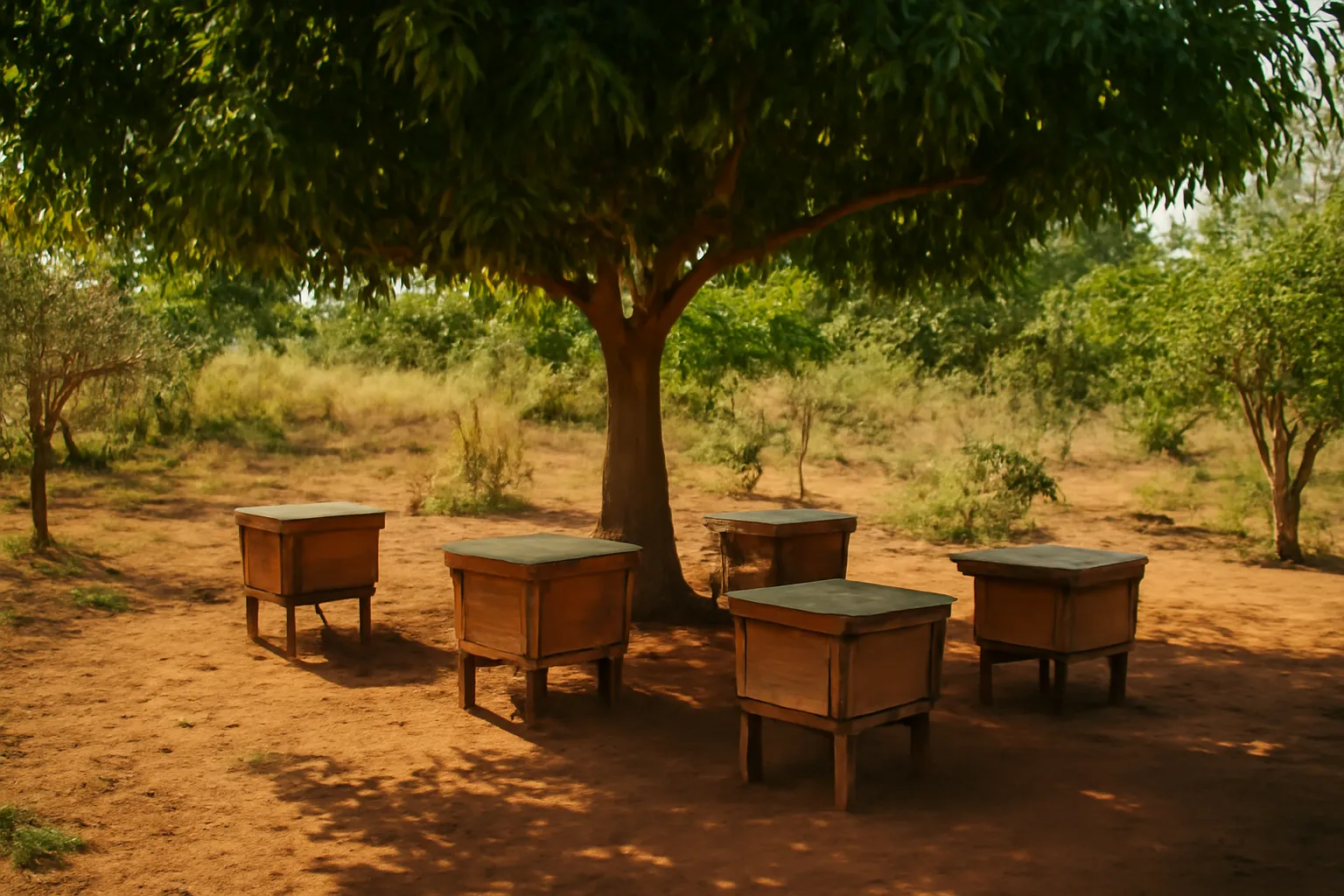
Keeping stingless bees through a tropical dry season
Heat and ants cause most colony losses in the dry months. What changes, and what to do about it.
 ›
×
›
×
A single-origin stingless bee honey from our own apiary in Trang Bang, Tay Ninh. Harvested and bottled by batch, traceable to the colony.
Vietnamese stingless bee honey, built for export
© 2026 Aron Bee. All rights reserved. · Copyright · OD-1C4F-F69A