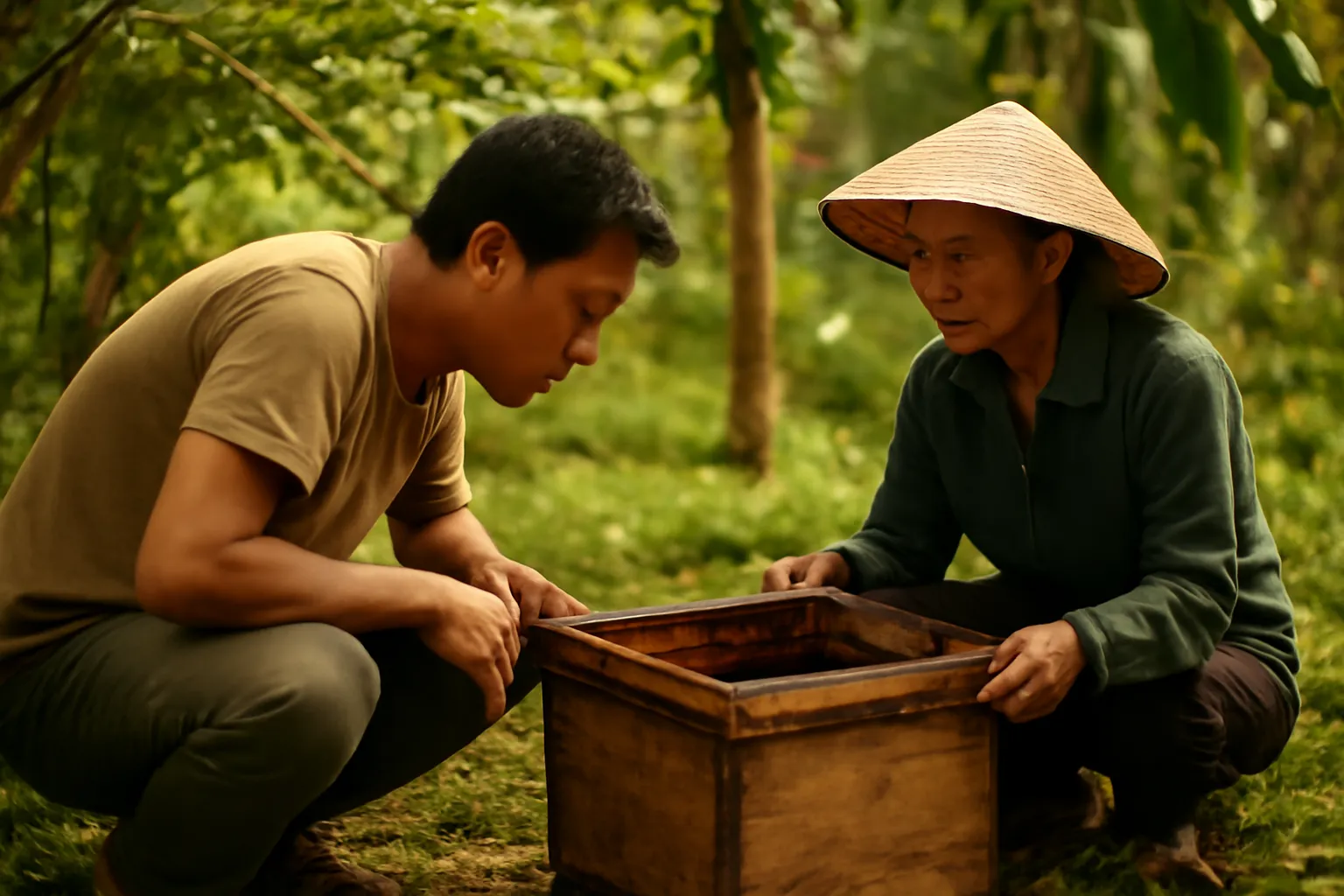
What to look at before you pay for a stingless bee colony
Most first-time buyers ask only one question: how much. Then the colony turns out to be weak and absconds three months later. The box is not the expensive part — losing a season is.
Look at the brood before you look at the price
Open the lid and find the brood mass in the middle of the box. A solid, continuous brood with cells at several stages, still expanding outward, means a healthy colony. A patchy brood, or one shrunk into a small lump inside a wide box, means the colony is going down. At that point no price is a good price.
Count the traffic at the entrance for ten minutes
This test needs no lid and cannot be staged. Sit beside the box for ten minutes and watch bees coming and going through the entrance tube. A strong colony gives a steady stream with foragers returning with pollen on their legs. A weak one is sparse, with long gaps.
Smell inside the box
A healthy nest smells faintly of wax and plant resin. A sharp sour smell or a musty one means honey has fermented inside or the nest is failing. Walk away regardless of the explanation offered.
Ask when it was split
A colony split recently needs months to settle. Paying the price of an established colony for a fresh split is a bad trade. Ask: when was this split, from which mother colony, and has it been through a rainy season yet.
Look at the box itself
Thick, dry, odourless wood. Thin boxes swing in temperature; boxes treated with anti-termite chemicals are dangerous for the bees. A cracked or soft box will fail in the first heavy rain.
Ask whether the seller actually keeps bees
A real keeper can tell you which corner of the garden this colony sat in, which season gives the most honey, how many times they split last year. A reseller can only quote a price. Buying from someone who keeps bees also means you can ask them later when something goes wrong — worth more than a small price difference.
Frequently asked
How large a colony should a beginner buy?
A medium, well-established colony is the sensible starting point. The smallest and cheapest ones need more skill; very large ones cost more without helping a beginner.
Can I buy a colony from photos online?
Not advisable. Photos do not show the brood and you cannot count entrance traffic. If you are far away, at least ask for video taken while the lid is open, and a live video call.
Should I open the box daily after buying?
No. Leave it alone for several weeks. Repeated opening is the leading cause of absconding in the first month.
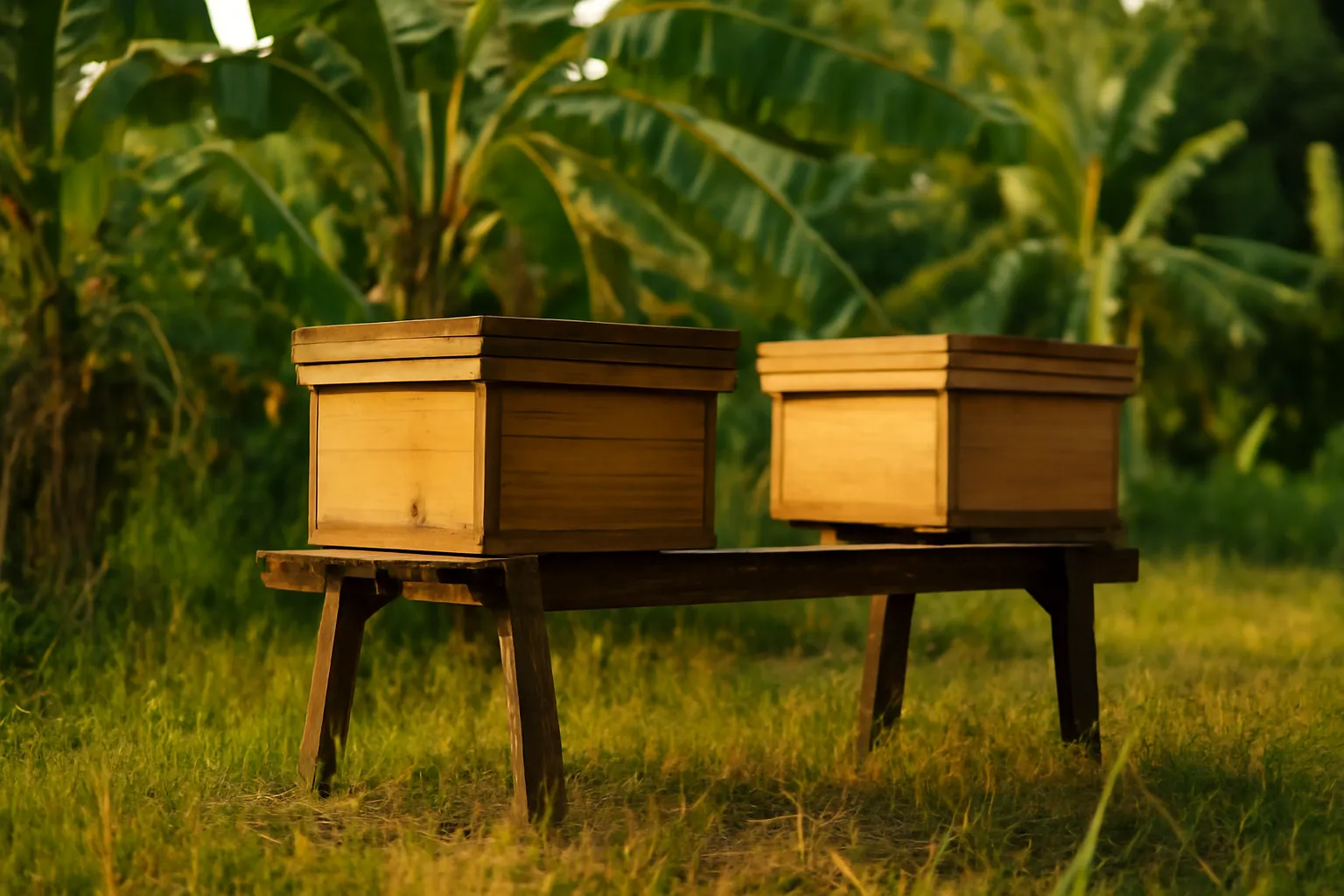
How many colonies should a beginner start with
One is too few to learn from, and ten is more than a garden or a beginner can carry. Where the sensible number sits.

Buying bees online: how to check a seller before you transfer money
You cannot inspect the brood through a screen. Five things that substitute for it, and one that never does.
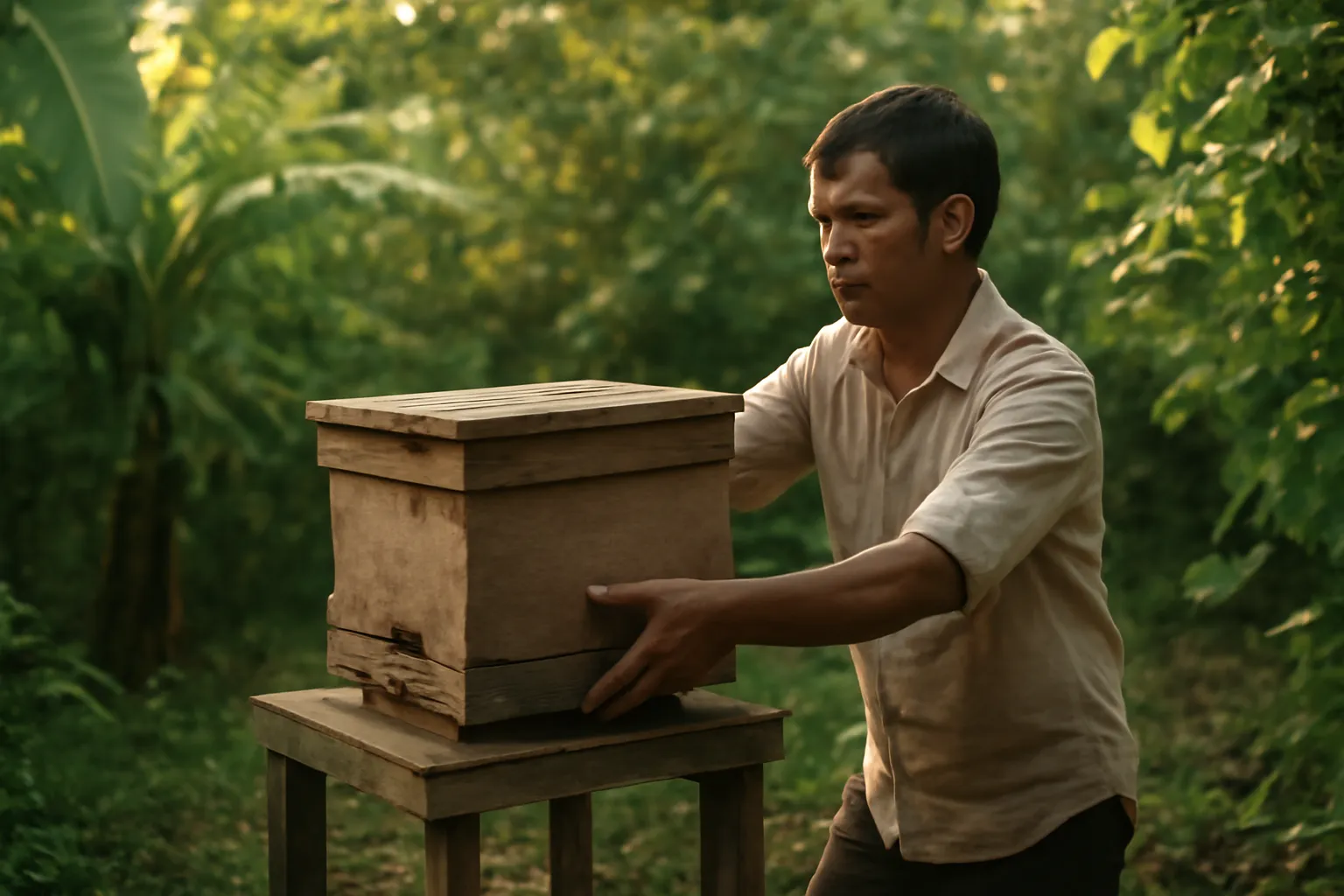
Bringing a colony home: the first seven days
The first week decides whether the colony stays or leaves. What to do each day, and what never to do.

What a stingless bee colony costs, and what drives the difference
Prices vary widely for what looks like the same thing. Four factors that explain most of the gap.
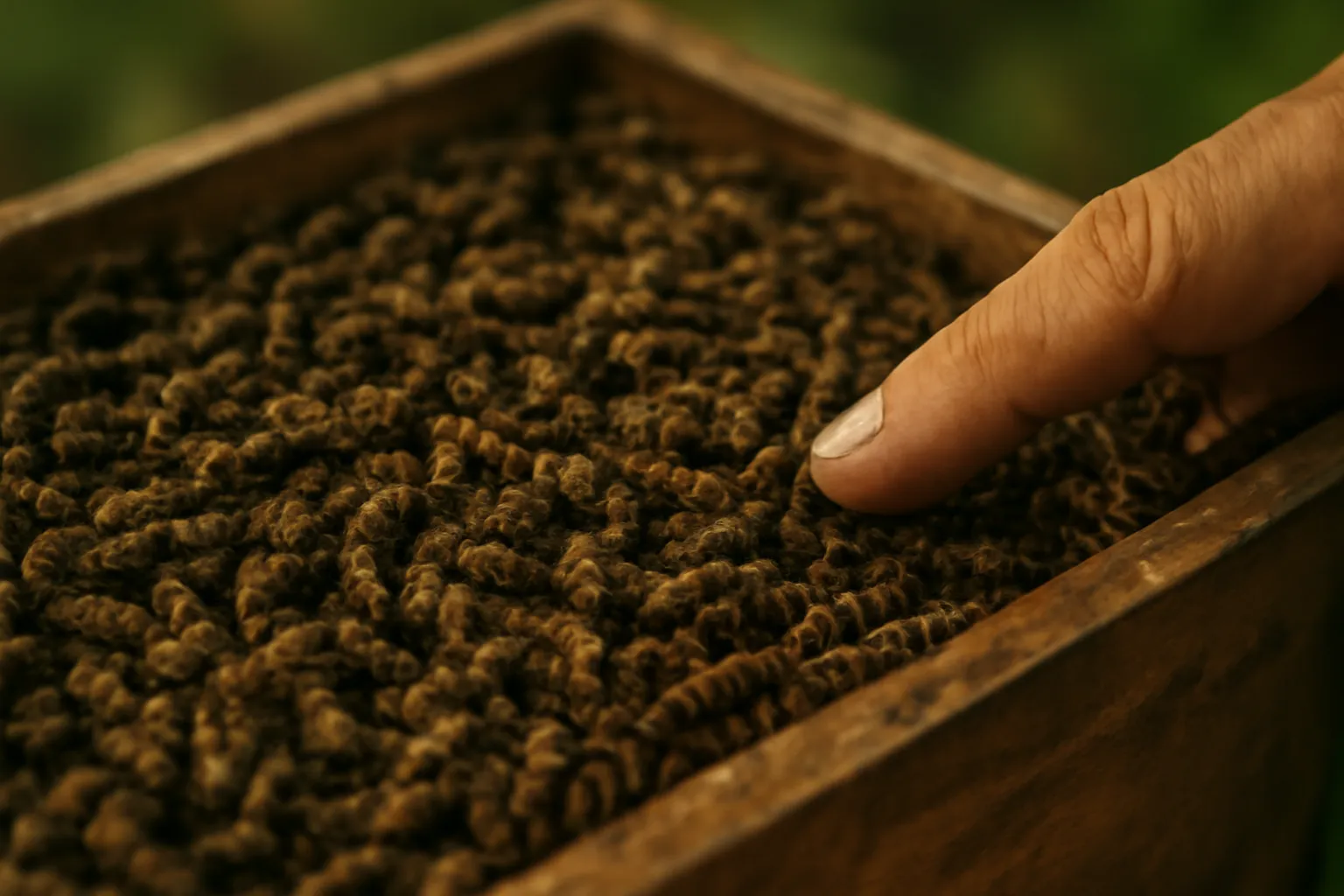
Strong colony or weak colony: reading it with the naked eye
You do not need equipment to judge a colony. Four visual signals and what each of them means.
 ›
×
›
×
A single-origin stingless bee honey from our own apiary in Trang Bang, Tay Ninh. Harvested and bottled by batch, traceable to the colony.
Vietnamese stingless bee honey, built for export
© 2026 Aron Bee. All rights reserved. · Copyright · OD-1C4F-F69A