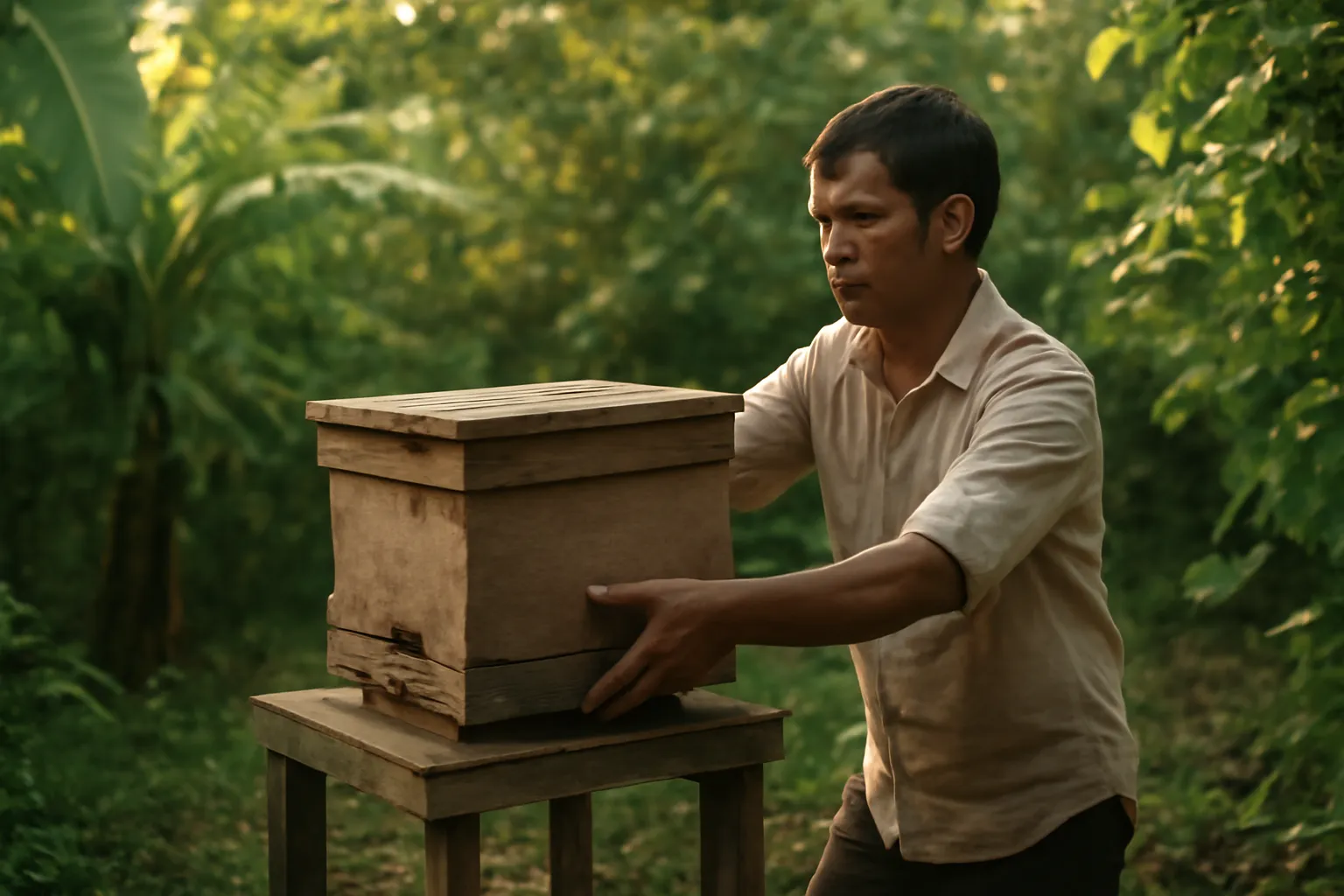
Bringing a colony home: the first seven days
Most first colonies are lost in the first month, and almost always because the keeper did too much rather than too little.
Day 1: place it and step back
Set the box on the stand you prepared, the right way up, entrance unobstructed. Remove the travel plug if there is one. Then walk away. Do not open the lid, however much you want to.
Days 2 to 7: watch only
Spend a few minutes each day watching the entrance from two metres away. Note whether bees are coming and going, and whether any return with pollen on their legs. Bees circling in front of the entrance for the first few days is normal — they are recording landmarks for the way home.
Never in the first week
- Open the lid.
- Move the box, even by a few centimetres.
- Stand directly in front of the entrance.
- Spray anything near the hive.
The one job to do daily
Check the water cups under the four legs of the stand. In dry weather they evaporate fast, and one empty cup is enough to let ants in. It takes five seconds and saves more colonies than any technique.
Signs it is settling well after a week
Steady entrance traffic, bees returning with pollen, no dead bees around the stand, no ants. All four together mean the colony is establishing.
Signs that need action now
Bees clustering outside the entrance around midday means the box is overheating — add shade immediately. An ant trail on a stand leg means redo the ant defence the same day. Neither problem requires opening the box.
After the first week
Still do not open it. The first inspection should come after at least a month, and only to see whether the nest is expanding. After that, every few months is enough.
Frequently asked
How do I know it is alive if I never open it?
The entrance tells you. Steady traffic with pollen coming in means the colony is raising brood.
Fewer bees than when I bought it — is that a loss?
Some foragers get lost in the first days while learning the new site. Normal, as long as traffic stays steady.
Should I feed it in the first week?
Only if it is the dry season and there is almost nothing flowering nearby. Then place light sugar water outside the box, never inside.
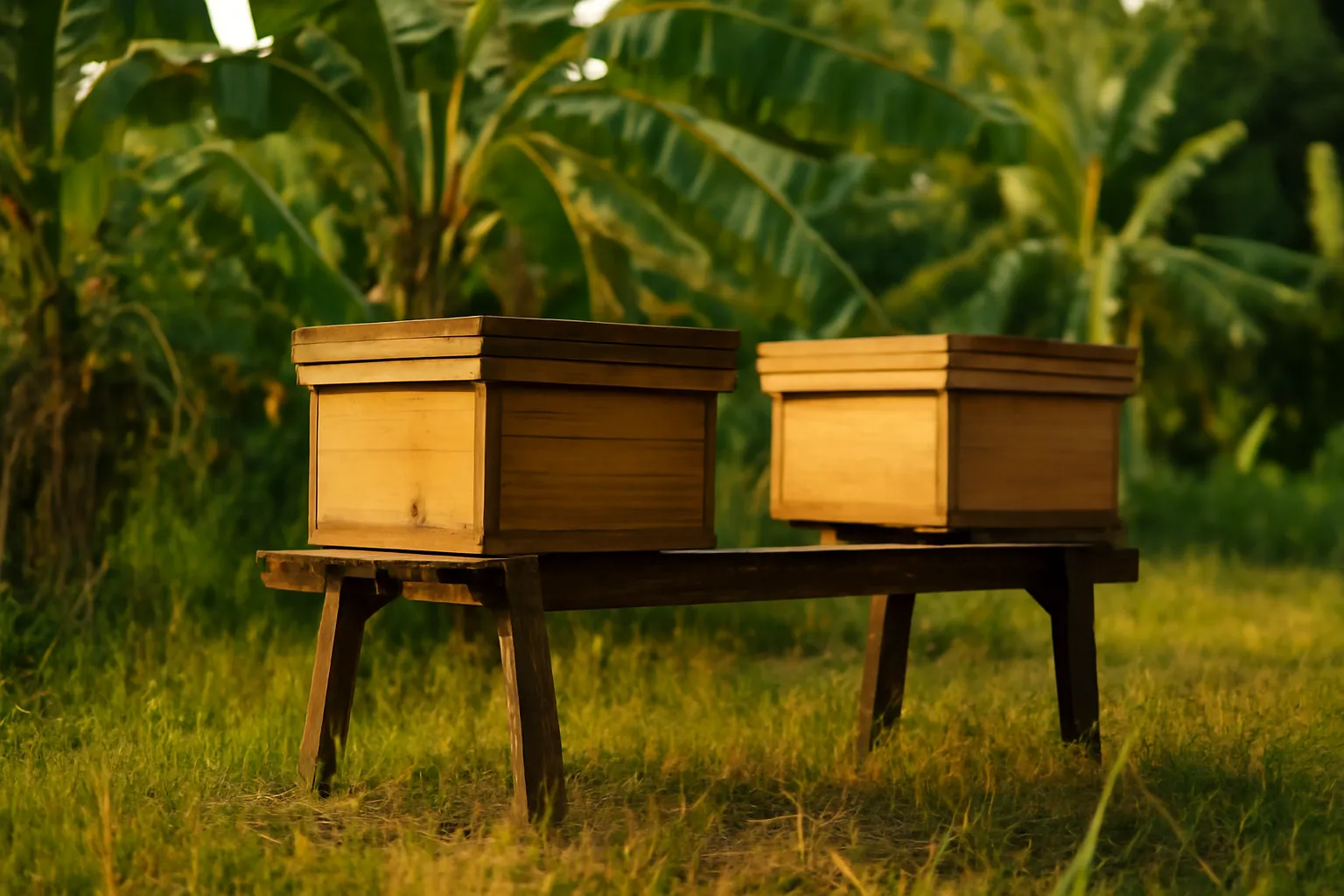
How many colonies should a beginner start with
One is too few to learn from, and ten is more than a garden or a beginner can carry. Where the sensible number sits.
Buying bees online: how to check a seller before you transfer money
You cannot inspect the brood through a screen. Five things that substitute for it, and one that never does.
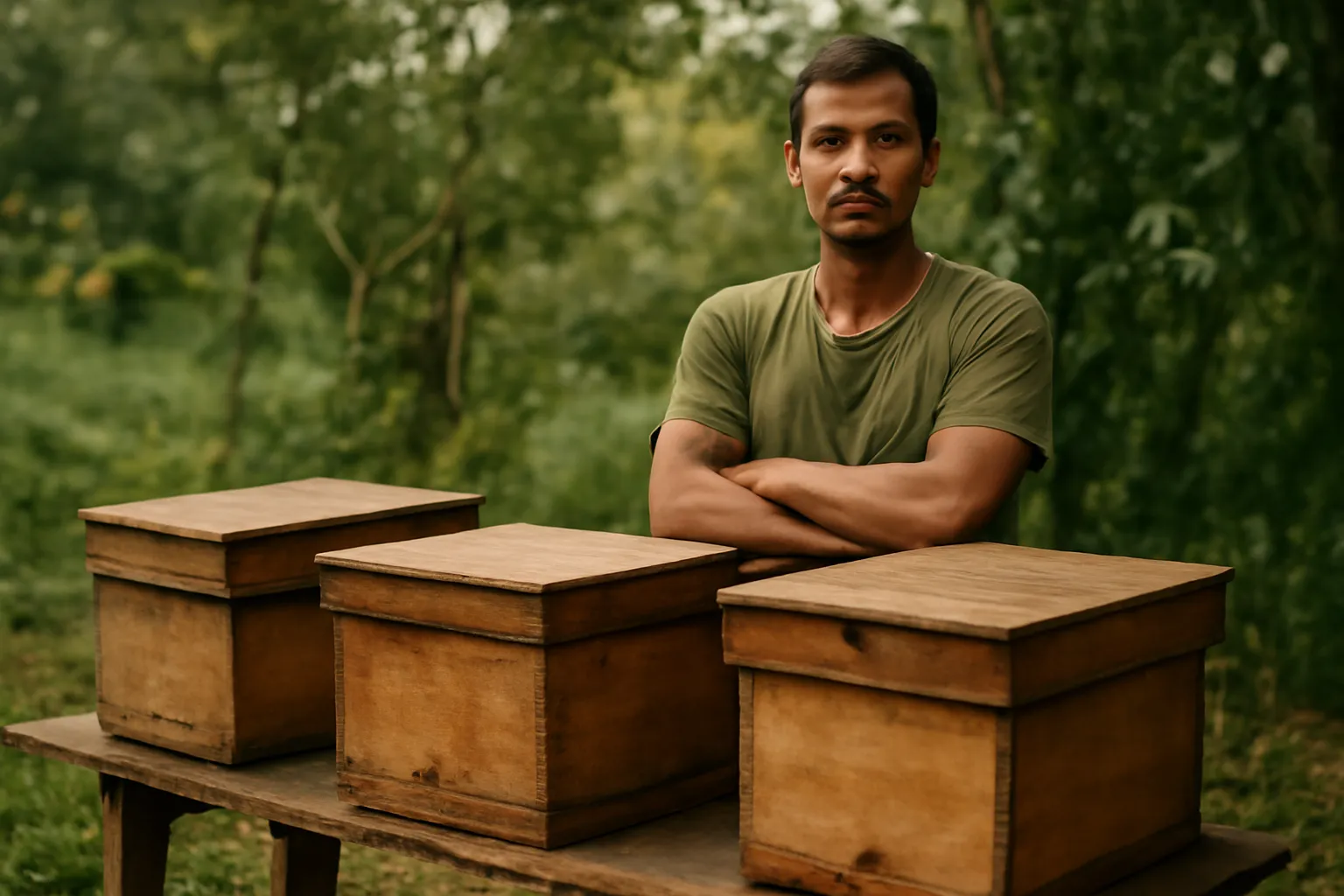
What a stingless bee colony costs, and what drives the difference
Prices vary widely for what looks like the same thing. Four factors that explain most of the gap.
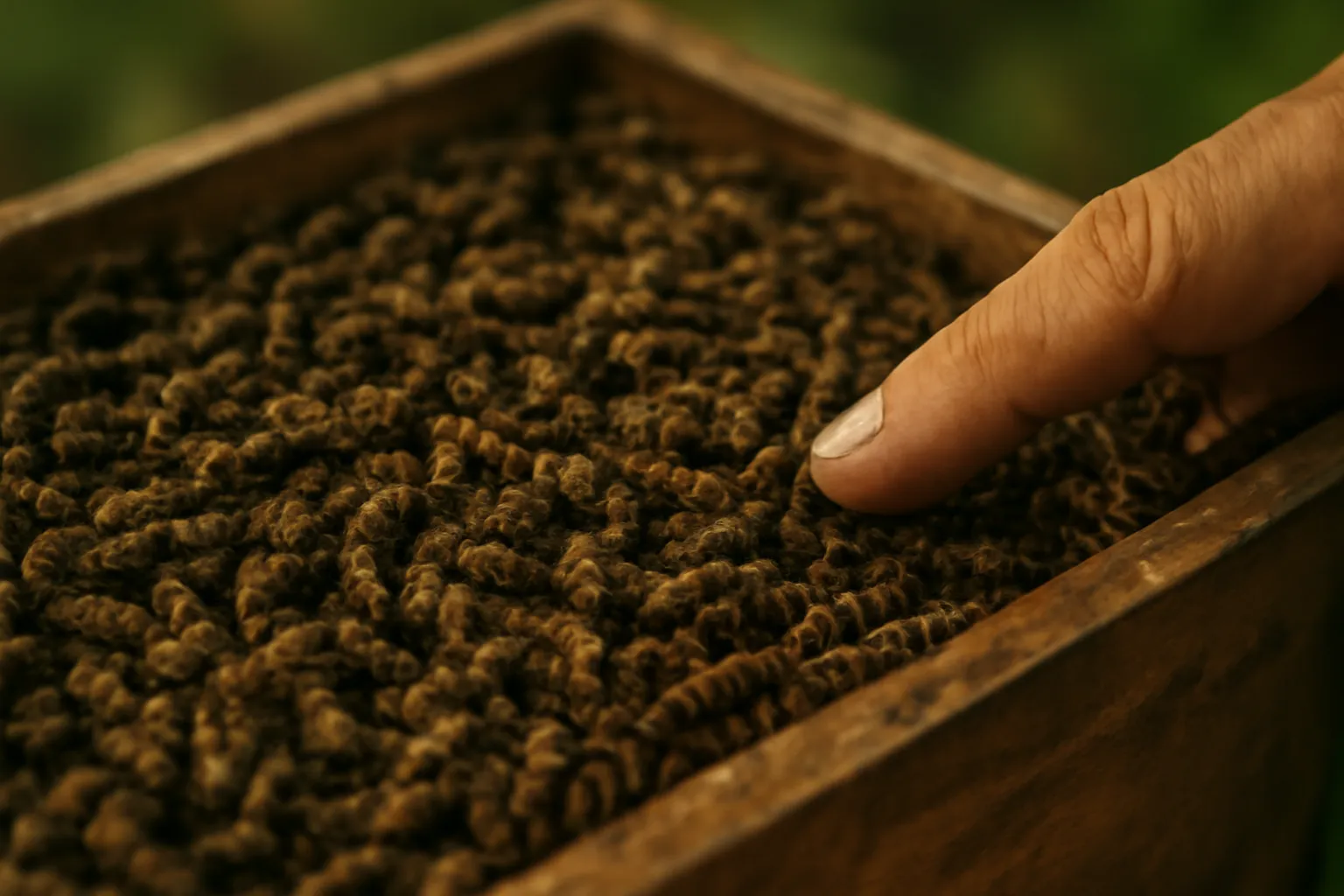
Strong colony or weak colony: reading it with the naked eye
You do not need equipment to judge a colony. Four visual signals and what each of them means.
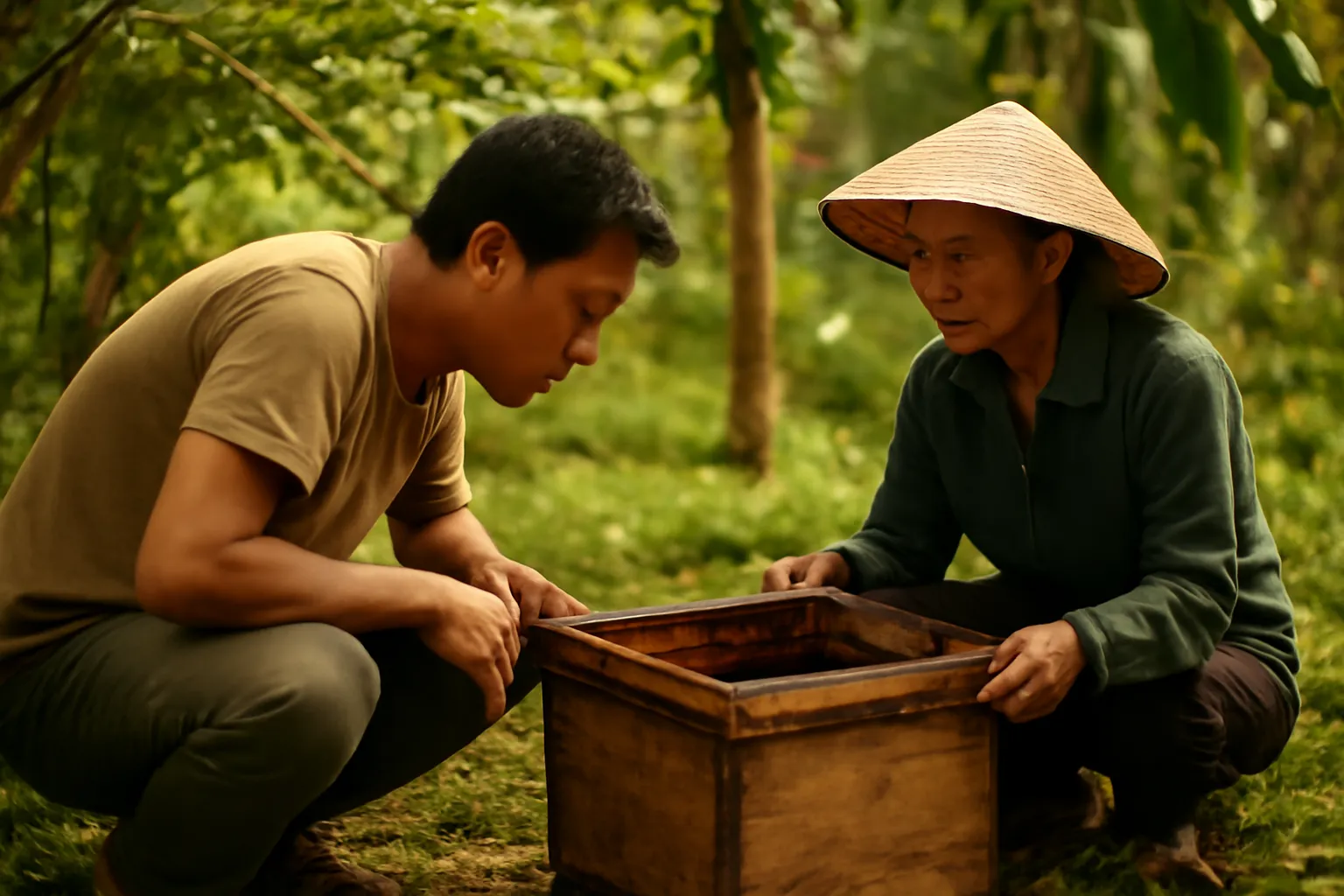
What to look at before you pay for a stingless bee colony
Six things to check with your own eyes when inspecting a colony, and the one question that separates real keepers from resellers.
 ›
×
›
×
A single-origin stingless bee honey from our own apiary in Trang Bang, Tay Ninh. Harvested and bottled by batch, traceable to the colony.
Vietnamese stingless bee honey, built for export
© 2026 Aron Bee. All rights reserved. · Copyright · OD-1C4F-F69A