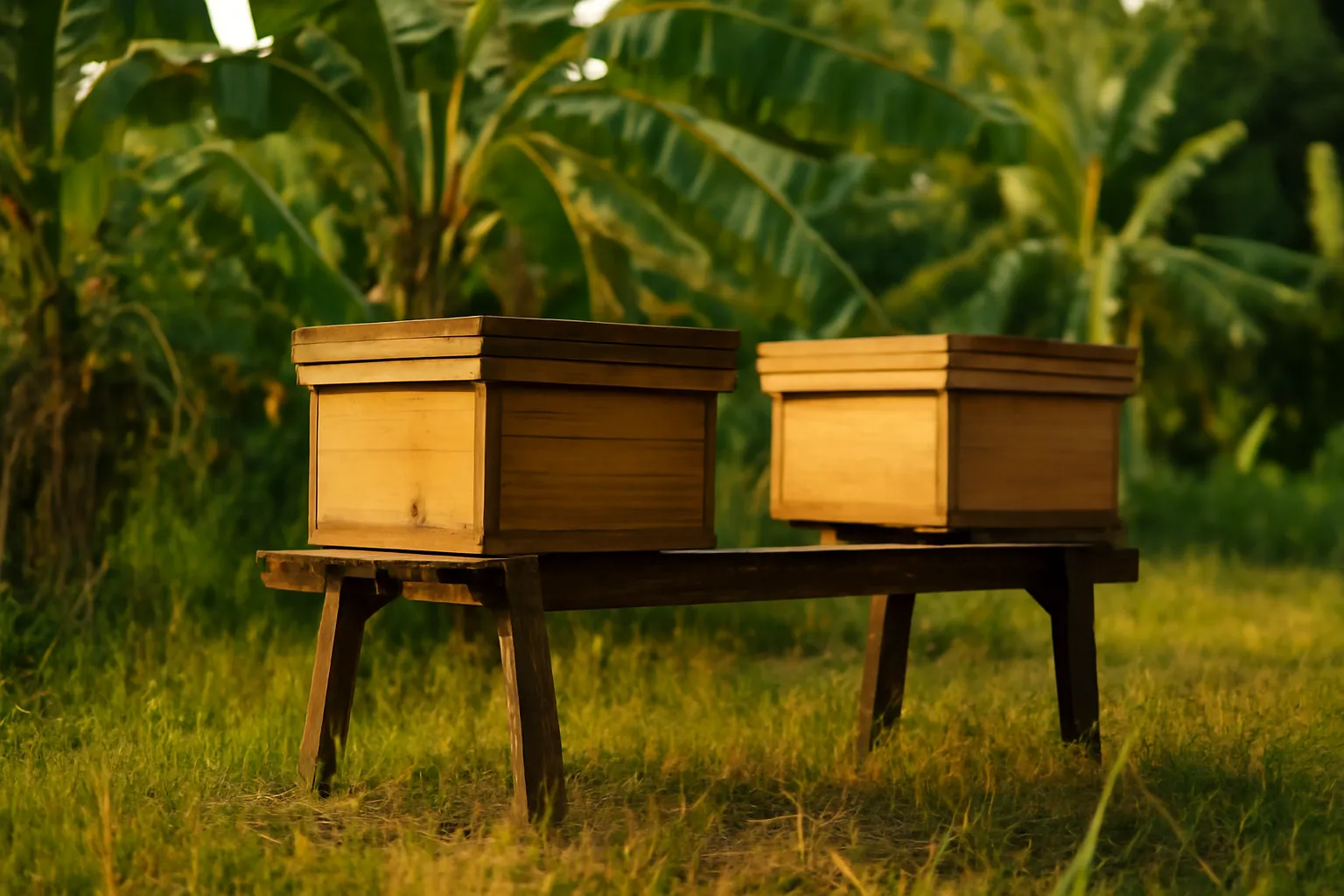
How many colonies should a beginner start with
The number you start with matters more than most beginners expect, and the mistake goes in both directions.
Why one is too few
With a single colony you have nothing to compare against. Entrance traffic looks sparse — is that this colony or is it the season? The brood looks patchy — compared with what? Beginners with one colony either panic and intervene too much, or miss a real decline entirely.
Why many is too many
Stingless bees forage within a few hundred metres, so every colony in your garden eats from the same source. Beyond what the surrounding flowering plants can support, adding colonies does not raise total yield — it divides it, and every colony ends up weaker.
The sensible number: two or three
Two lets you compare. Three gives a little redundancy if one fails. All three are within the observation capacity of someone still learning to read an entrance.
How to know whether your garden can take more
Keep two colonies through one full year and record what happens. If both fill their boxes before the dry season, the garden has spare capacity and you can split next season. If neither does, the limit is forage, and adding colonies will make things worse rather than better.
How to raise the ceiling
Plant flowering species that bloom in sequence so there is something in flower every month, and include trees that yield resin — stingless bees need resin to build, not just nectar. This is slow, taking a year or two to show, and it is the only durable way to expand.
Or split the apiary across sites
A few colonies at each of several locations a few kilometres apart, each group feeding on its own forage area. If a relative or neighbour will host a couple of boxes, this is the cheapest way to grow.
Frequently asked
Can I start with one and split it later?
You can, but expect to wait about a year before it is strong enough, and you lose the ability to compare in the meantime.
What if I only have a balcony?
One colony. Space and forage are both limited, and two will simply compete.
How fast can I grow from two colonies?
A strong colony splits once or twice a year, and each split needs about a year to mature. Realistically it takes a few years to reach a meaningful number.

Buying bees online: how to check a seller before you transfer money
You cannot inspect the brood through a screen. Five things that substitute for it, and one that never does.
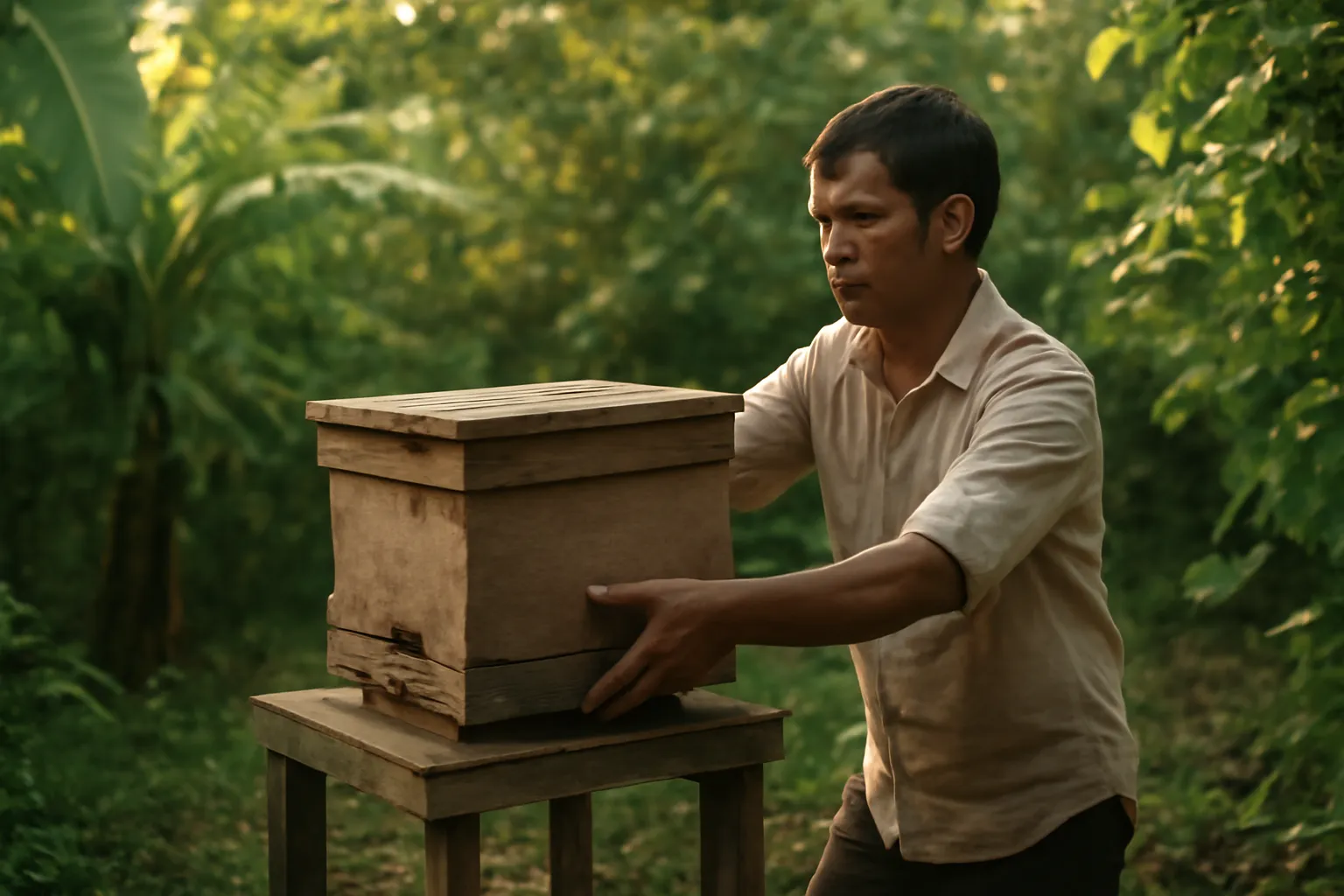
Bringing a colony home: the first seven days
The first week decides whether the colony stays or leaves. What to do each day, and what never to do.
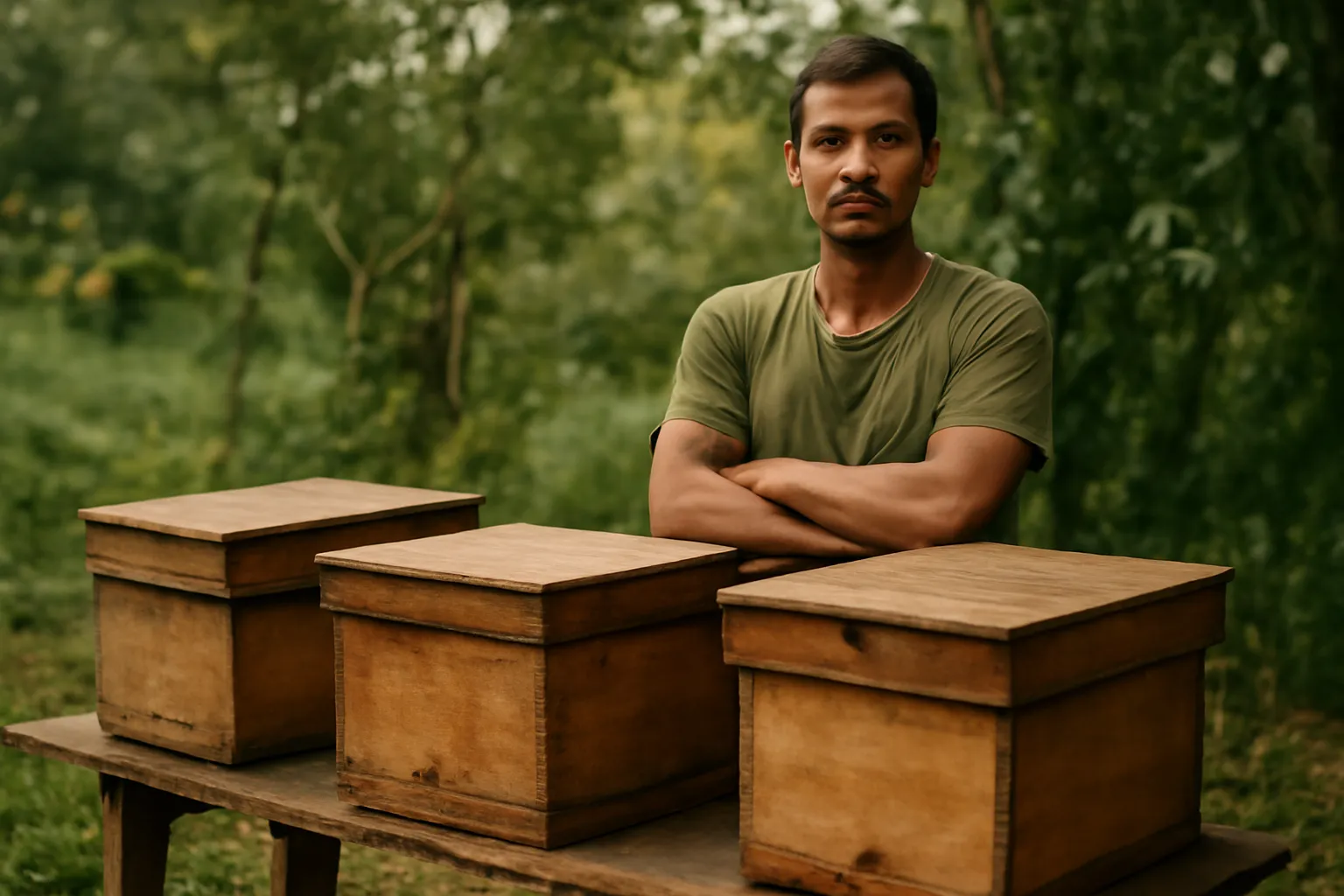
What a stingless bee colony costs, and what drives the difference
Prices vary widely for what looks like the same thing. Four factors that explain most of the gap.
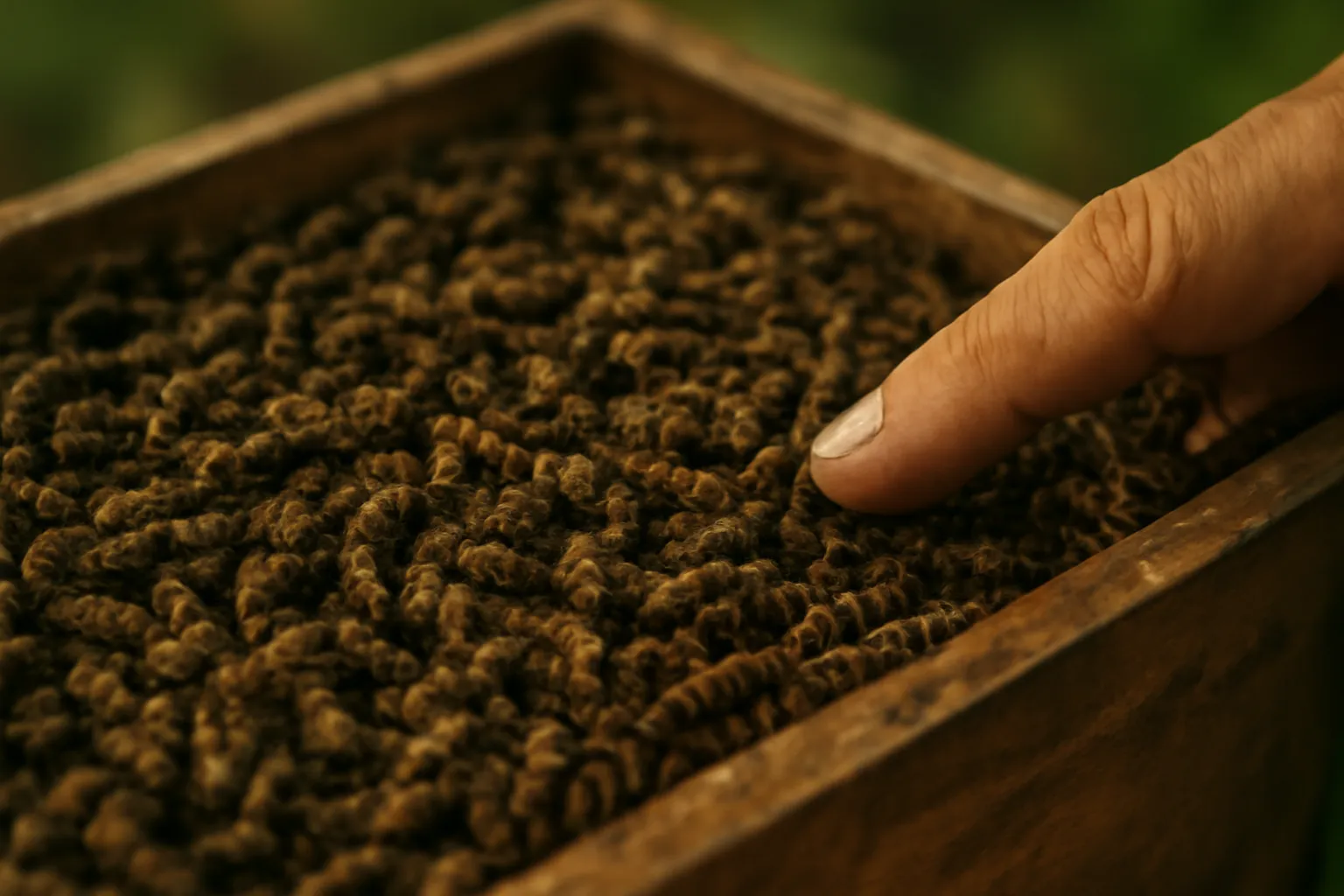
Strong colony or weak colony: reading it with the naked eye
You do not need equipment to judge a colony. Four visual signals and what each of them means.
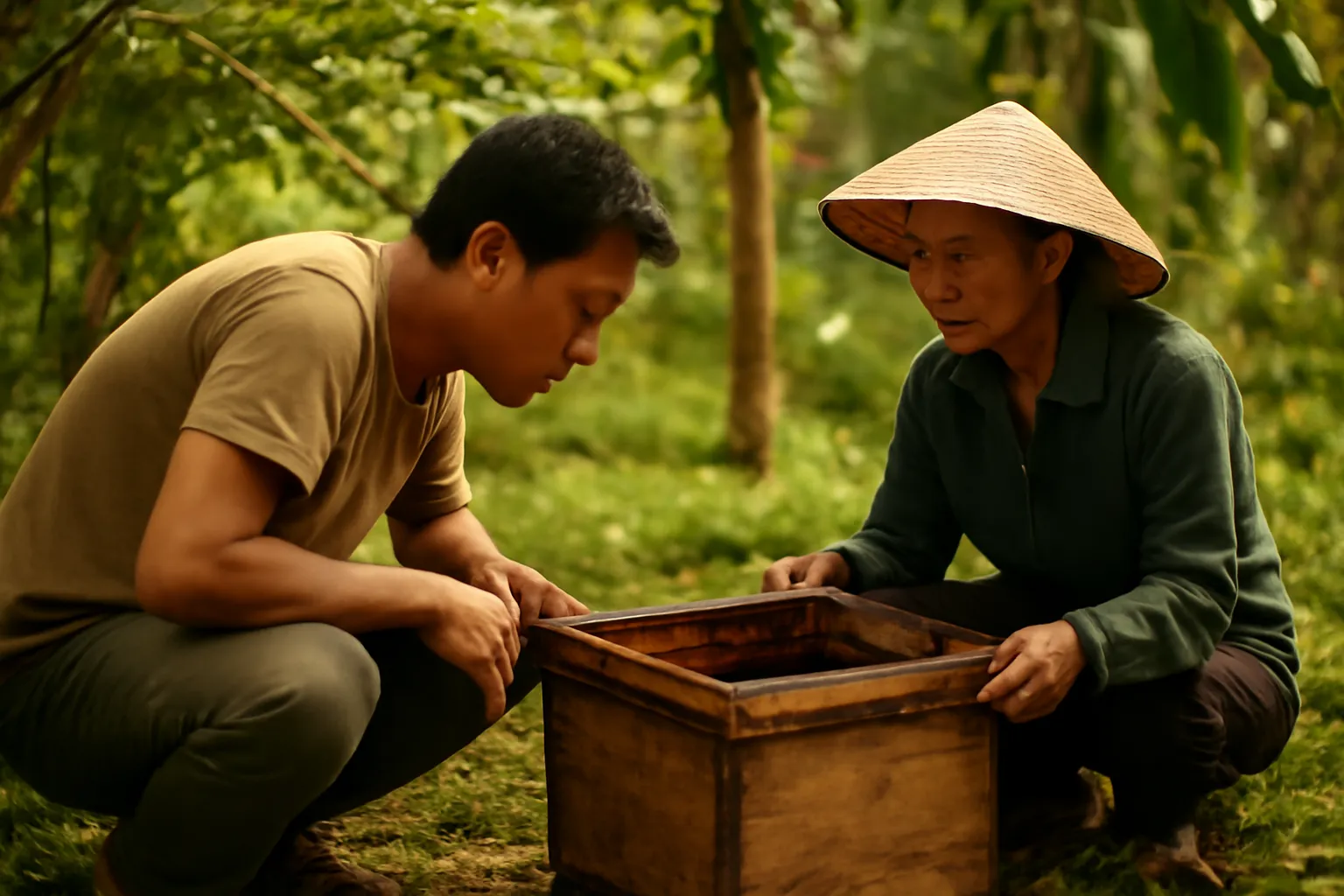
What to look at before you pay for a stingless bee colony
Six things to check with your own eyes when inspecting a colony, and the one question that separates real keepers from resellers.
 ›
×
›
×
A single-origin stingless bee honey from our own apiary in Trang Bang, Tay Ninh. Harvested and bottled by batch, traceable to the colony.
Vietnamese stingless bee honey, built for export
© 2026 Aron Bee. All rights reserved. · Copyright · OD-1C4F-F69A