Strong colony or weak colony: reading it with the naked eye
Experienced keepers rarely open a box. They stand beside it and know which colony is rising and which is falling. Here is what they read.
1. Entrance traffic
A strong colony produces an almost unbroken stream during the morning peak. A weak one is sparse, with several seconds between bees. Comparing boxes on the same stand is far more reliable than judging one box alone.
2. Pollen coming in
The single most useful signal. Pollen feeds larvae, so bees carrying pollen mean the colony is raising brood, which means it has a laying queen. A prolonged stop in pollen traffic is the most worrying thing you can observe from outside.
3. Guards at the entrance tube
A healthy colony always keeps a few bees at the mouth of the wax tube, facing outward. An entrance left completely unattended means the colony no longer has the numbers to defend itself, and ants will find it soon.
4. The brood mass, if you do open
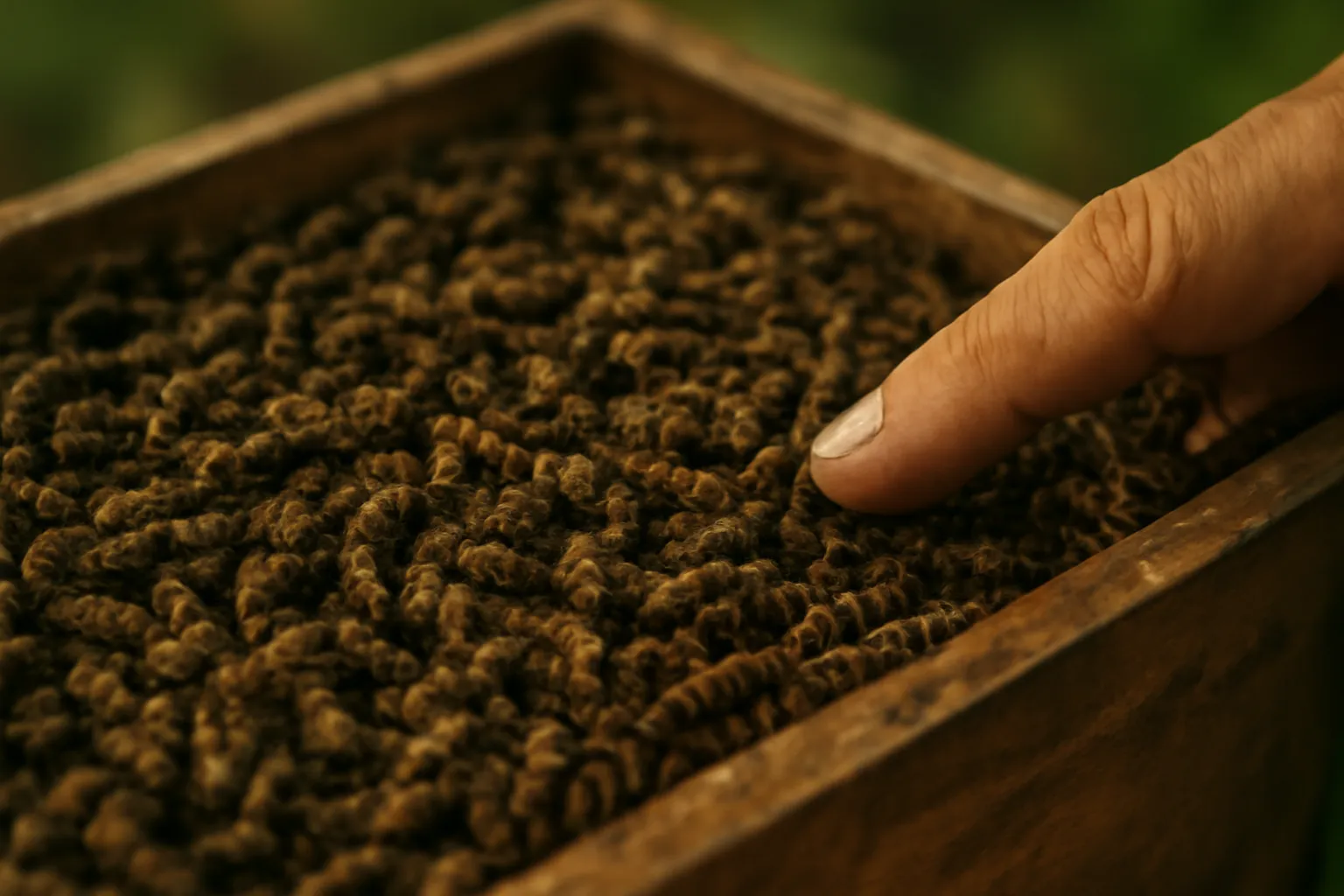
Solid and continuous, with cells at several stages, expanding toward the edges. Patchy brood, or brood shrinking into a lump, means decline. Larger rounded cells at the edge are queen cells — a sign the colony is strong enough to split.
What is not a reliable signal
Total box weight tells you little, because the wood, the resin structure and the stored honey all vary. The amount of visible wax means little too — a colony can build a lot of structure and still be weak in numbers.
Watch the trend, not the moment
One observation says nothing. Watch at the same hour once a week and write a line down. The direction over several weeks is what matters, and it is what tells you whether to intervene.
Frequently asked
How do I know if the colony still has a queen?
Indirectly and reliably: fresh brood layers appearing and steady pollen traffic. Do not dig through the nest looking for her — that does more harm than the answer is worth.
The colony looks smaller than when I bought it. Is that bad?
In the first week or two, some foragers get lost while learning the new location. That is normal if entrance traffic stays steady.
How often should I check?
Look at the entrance weekly. Open the box only every few months, and only for a clear reason.

How many colonies should a beginner start with
One is too few to learn from, and ten is more than a garden or a beginner can carry. Where the sensible number sits.

Buying bees online: how to check a seller before you transfer money
You cannot inspect the brood through a screen. Five things that substitute for it, and one that never does.

Bringing a colony home: the first seven days
The first week decides whether the colony stays or leaves. What to do each day, and what never to do.

What a stingless bee colony costs, and what drives the difference
Prices vary widely for what looks like the same thing. Four factors that explain most of the gap.

What to look at before you pay for a stingless bee colony
Six things to check with your own eyes when inspecting a colony, and the one question that separates real keepers from resellers.
 ›
×
›
×
A single-origin stingless bee honey from our own apiary in Trang Bang, Tay Ninh. Harvested and bottled by batch, traceable to the colony.
Vietnamese stingless bee honey, built for export
© 2026 Aron Bee. All rights reserved. · Copyright · OD-1C4F-F69A