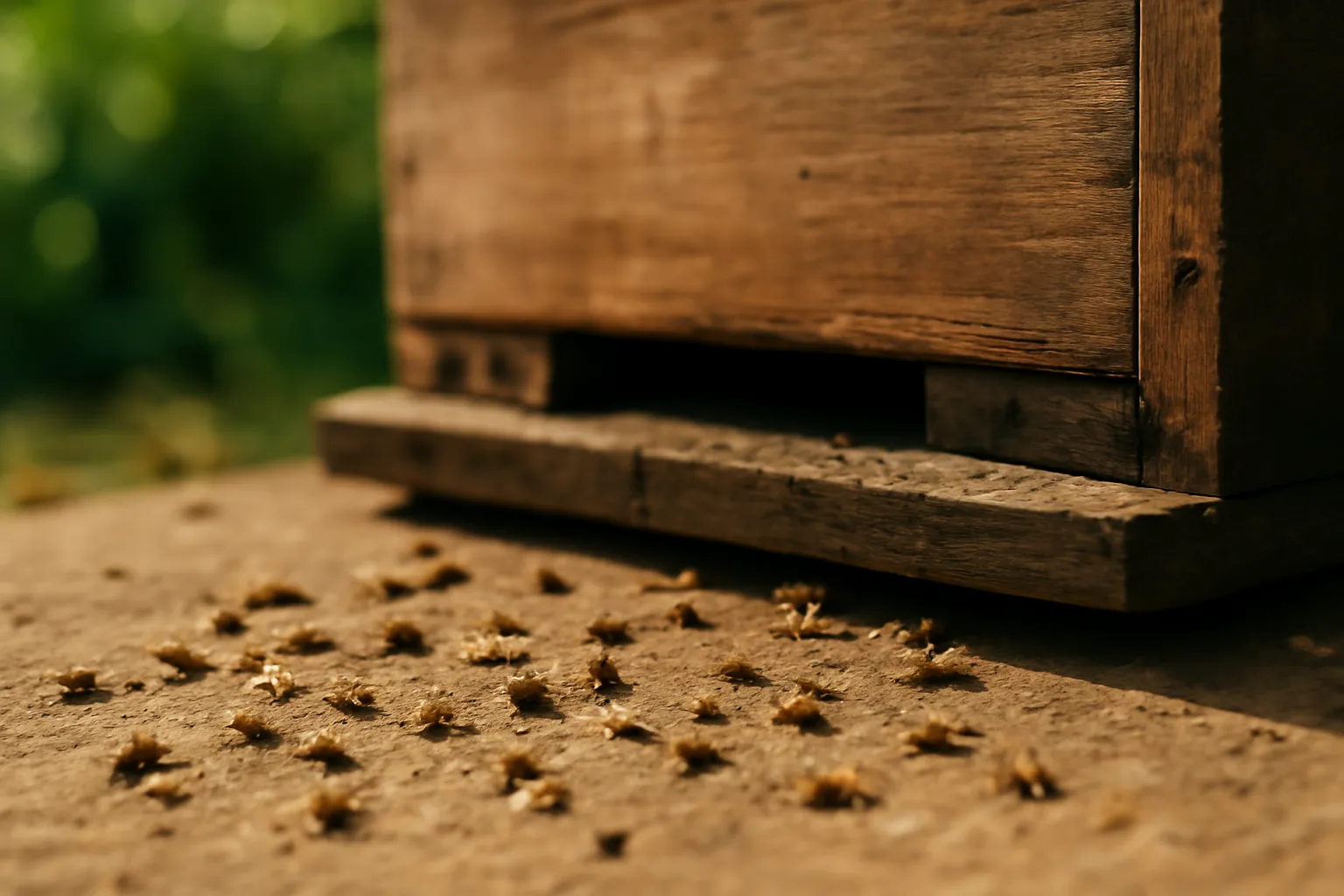
Pesticides and stingless bees: recognising poisoning
The colony is fine, and then within a day or two there are hundreds of dead bees in front of the entrance. No unusual smell, no ants, no sign of disease. This is nearly always chemical poisoning.
The characteristic pattern
- Dead bees concentrated directly in front of the entrance rather than scattered.
- It happens abruptly over one or two days, not as a gradual decline.
- Many die curled up; some twitch before dying.
- Neighbouring colonies are hit at the same time if they share a foraging area.
Common sources
Insecticide applied to a field or orchard within a few hundred metres. Also: ant or mosquito spray used near the stand, paint or solvent used close to the box, and timber treated with preservative used to build a new box.
What can be done immediately
There is no antidote for a colony. What you can do is limit further exposure: if you know the spraying date, close the entrance with breathable mesh during the application and reopen afterwards, and position the box out of the prevailing wind from the field. Make sure clean water is available near the stand so bees do not travel further to find it.
Prevention is the real answer
Before building a stand, ask the neighbours whether anyone sprays on a schedule. That question matters more than any technical criterion, and the answer can rule out a site that otherwise looks perfect.
If a hive is already near cultivated land, the most durable fix is an agreement with whoever farms it about spray timing, so you can cover the hives.
Never use chemicals around your own stand
Many colonies die because the keeper sprayed ant killer around the stand legs. Water cups and grease bands are the only two methods that should be used.
Frequently asked
Is the honey contaminated?
Possibly. After a clear poisoning event, do not harvest from that colony in the following cycle.
Can a mildly affected colony recover?
If the queen survives and the brood is intact, yes, usually over a few months. Without a queen, recovery is unlikely.
How long can the entrance stay closed during spraying?
A few hours with breathable mesh and the box kept cool. Never sealed, and never through the midday heat.

Keeping records: the dullest job with the highest return
A few lines per colony over a few years tell you which lineage to propagate, which corner yields, and when to harvest.
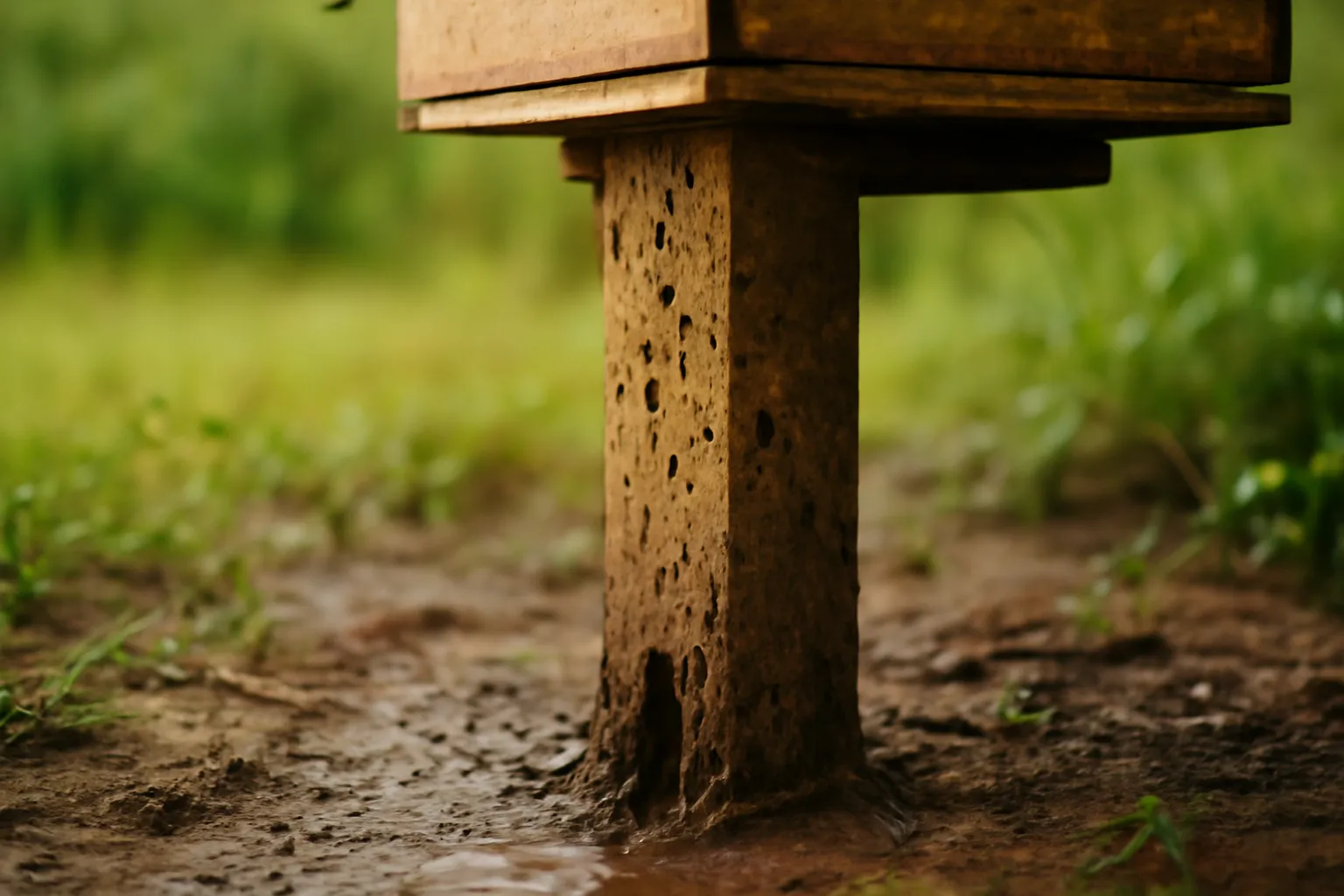
Termites and wood borers: they destroy the house, not the bees
Termites do not eat bees, but they hollow out stands and boxes. A collapse in the wet season takes the colony with it.
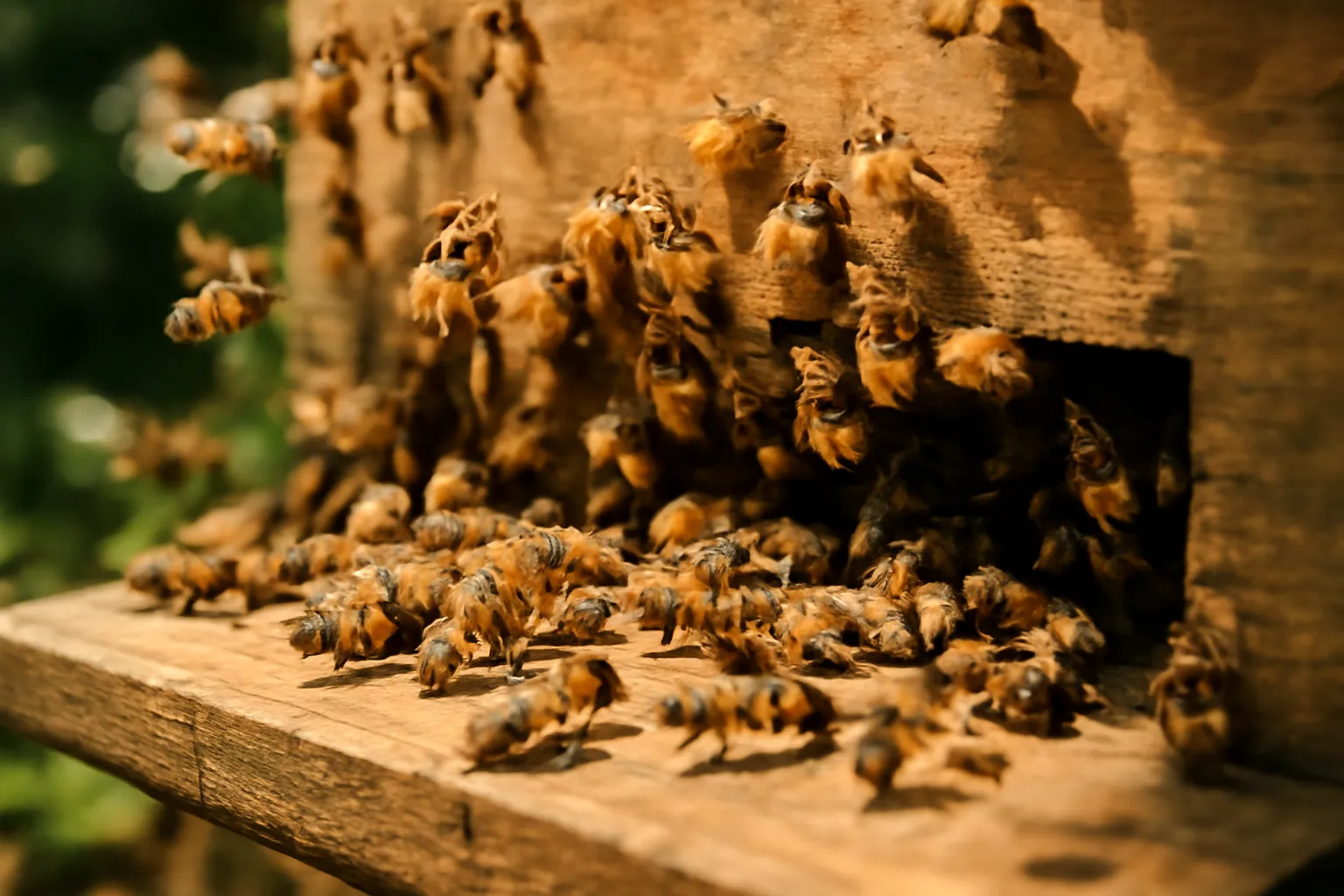
Robbing: when other colonies come for the honey
In lean months colonies target each other, and it often starts right after you harvest. How to spot and stop it.
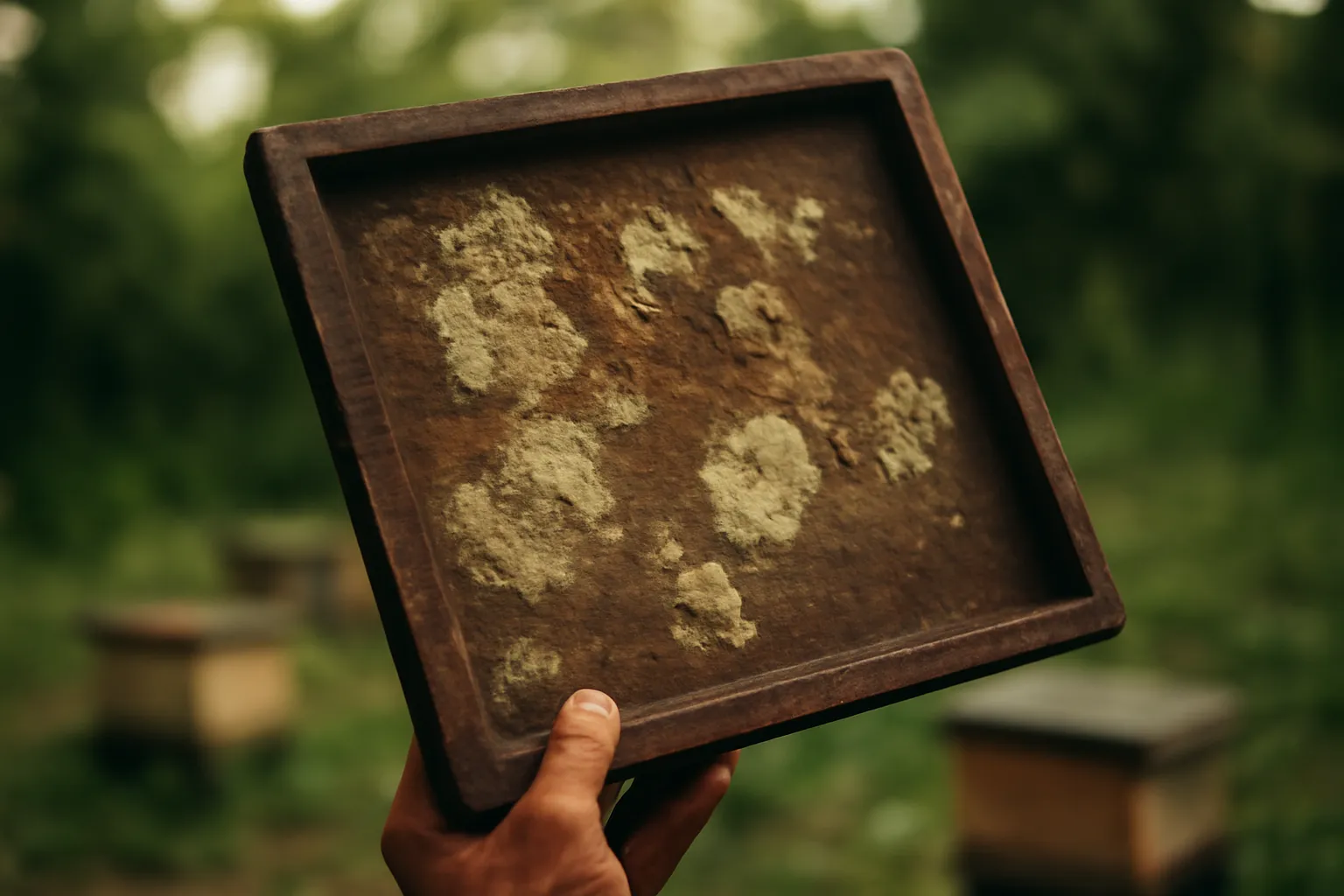
Mould inside the box is a damp problem, not a disease
White fuzz on the lid is almost always drainage and ventilation. How to tell it from an actual brood disease.
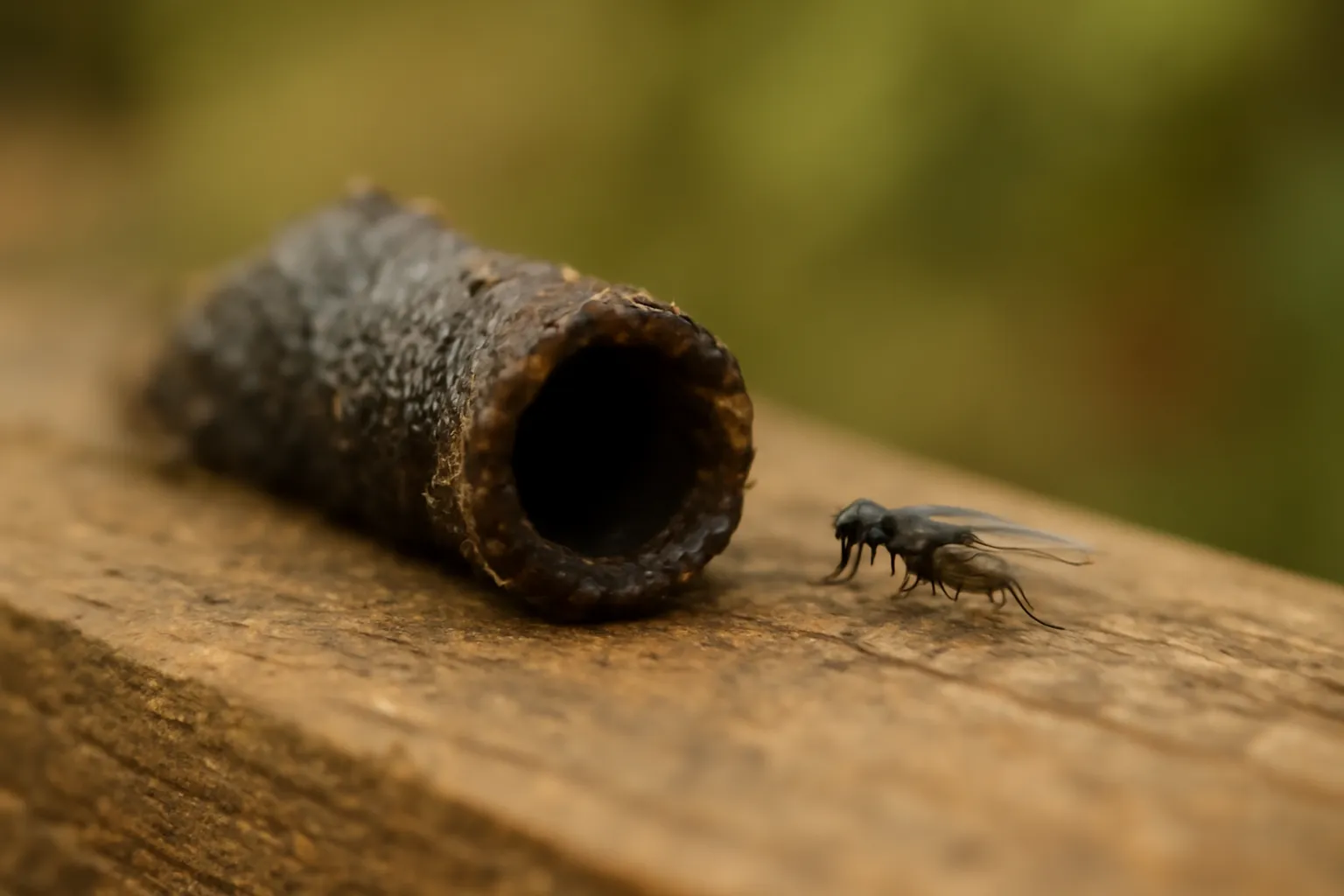
Parasitic flies: the threat nobody warns beginners about
Flies laying eggs in a nest destroy the brood from inside while the box still looks fine. Early signs and what to do.
 ›
×
›
×
A single-origin stingless bee honey from our own apiary in Trang Bang, Tay Ninh. Harvested and bottled by batch, traceable to the colony.
Vietnamese stingless bee honey, built for export
© 2026 Aron Bee. All rights reserved. · Copyright · OD-1C4F-F69A