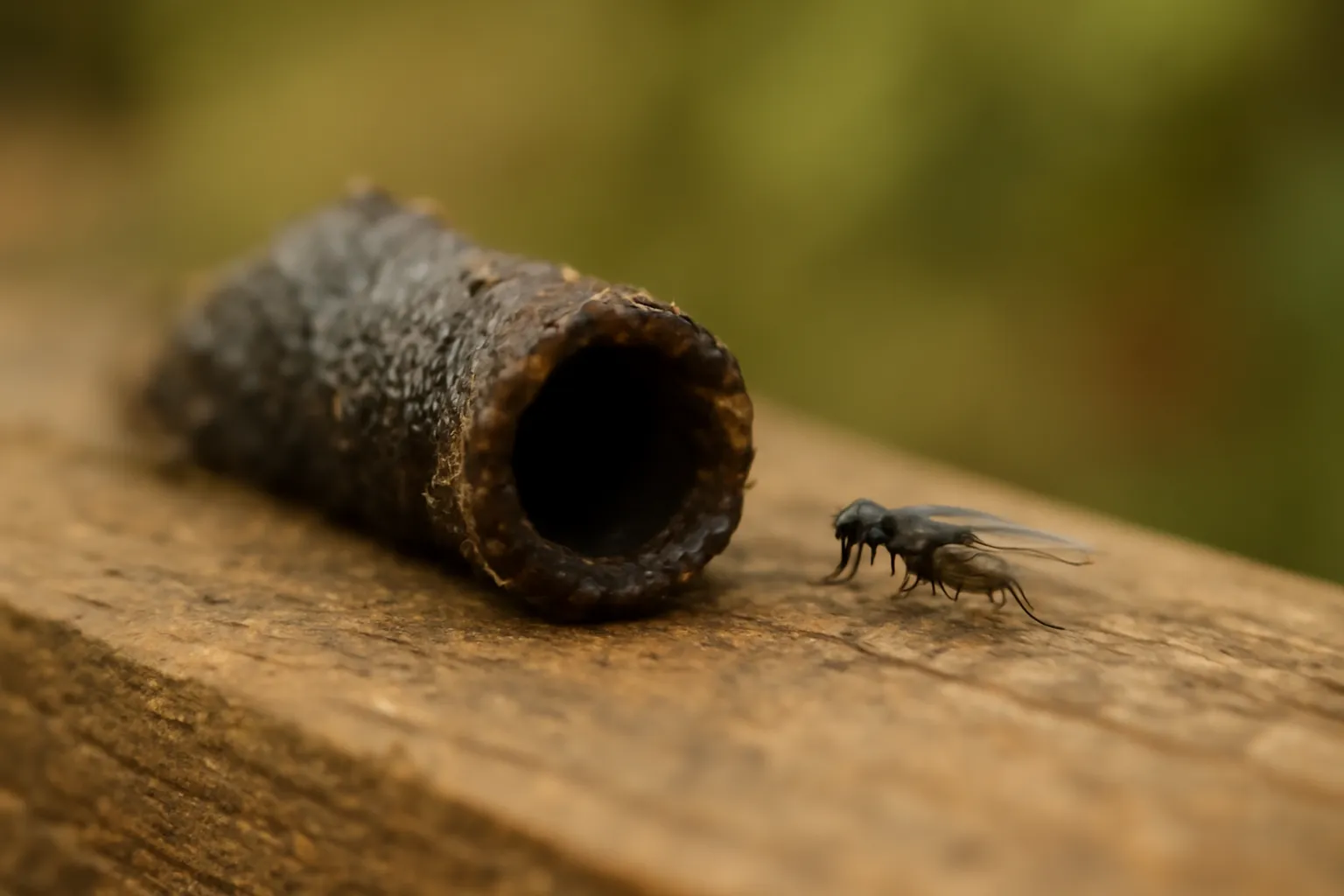
Parasitic flies: the threat nobody warns beginners about
Ants get all the attention, but parasitic flies are quieter and harder to reverse. By the time the problem is visible from outside, it is usually late.
What happens
Certain small flies lay eggs inside the nest, entering through the entrance or a gap in the box. The larvae eat pollen, honey and bee brood. The brood mass is destroyed from within while the outside of the box looks normal for weeks.
Early signs
- Small flies hovering around the entrance and settling on the box.
- An unfamiliar smell at the entrance — slightly sour and rancid, different from the usual wax-and-resin scent.
- Entrance traffic dropping without the dead bees you would see from an ant attack.
- Fluid seeping from a joint in the box.
The root cause: a weak colony and open gaps
A strong colony guards its entrance and flies cannot get in. The problem arises once the colony is already weakened for another reason — over-harvested, harassed by ants, or recently split. Large gaps in an old, decaying box are the other route in.
What to do
Caught early with part of the brood still sound: move the sound portion into a clean box, discard everything infested, resite it with shade and ant defence, then leave it alone. If most of the brood is gone, merge the remaining bees into another colony.
An infested box must be scraped clean and sunned for several days before reuse, or discarded outright if the timber has softened.
Prevention
Keeping colonies strong is the main defence. Beyond that: seal large gaps in boxes, never leave spilled honey around the stand after harvesting, and do not leave a box open for long on a humid day.
Frequently asked
Is there a treatment?
Do not use chemicals inside a stingless bee box; they are far more sensitive than honey bees. The response is mechanical — remove what is infested and keep the colony strong.
Why is the colony next to it unaffected?
Because it is strong and guards its entrance. These flies are always present in the environment; they only get in when a colony is failing.
Is honey from an infested nest usable?
No. Discard all honey from the affected area.

Keeping records: the dullest job with the highest return
A few lines per colony over a few years tell you which lineage to propagate, which corner yields, and when to harvest.
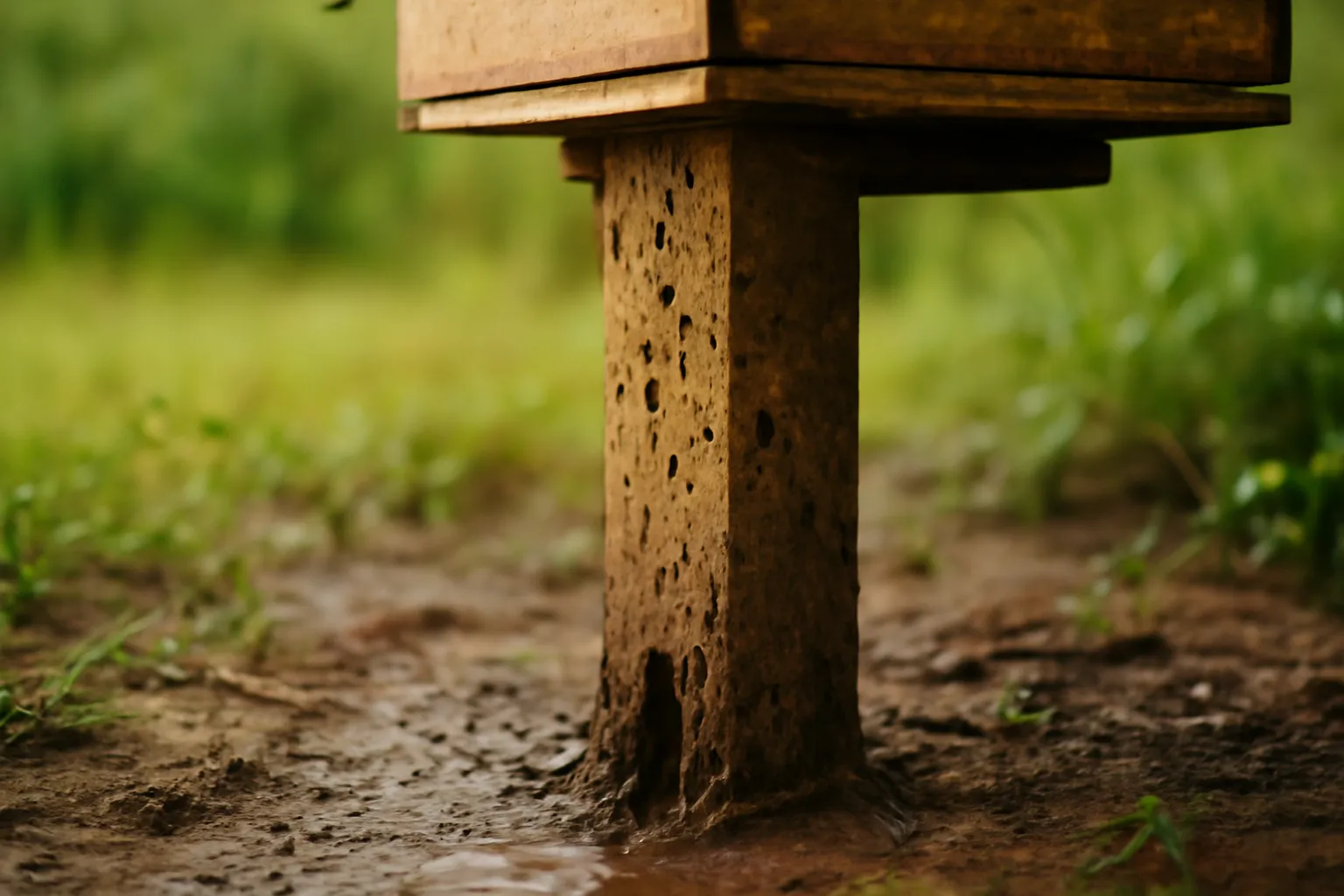
Termites and wood borers: they destroy the house, not the bees
Termites do not eat bees, but they hollow out stands and boxes. A collapse in the wet season takes the colony with it.
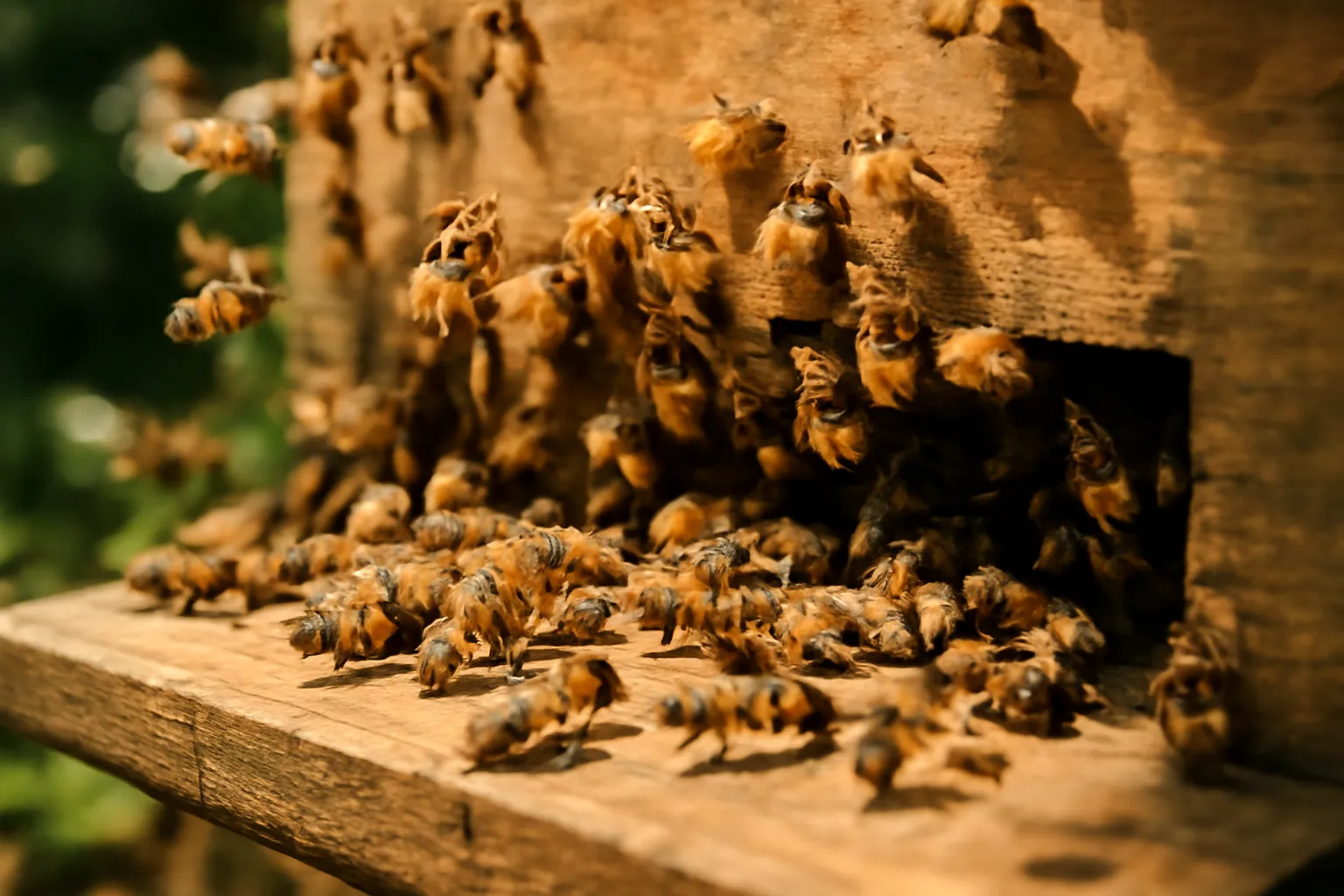
Robbing: when other colonies come for the honey
In lean months colonies target each other, and it often starts right after you harvest. How to spot and stop it.
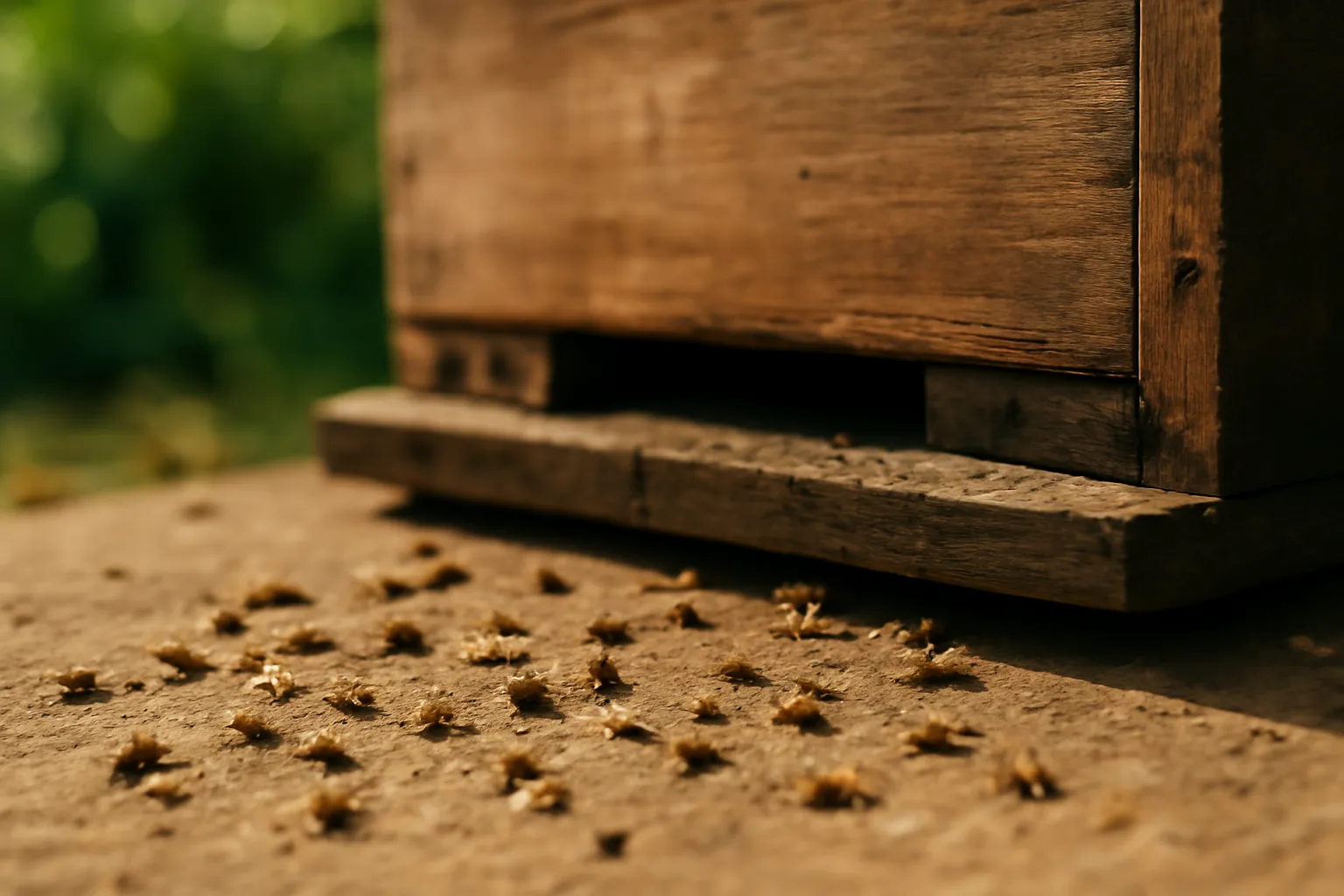
Pesticides and stingless bees: recognising poisoning
A colony dying within a day or two with no signs of disease is almost always chemical. What to look for and what can be done.
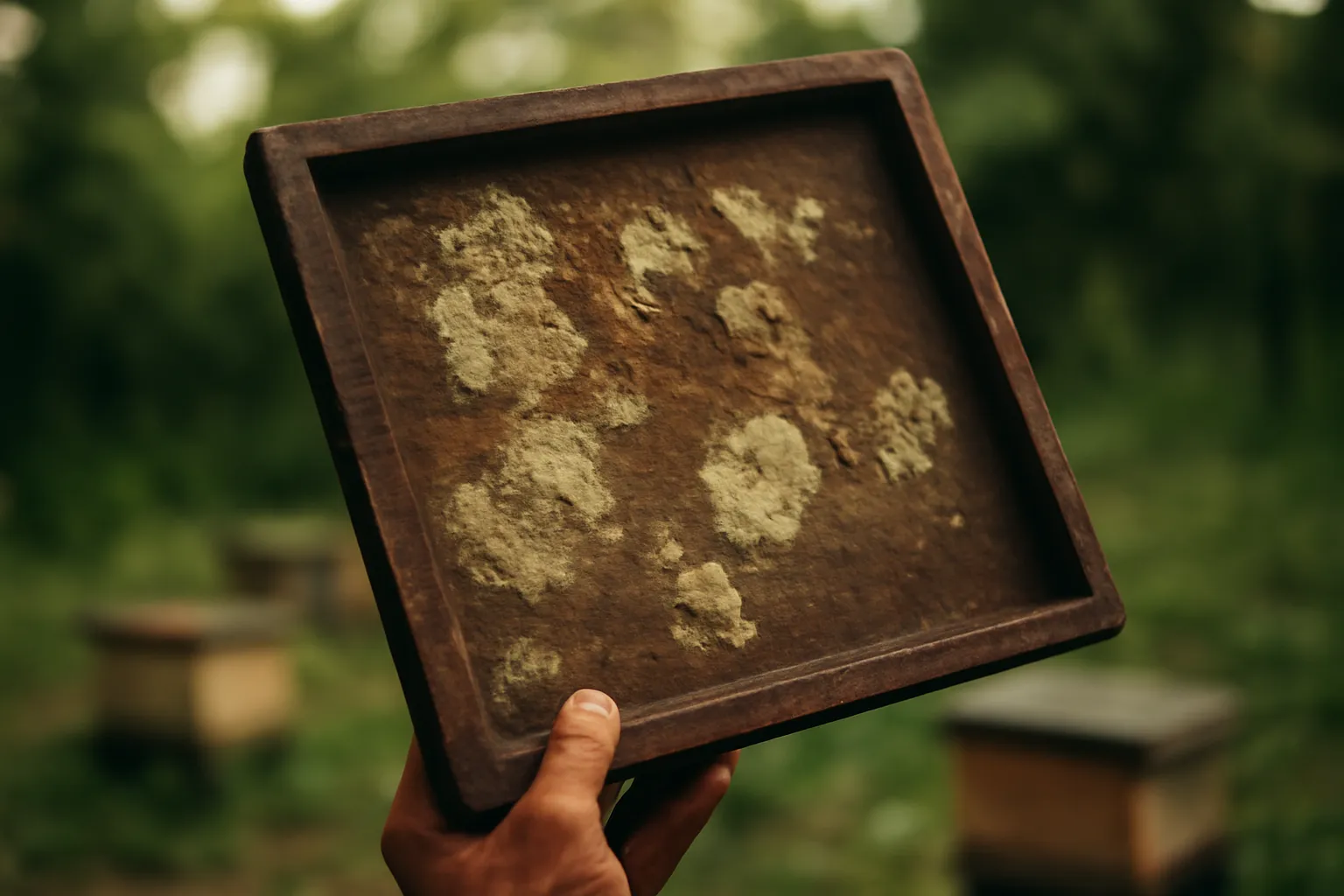
Mould inside the box is a damp problem, not a disease
White fuzz on the lid is almost always drainage and ventilation. How to tell it from an actual brood disease.
 ›
×
›
×
A single-origin stingless bee honey from our own apiary in Trang Bang, Tay Ninh. Harvested and bottled by batch, traceable to the colony.
Vietnamese stingless bee honey, built for export
© 2026 Aron Bee. All rights reserved. · Copyright · OD-1C4F-F69A