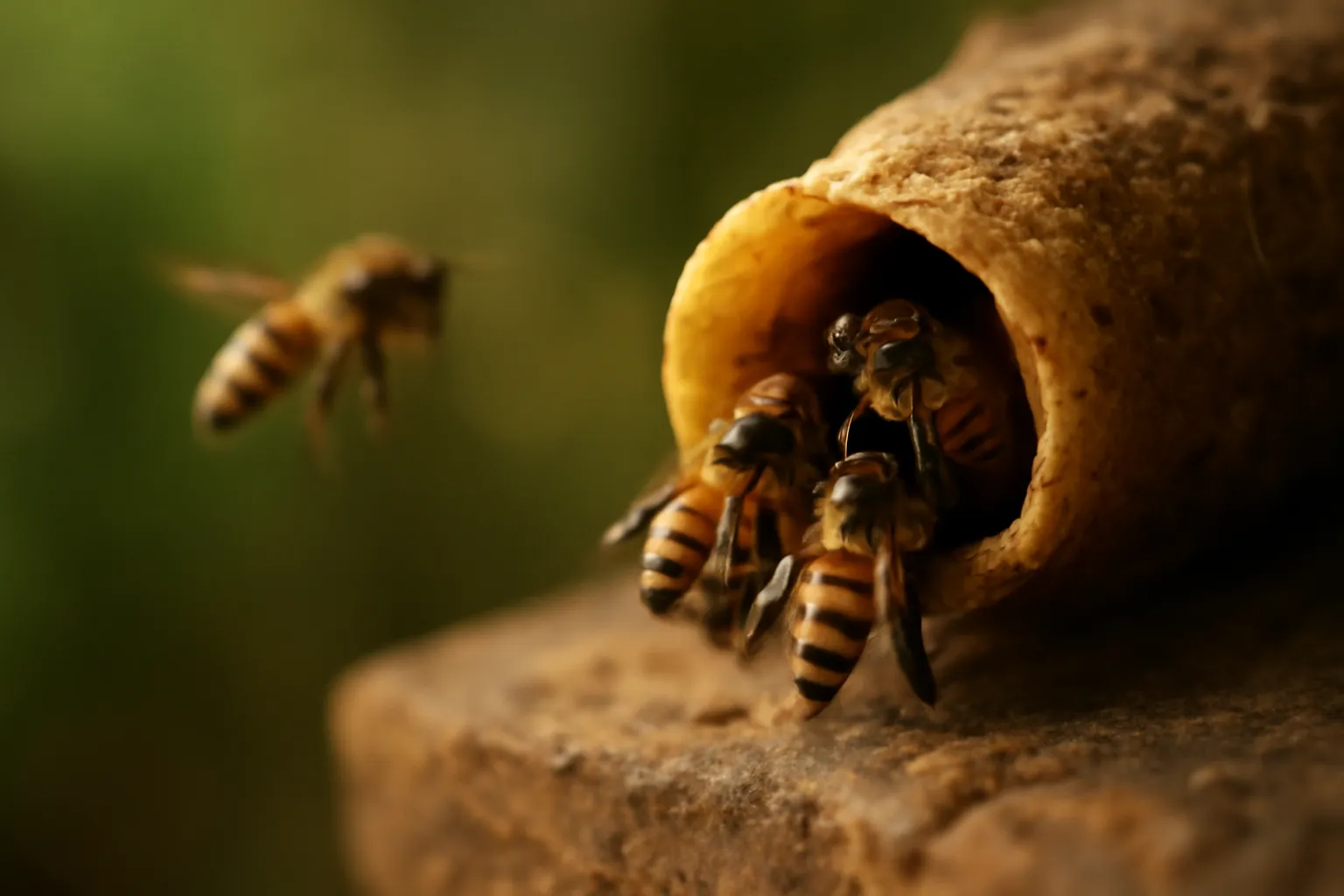
Reading the entrance: ten minutes tells you how the colony is doing
Experienced keepers barely open their boxes. They sit beside the stand for ten minutes and know which colony is rising and which is falling. Here is what they are reading.
1. Density of traffic
A strong colony gives an almost unbroken stream during the morning peak. A weak one is sparse, with seconds between bees. Comparing boxes on the same stand is far more reliable than judging one alone.
2. Pollen coming in
The single most important signal. Pollen feeds larvae, so bees returning with pollen mean the colony is raising brood, which means it has a laying queen. A prolonged stop is the most worrying thing visible from outside.
3. Guards at the tube mouth
A healthy colony keeps a few bees at the entrance, facing outward. A completely unattended entrance means the colony lacks the numbers to defend itself, and ants will find it.
4. Bees clustering outside at midday
Not a good sign. They are out because it is too hot inside. Add shade immediately.
5. Dead bees around the stand
A few are normal. Many concentrated in front of the entrance over one or two days indicates chemical poisoning. Scattered dead bees with an ant trail indicates an ant attack.
6. How unfamiliar bees fly
Bees probing along the box walls looking for gaps, rather than heading straight in, are from another colony attempting to rob. Most common in the dry season.
How to observe usefully
Sit two metres away, at the same hour, once a week, and write a line down. A single observation says nothing; a sequence over several weeks shows a direction — and direction is what matters.
Frequently asked
What is the best time of day?
Between about eight and ten in the morning, when activity peaks and the sun is not yet harsh.
What if it is raining and nothing is flying?
Normal. Draw no conclusion from a wet day; wait for a clear one.
How detailed should the notes be?
One line per colony per week is enough: traffic dense or sparse, pollen or no pollen, anything unusual.
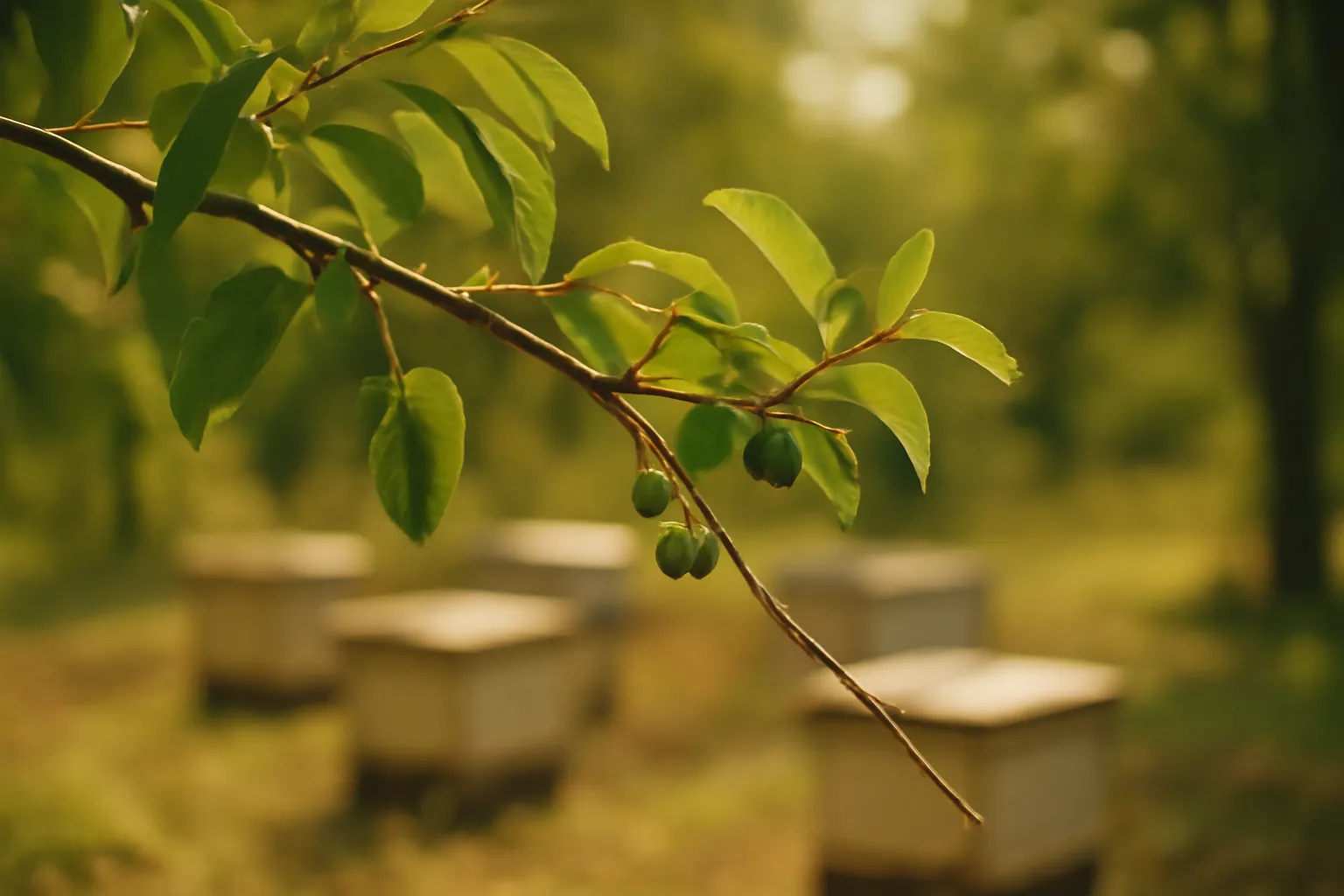
Stingless bees and the garden: a two-way relationship
People keep them for honey. The garden gets back more than what ends up in the jar.
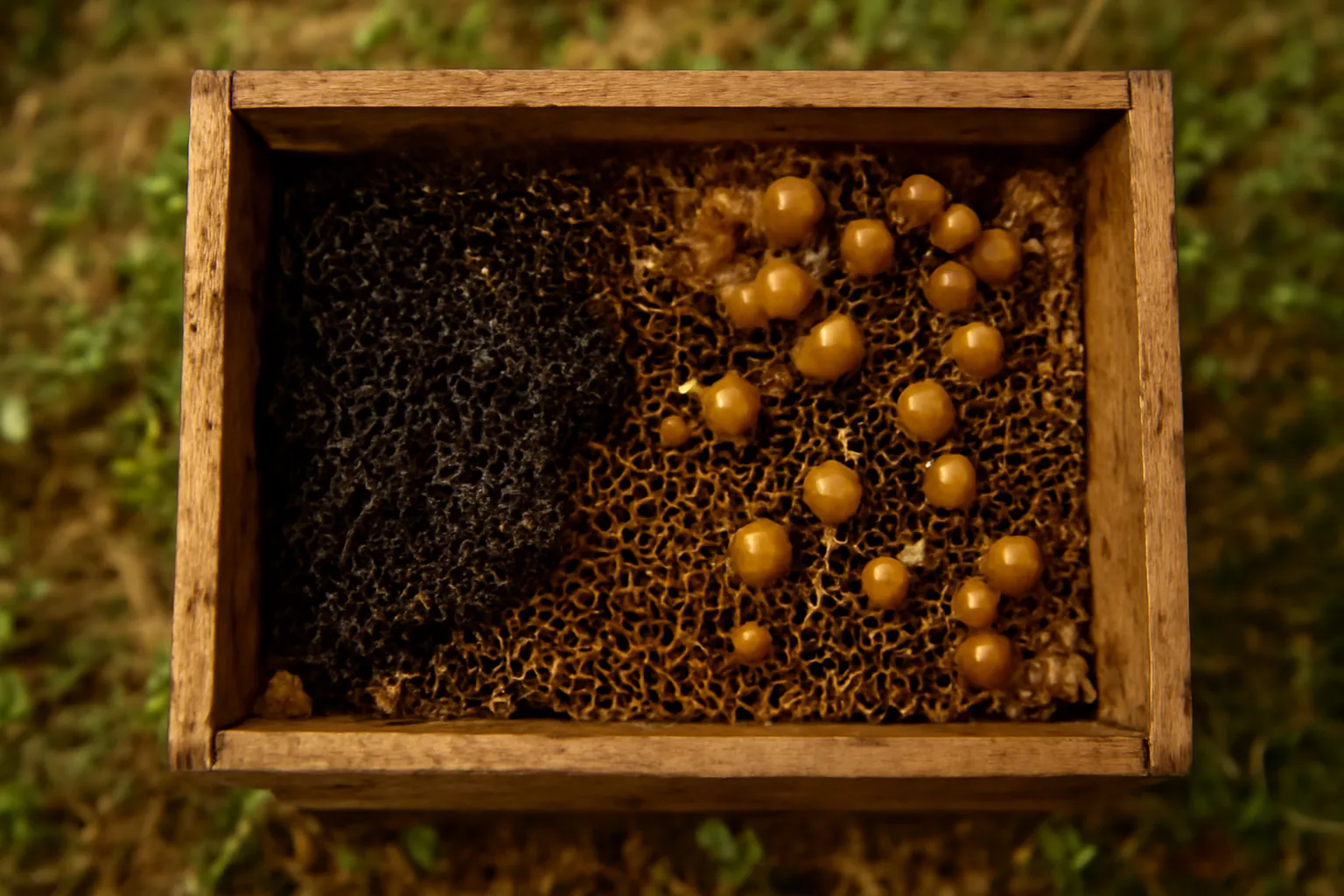
A short glossary for new stingless beekeepers
Twenty terms you will meet when buying a colony or reading a guide, explained in plain language.
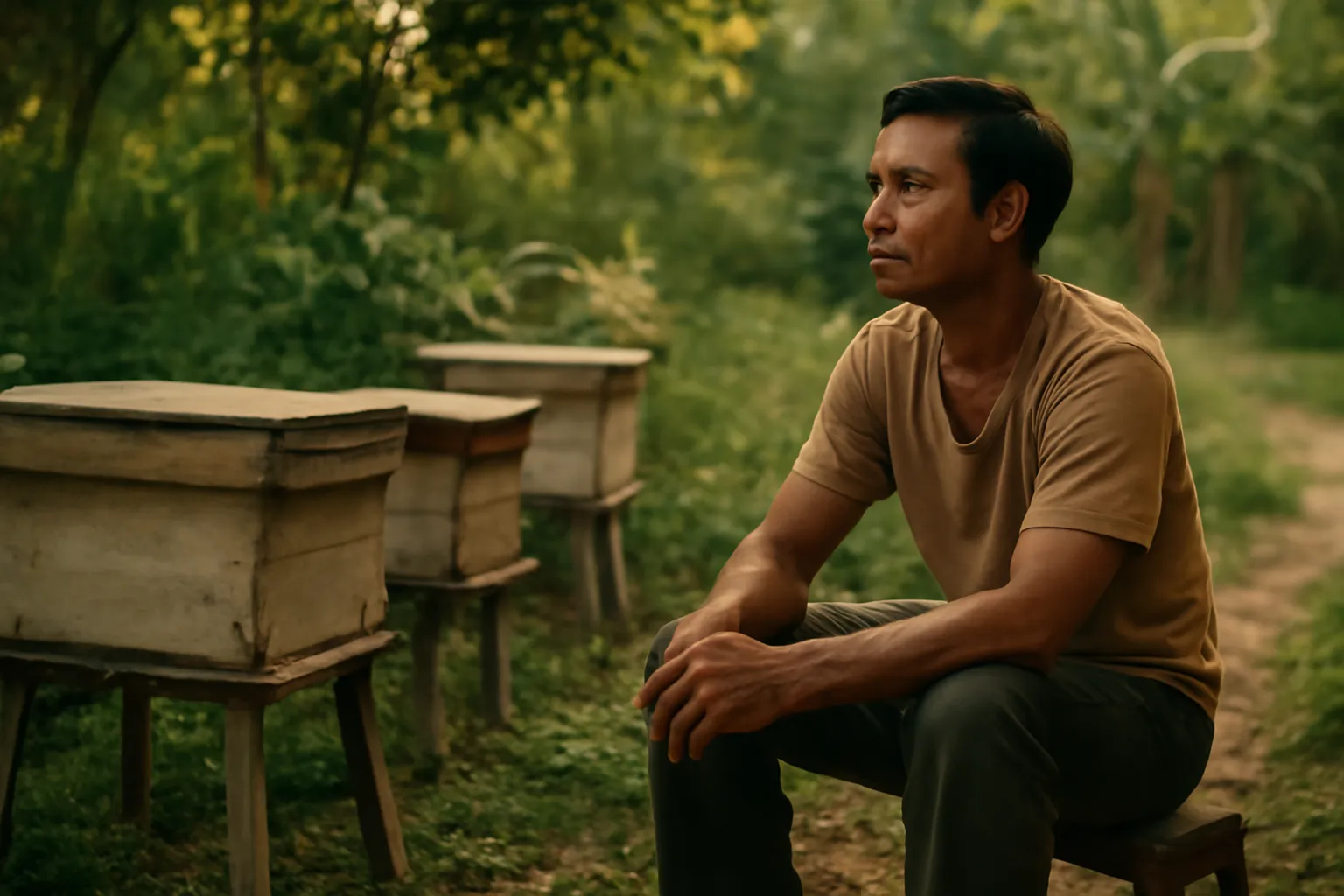
Is keeping stingless bees a business? An honest look at the numbers
A straight answer to the question every beginner asks, and a method to work it out for your own situation.
Ten mistakes beginners make in the first year
Collected from the most common colony losses. Almost none of them costs money to avoid.

What to prepare before buying your first colony
Everything on this list should be done before the bees arrive. Preparing afterwards is the usual reason a first colony dies.
 ›
×
›
×
A single-origin stingless bee honey from our own apiary in Trang Bang, Tay Ninh. Harvested and bottled by batch, traceable to the colony.
Vietnamese stingless bee honey, built for export
© 2026 Aron Bee. All rights reserved. · Copyright · OD-1C4F-F69A