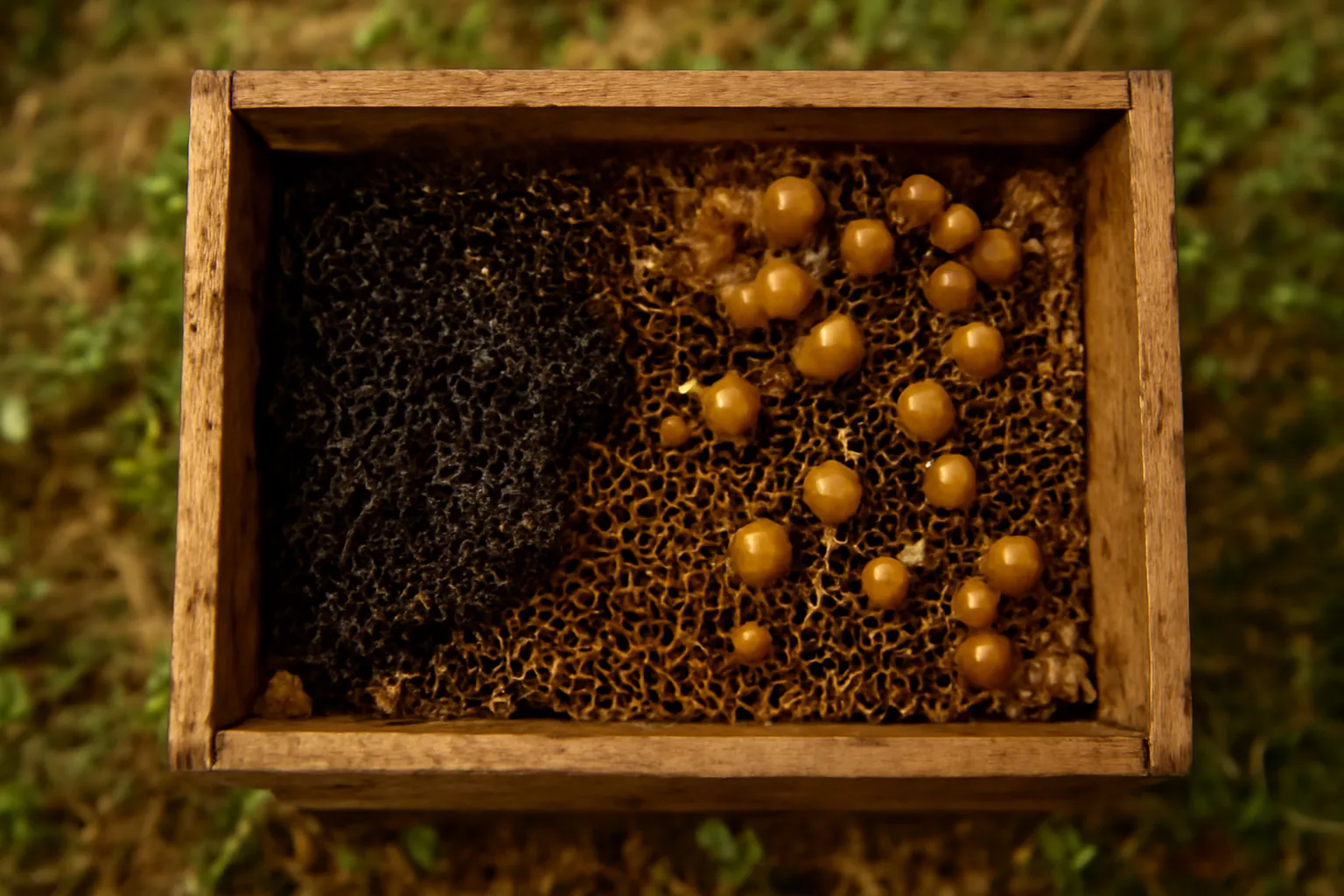
A short glossary for new stingless beekeepers
Buying a colony without understanding the seller's vocabulary makes it hard to judge anything. These are the terms that come up most, in plain language.
Nest structure
Brood mass — the darker, layered block in the middle of the box where the queen lays and larvae develop. The part that must never be disturbed.
Honey pots — rounded wax containers, larger and more translucent, usually toward the edges and above. The only part harvested.
Pollen pots — orange, rounded, usually around the brood. Protein for the larvae; not harvested.
Cerumen — the material stingless bees build with: wax blended with plant resin. The source of the tart finish in the honey.
Entrance tube — the wax tube projecting from the entrance hole. The colony's guard post; never remove it.
The colony
Queen cell — a cell noticeably larger than the rest, at the edge of the brood, where a new queen is raised. Their presence means the colony is strong enough to split.
Absconding — the whole colony abandoning the box to find another cavity.
Splitting — dividing one colony into two. The daughter must include a queen cell.
Merging — combining two colonies, usually to save a weak queenless one.
Hiving — installing a colony into a box.
The work
Robbing — one colony taking honey from another, most common in the dry season.
Ant defence — standing the stand legs in water cups or applying grease bands.
Harvest — drawing honey from the pots, leaving the brood and part of the reserve.
The honey
Batch code — a mark identifying which harvest run a jar belongs to. The basis of traceability.
Fermentation — spoilage caused by yeast activity: a bulging lid, strong foam, a smell of alcohol.
Moisture — the water content. Stingless bee honey typically sits at twenty-five to thirty percent, higher than ordinary honey, which is why it ferments more easily.
Frequently asked
Why do so many terms come from honey-bee keeping?
Because keepers borrowed the vocabulary, even though nest structure is entirely different. When you hear a familiar term, ask the seller what they mean by it.
How do sellers measure colony size?
There is no common standard and every apiary counts differently. Judging the brood mass and entrance traffic is more reliable.
Which term matters most to understand?
Brood mass. Everything about assessing a colony starts there.
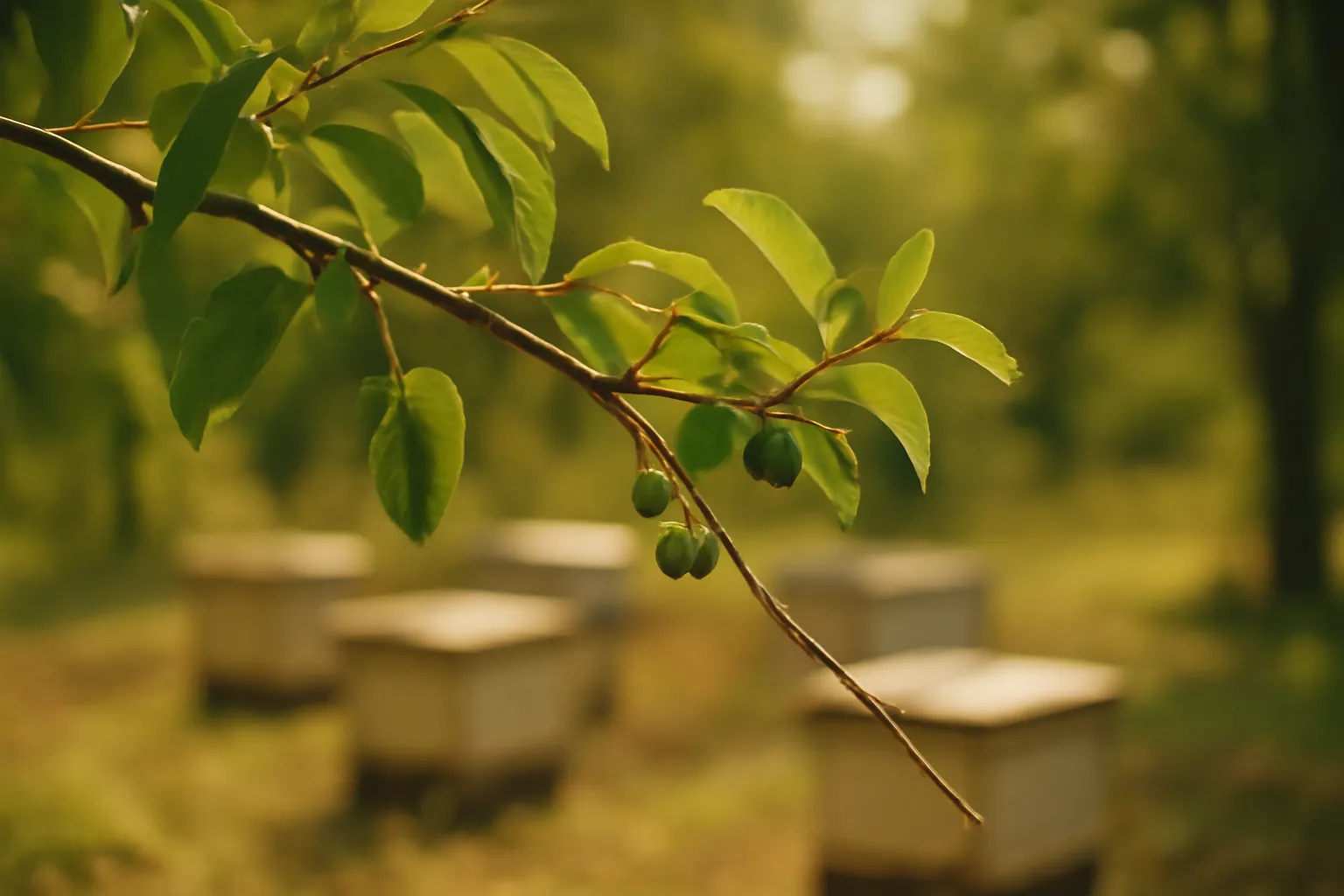
Stingless bees and the garden: a two-way relationship
People keep them for honey. The garden gets back more than what ends up in the jar.

Is keeping stingless bees a business? An honest look at the numbers
A straight answer to the question every beginner asks, and a method to work it out for your own situation.
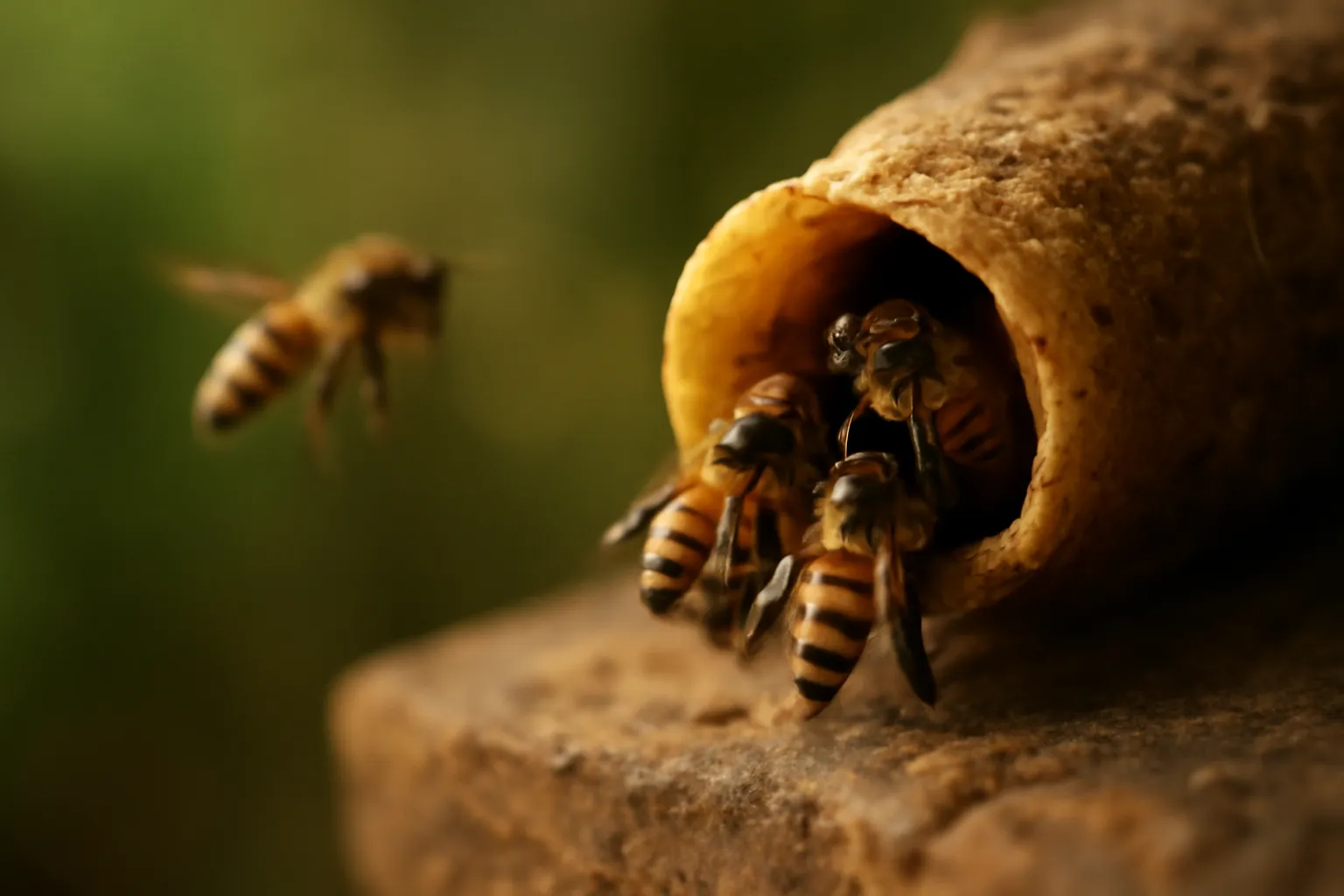
Reading the entrance: ten minutes tells you how the colony is doing
Six things visible from outside the box, and what each of them means.
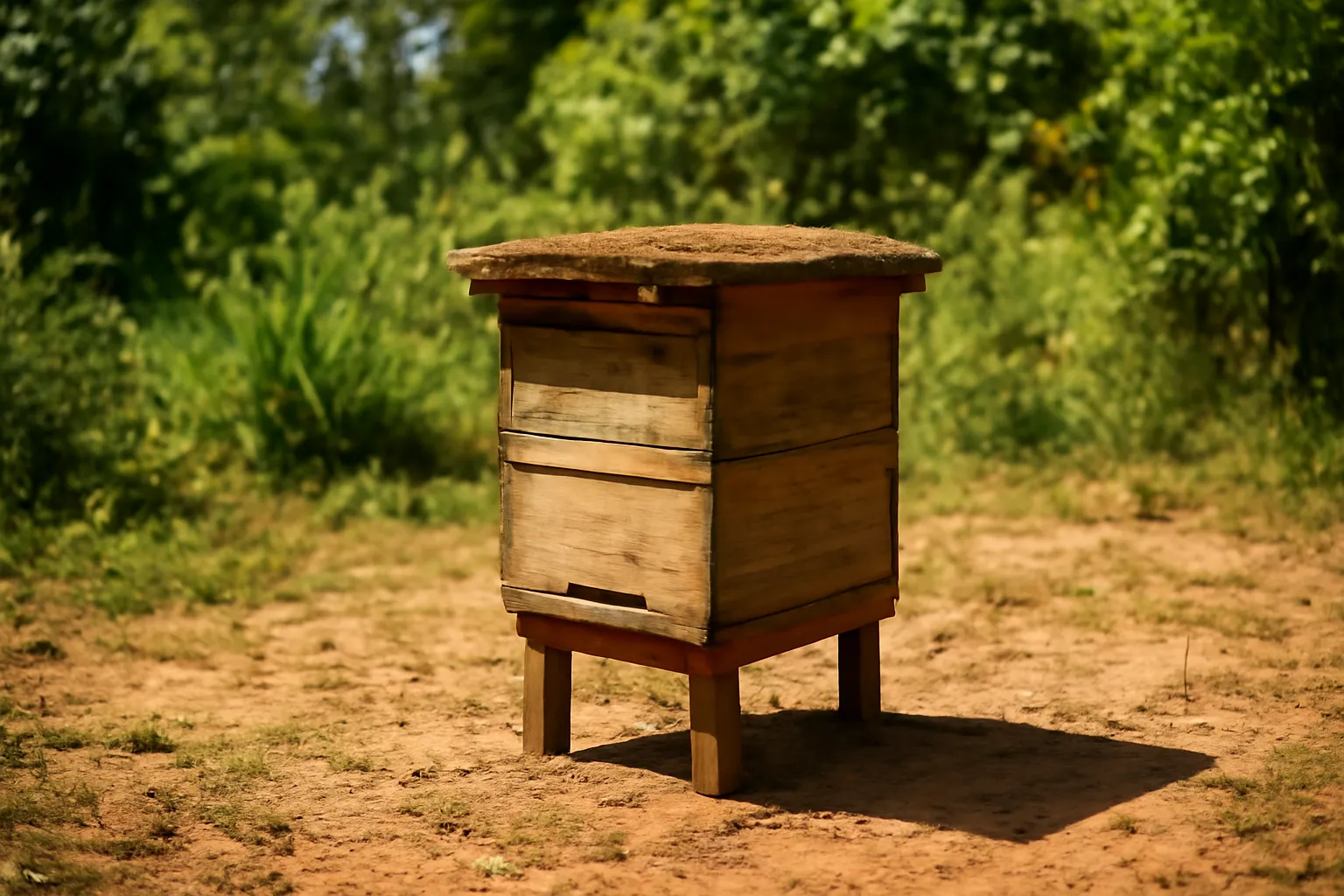
Ten mistakes beginners make in the first year
Collected from the most common colony losses. Almost none of them costs money to avoid.

What to prepare before buying your first colony
Everything on this list should be done before the bees arrive. Preparing afterwards is the usual reason a first colony dies.
 ›
×
›
×
A single-origin stingless bee honey from our own apiary in Trang Bang, Tay Ninh. Harvested and bottled by batch, traceable to the colony.
Vietnamese stingless bee honey, built for export
© 2026 Aron Bee. All rights reserved. · Copyright · OD-1C4F-F69A