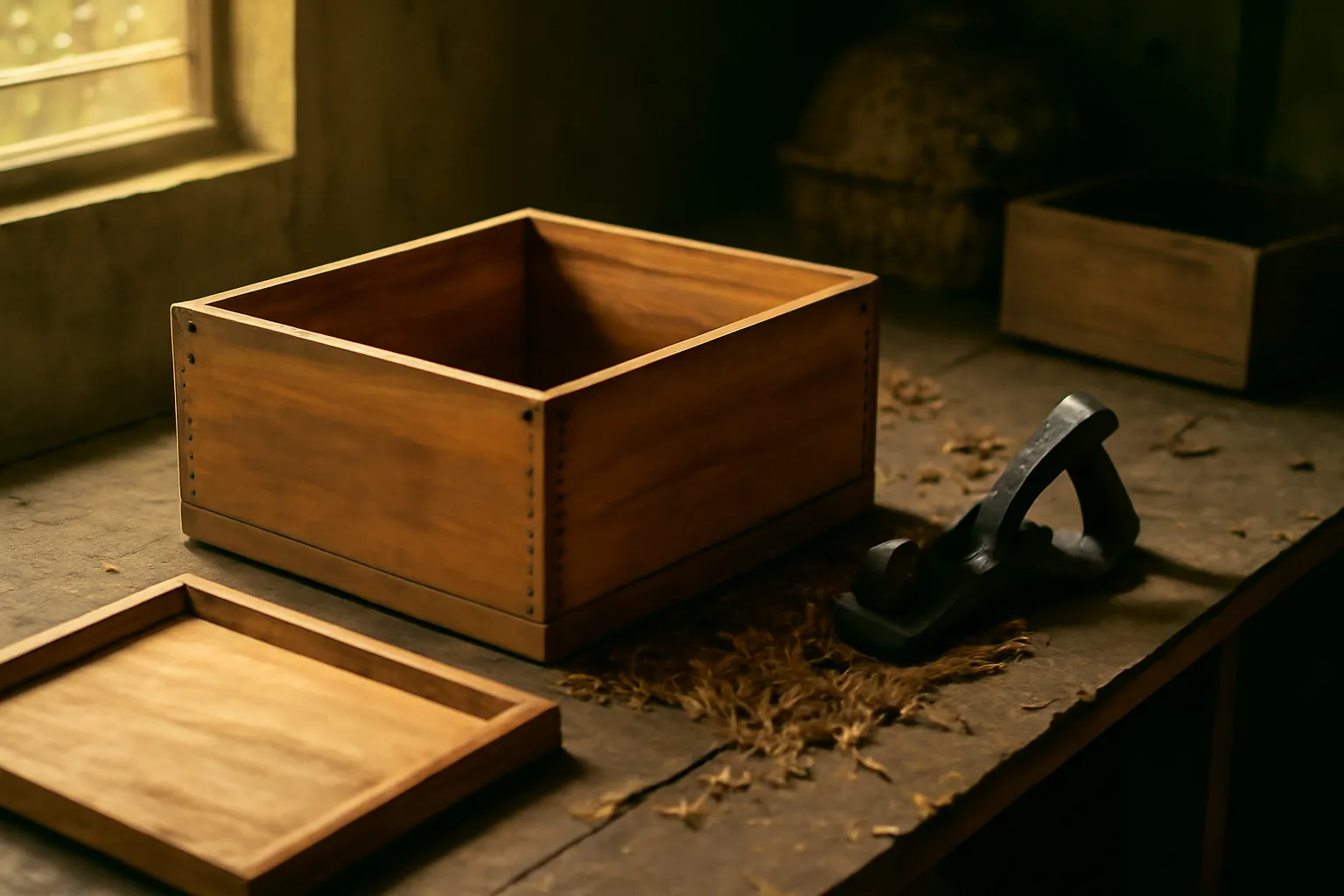
The hive box itself: size, timber and common faults
A stingless bee box is far simpler than a honey-bee hive, but a few details decide whether the colony builds or leaves.
Size: smaller than people expect
A common single-colony box sits around twenty-five by eighteen by fifteen centimetres. A box that is too large means the colony cannot cover the space, heat and humidity are not held, growth is slow, and empty corners become footholds for ants. The rule is: slightly tight beats roomy.
Timber
Odourless, well seasoned, around two centimetres thick. Thick timber holds temperature steady, which matters in a hot climate. Avoid wood that still smells of oil, wood treated with anti-termite chemicals, and glued composite board.
Entrance
A single round hole eight to ten millimetres across is enough. A larger hole is harder for the colony to guard and invites ants. The bees will build a wax tube projecting outward — never remove it, that tube is their guard post.
Lid and gaps
The lid must fit closely, but the box must not be airtight. Bees need gas exchange; a completely sealed box condenses moisture and grows mould. The natural gaps between boards are usually sufficient, and no extra ventilation holes are needed.
Three faults common in boxes sold ready-made
- Too large, because the design is a scaled-down honey-bee hive.
- Timber thinner than fifteen millimetres, heating and cooling too fast.
- A lid screwed down hard, so every opening breaks wax and alarms the colony.
Do you need a two-part box?
For someone keeping a few colonies, no. A split box separating honey from brood makes harvesting easier but needs a genuinely strong colony to occupy the upper section. Start with a single chamber.
Frequently asked
Can I reuse a box that held a colony before?
Yes, and it is better than a new one — residual wax scent helps a new colony accept the space. Scrape off any mould and sun the box first.
Should the box be painted?
Never inside. Outside you can use a plant oil or odourless paint, fully cured before use.
Are plastic boxes usable?
Not advisable. Plastic does not breathe, heats quickly and condenses moisture. Timber remains the right material.
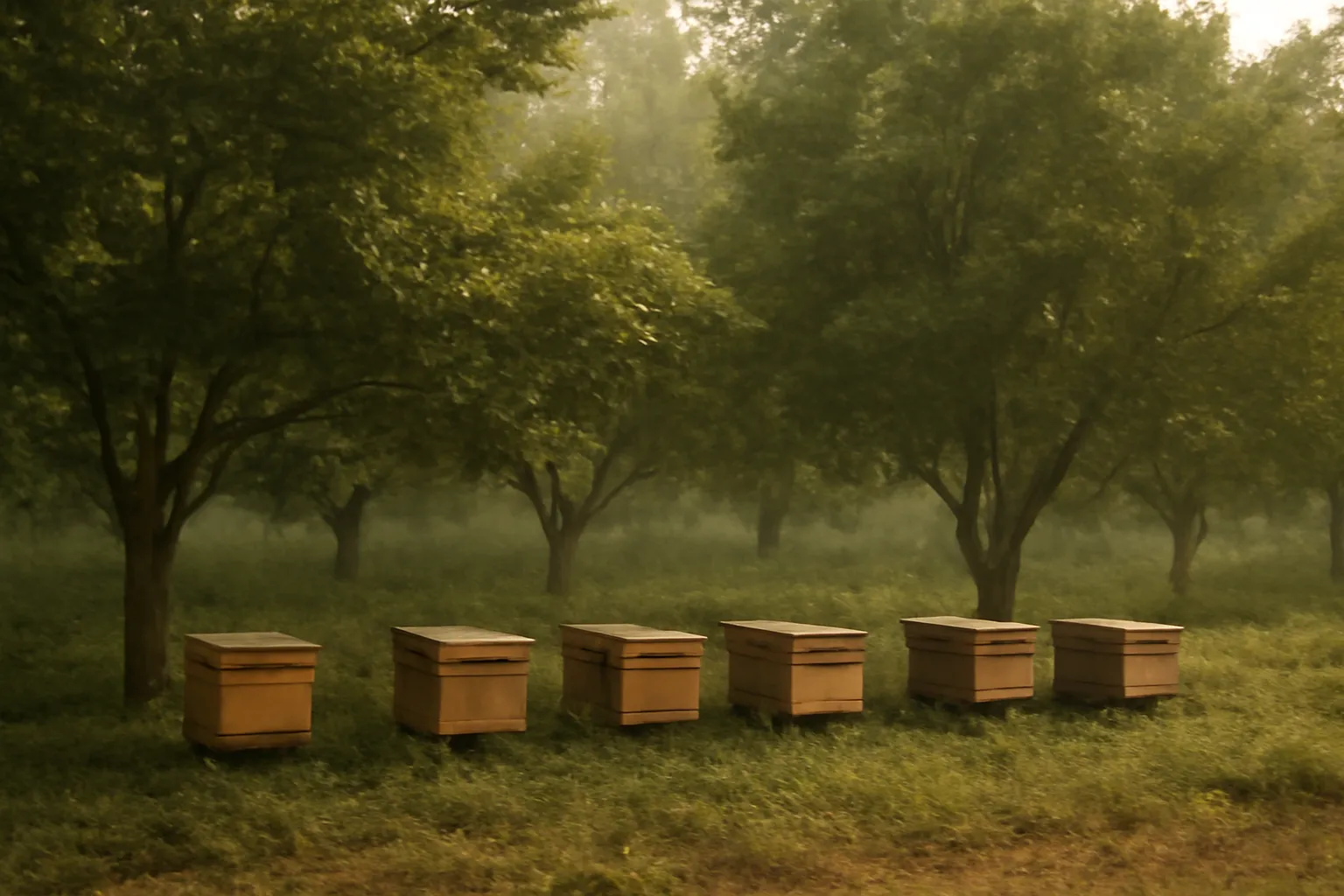
How many hives a garden can carry
Adding colonies past the forage limit does not raise yield, it divides it. How to estimate your own ceiling.
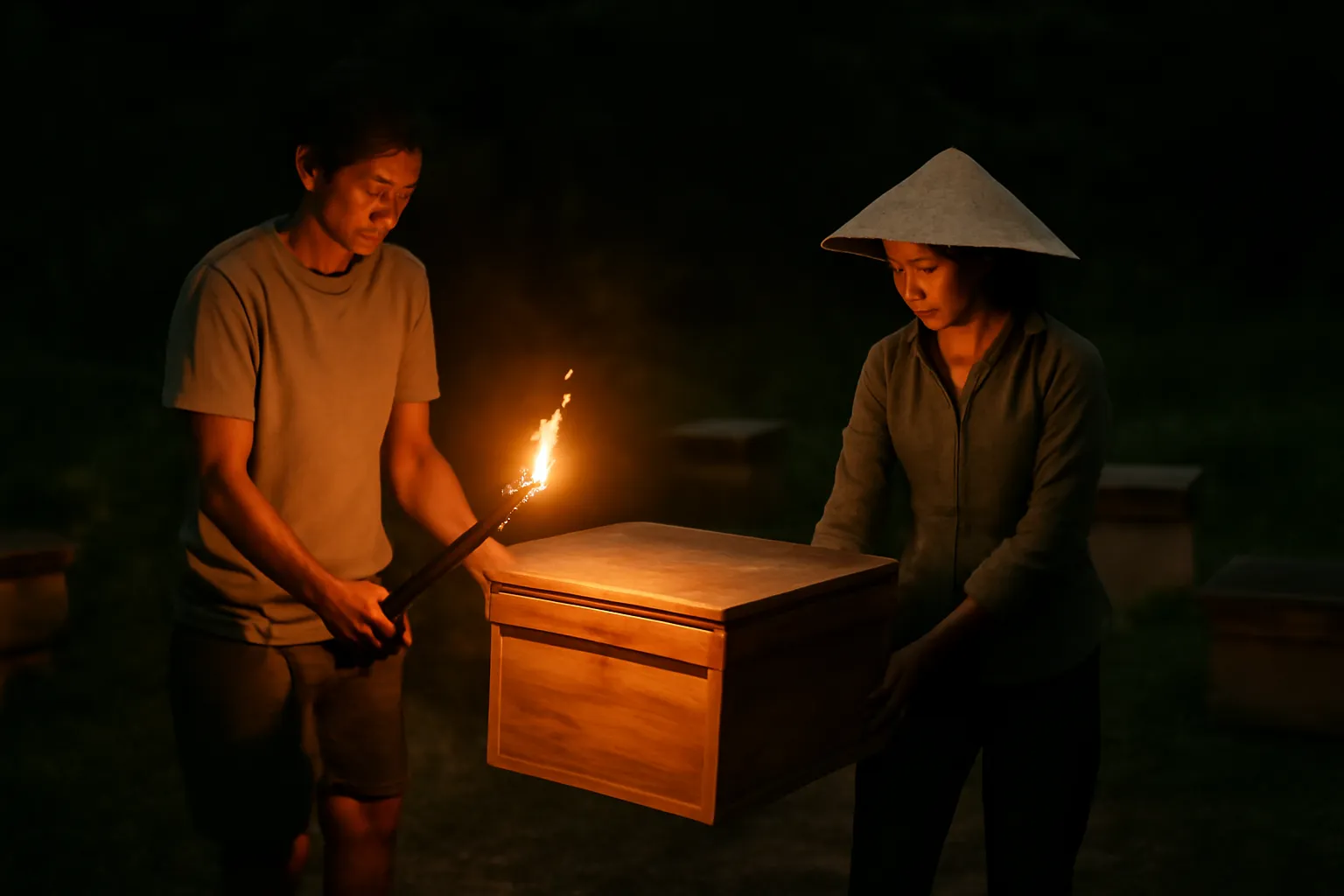
Moving a hive without losing the foragers
Stingless bees return to a remembered location. Move it wrong and the field bees die at the old spot. Two methods that work.
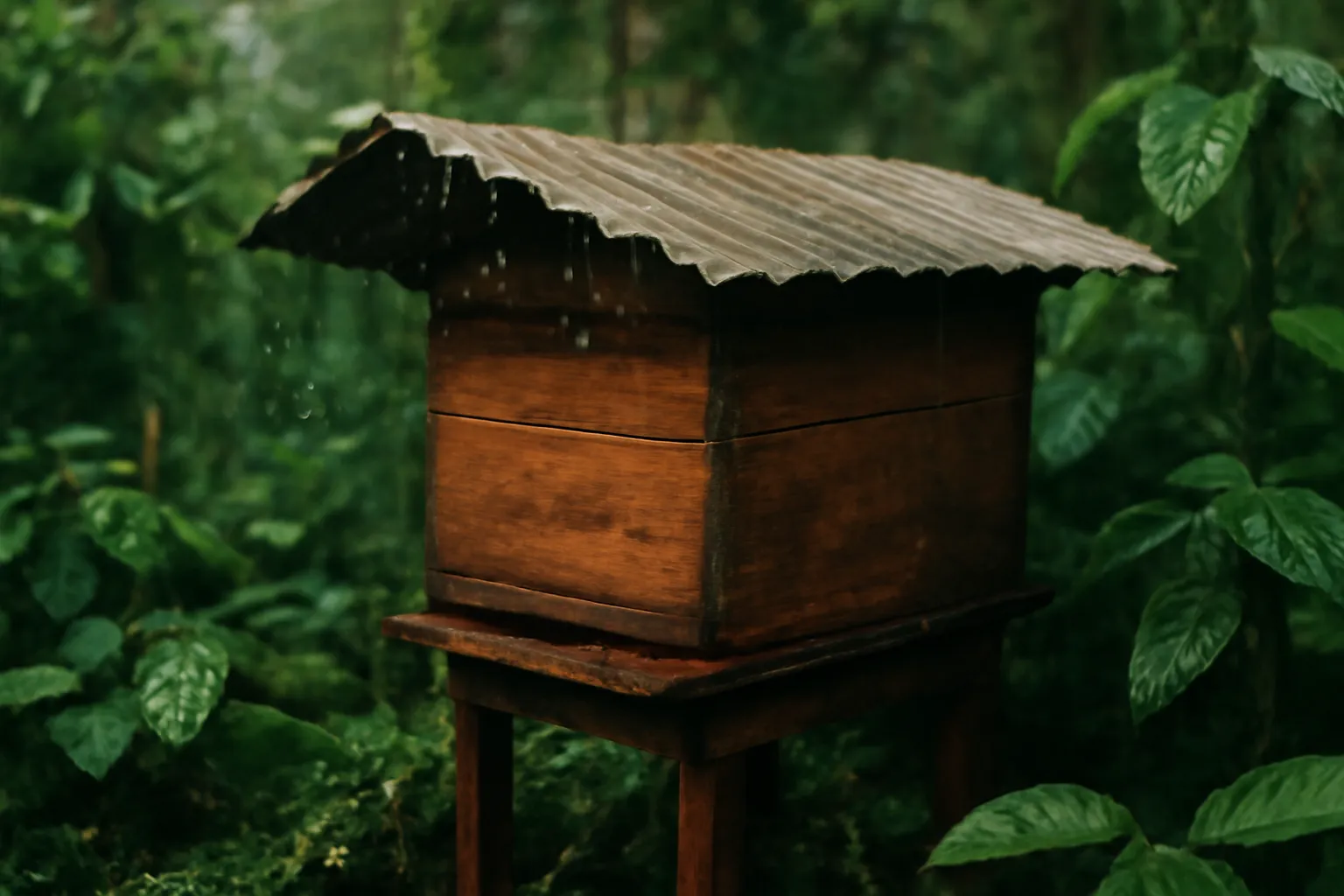
Shade and rain cover: enough without going too far
Too little and the colony overheats; too much and it goes dark and damp. How to build cover that works.
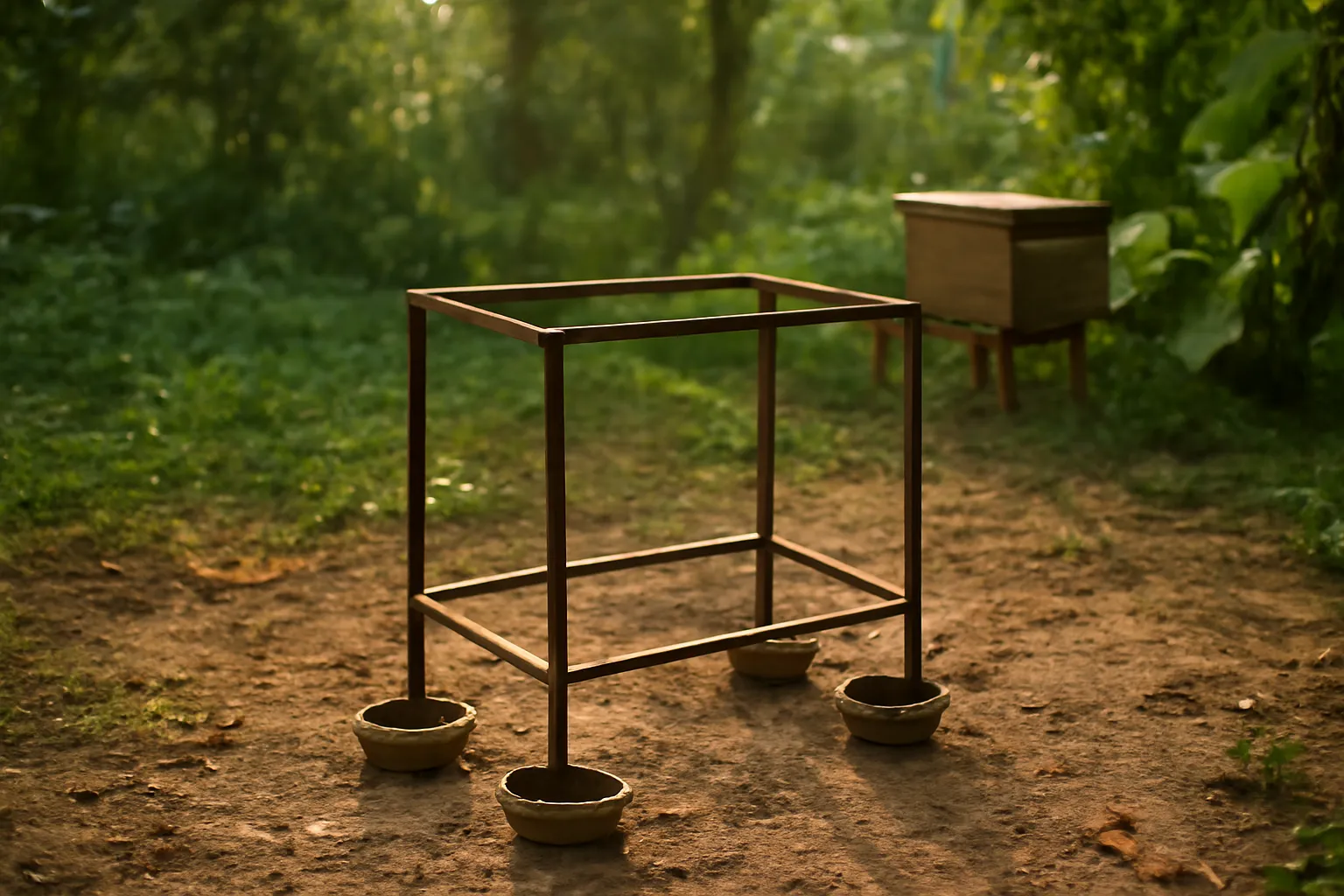
Building a hive stand: four designs and which lasts
A stand is not just height. It is the first line of defence against ants and termites, so how it is built matters.
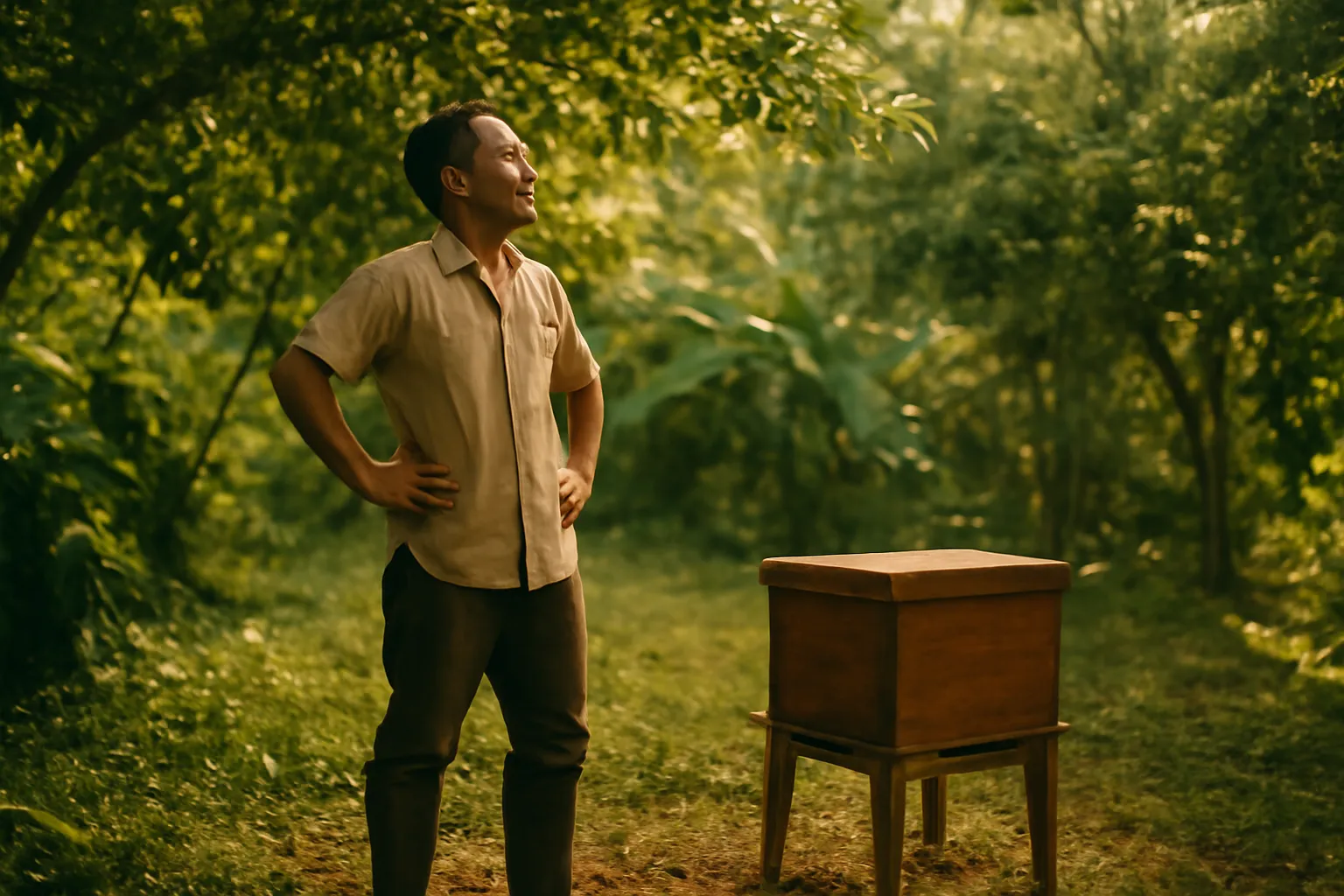
Choosing where to put the hive: the decision hardest to undo
Stingless bees navigate by landmarks, so the box stays where you put it. Five criteria in order of importance.
 ›
×
›
×
A single-origin stingless bee honey from our own apiary in Trang Bang, Tay Ninh. Harvested and bottled by batch, traceable to the colony.
Vietnamese stingless bee honey, built for export
© 2026 Aron Bee. All rights reserved. · Copyright · OD-1C4F-F69A