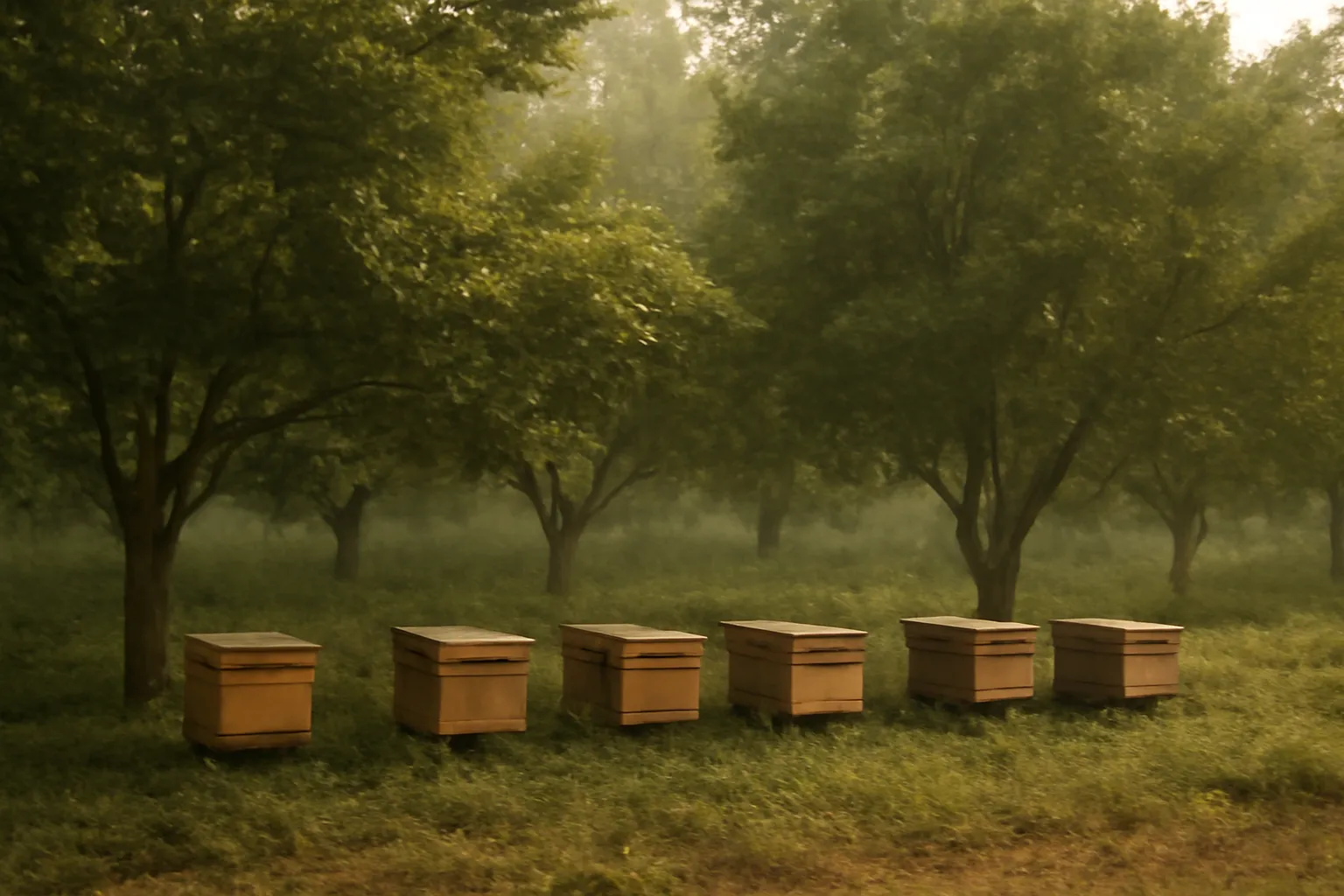
How many hives a garden can carry
Someone who succeeds with two colonies usually wants twenty the following year. But stingless bees forage over a short radius, so every colony in the garden eats from the same table. Past the limit, nobody thrives.
There is no standard number, only a method
Carrying capacity depends on the density of flowering plants within about three hundred metres of the stand, not on how much land you own. A small plot in a neighbourhood full of fruit trees supports more colonies than a large bare field.
Signs you are over the limit
- All colonies stall at once, none filling its box despite identical care.
- Yield per colony falls year on year even as colony numbers rise.
- Fighting at entrances, and robbing between colonies.
Once these appear, adding colonies does not increase total production — it only splits it further.
Raising the ceiling instead of the count
Planting for sequential flowering is the durable answer, though it takes a year or two to show. Fast-growing flowering shrubs first to cover the dry months, fruit and resin trees for the longer term.
Splitting across sites
This is what larger operations do: a handful of colonies at each of several locations a few kilometres apart, each group with its own forage area. If a relative or neighbour will host a couple of boxes, it is the cheapest way to expand.
Advice for a beginner
Keep two or three colonies through one full year and see whether they fill their boxes before the dry season. If they do, the garden has spare capacity and you can split next season. If they do not, the constraint is forage, and adding colonies will only make it worse.
Frequently asked
Can thirty colonies fit on a small plot?
Almost certainly not on that plot's forage alone. Larger operations always either spread across sites or sit inside a wide area of orchard.
Can I feed my way past the limit?
Feeding carries colonies through a lean stretch but does not replace natural forage, and it lowers honey quality. Use it as a temporary measure only.
Can stingless bees and honey bees share a garden?
Yes, they do not conflict directly. But honey bees forage far more heavily, so where forage is limited the stingless bees lose out.
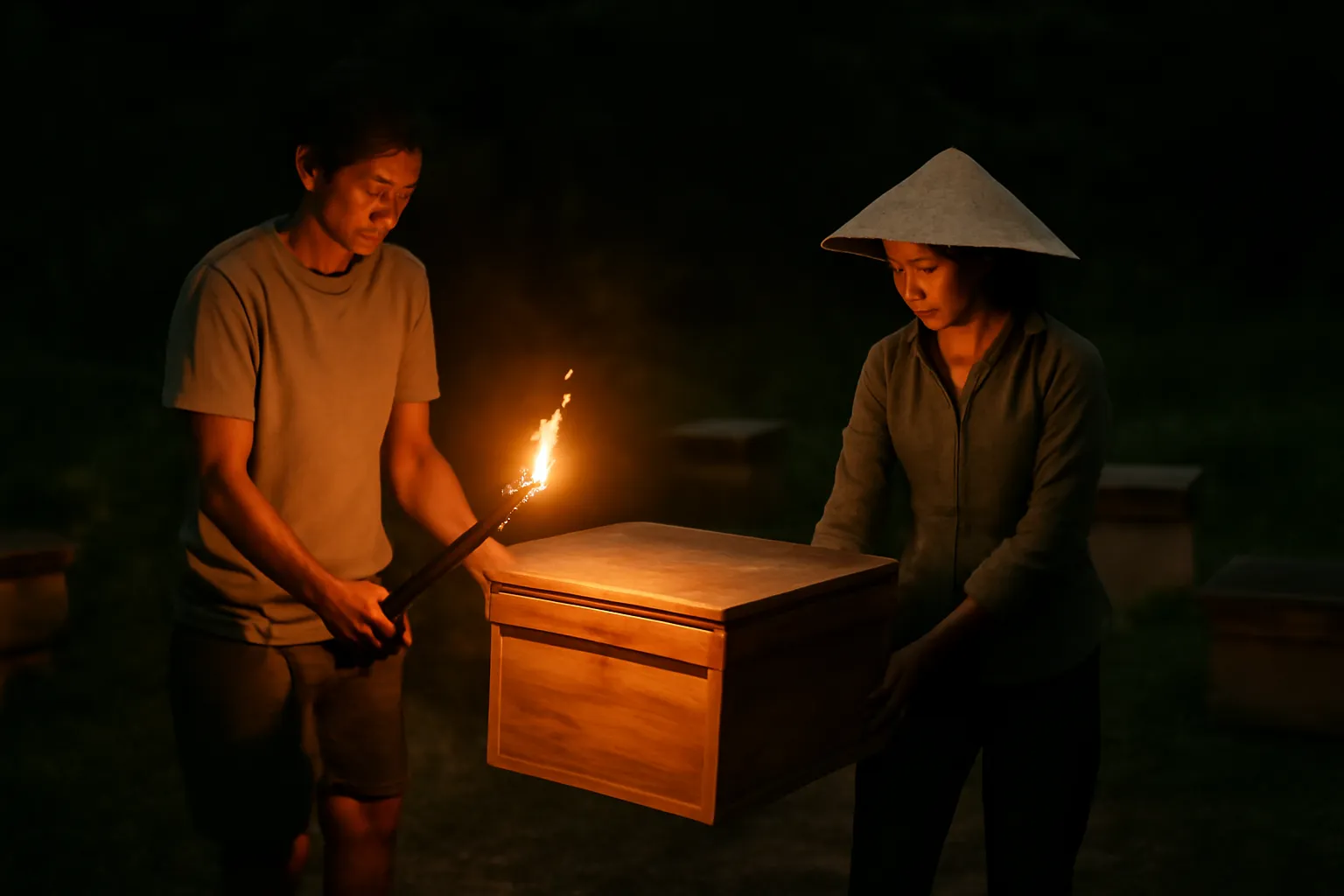
Moving a hive without losing the foragers
Stingless bees return to a remembered location. Move it wrong and the field bees die at the old spot. Two methods that work.
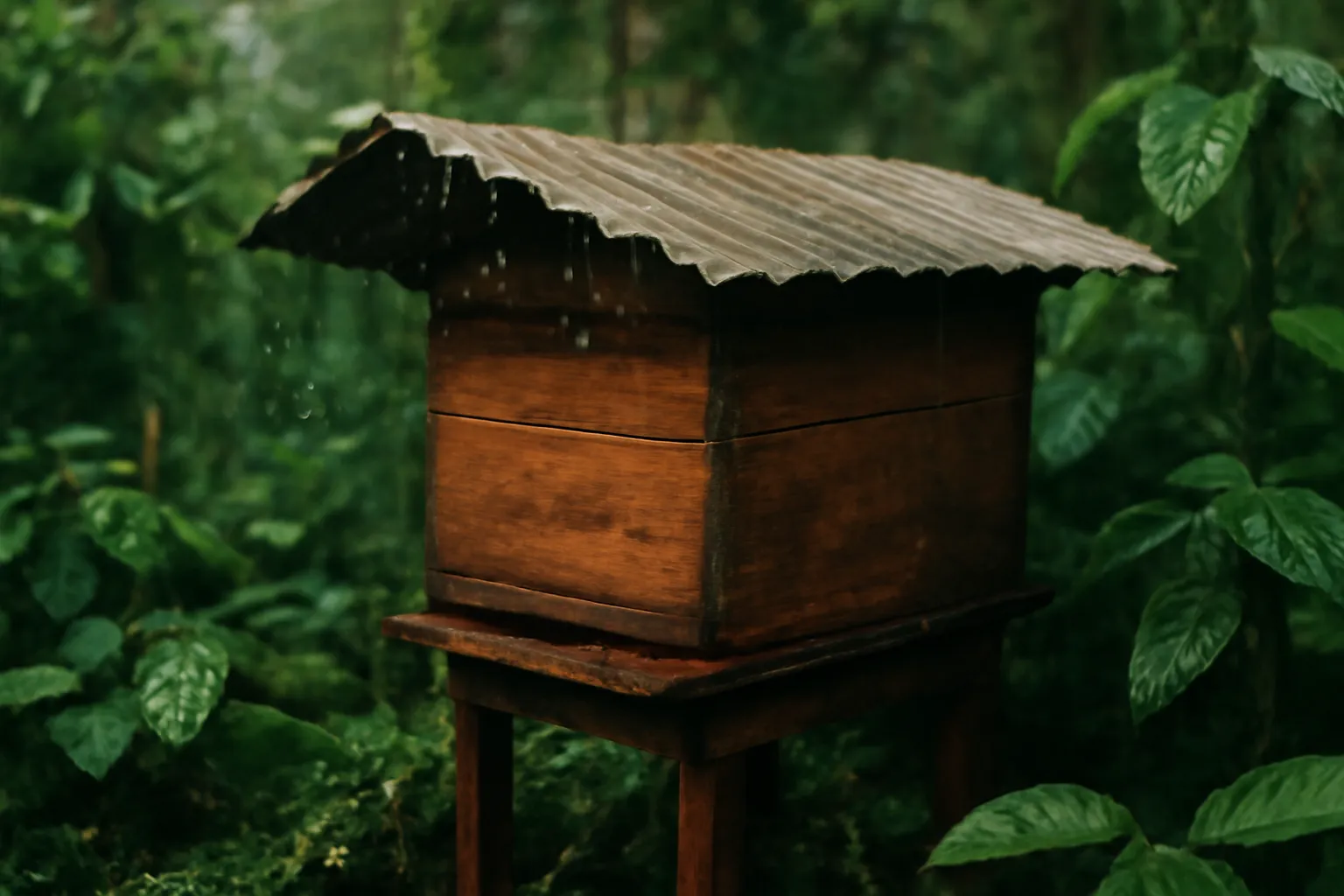
Shade and rain cover: enough without going too far
Too little and the colony overheats; too much and it goes dark and damp. How to build cover that works.
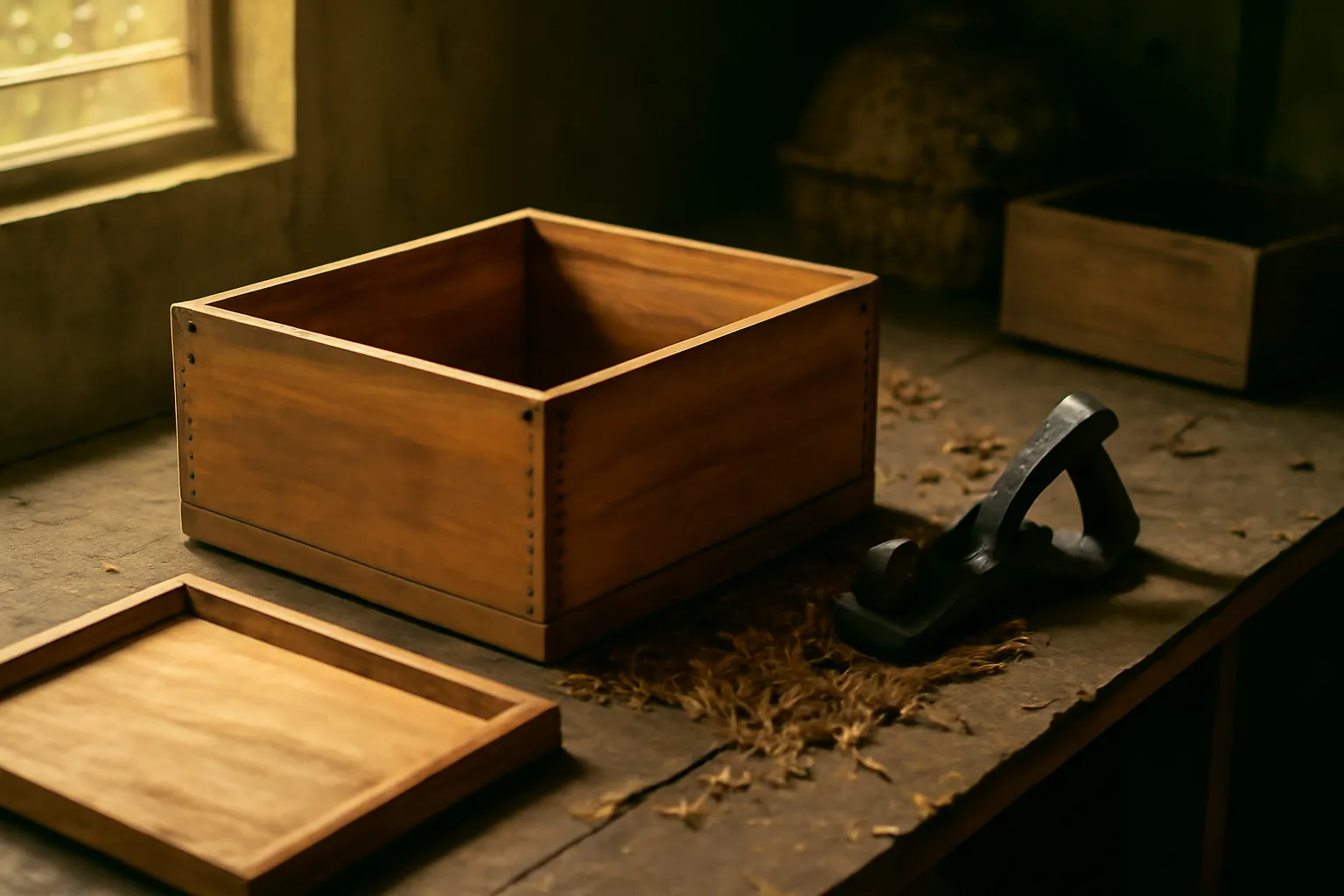
The hive box itself: size, timber and common faults
Too large and the colony cannot fill it; too sealed and it goes damp. What a good box looks like.
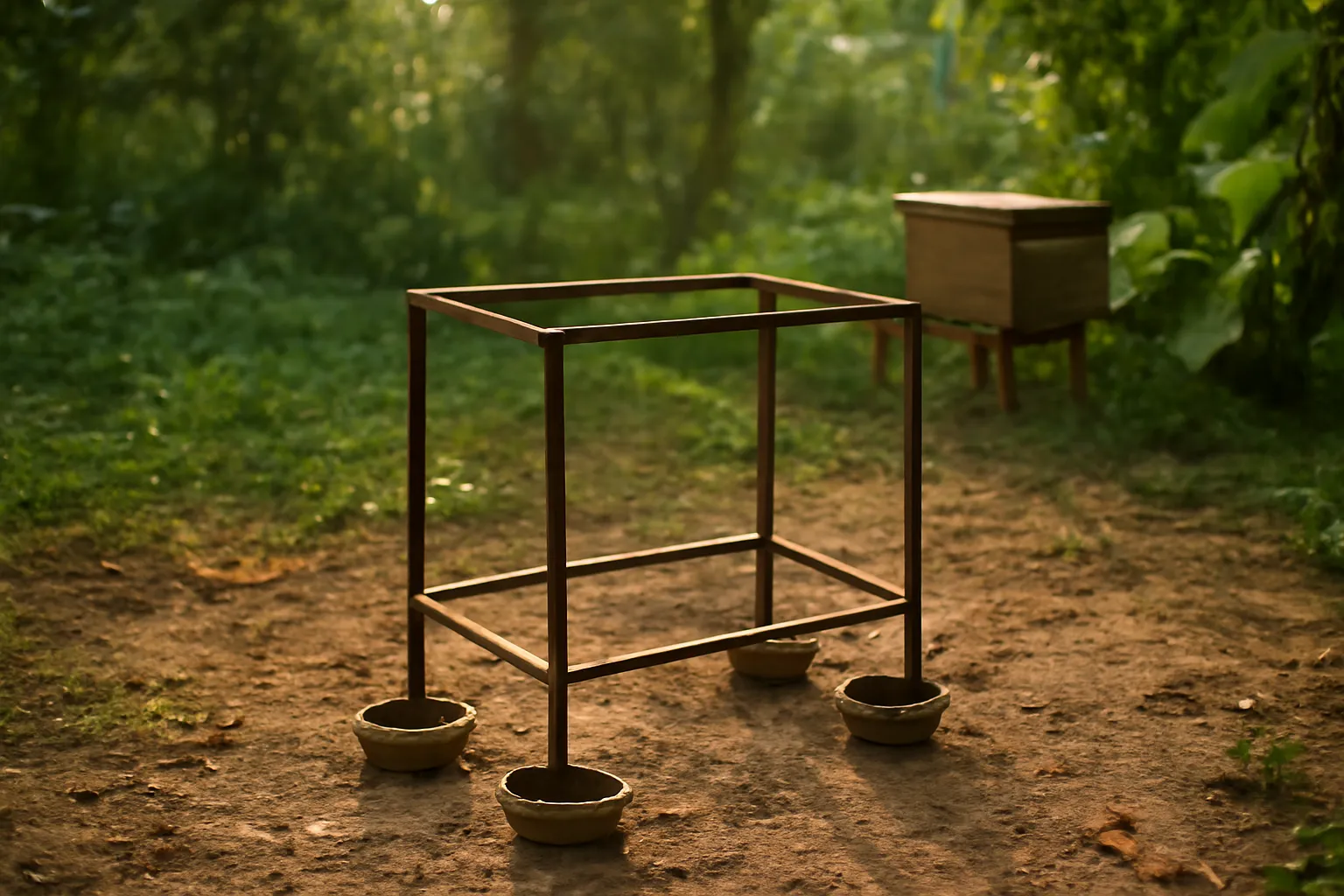
Building a hive stand: four designs and which lasts
A stand is not just height. It is the first line of defence against ants and termites, so how it is built matters.
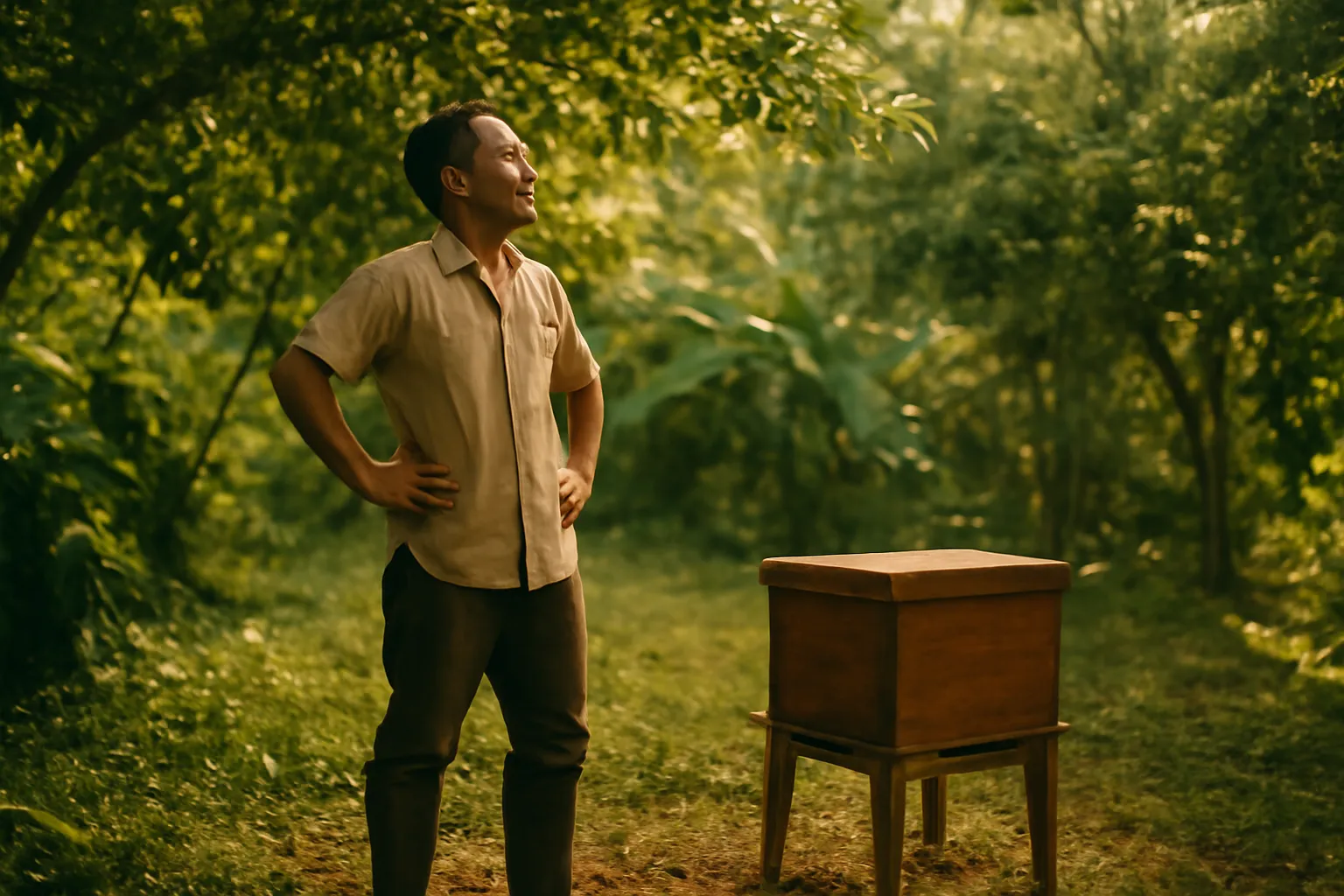
Choosing where to put the hive: the decision hardest to undo
Stingless bees navigate by landmarks, so the box stays where you put it. Five criteria in order of importance.
 ›
×
›
×
A single-origin stingless bee honey from our own apiary in Trang Bang, Tay Ninh. Harvested and bottled by batch, traceable to the colony.
Vietnamese stingless bee honey, built for export
© 2026 Aron Bee. All rights reserved. · Copyright · OD-1C4F-F69A