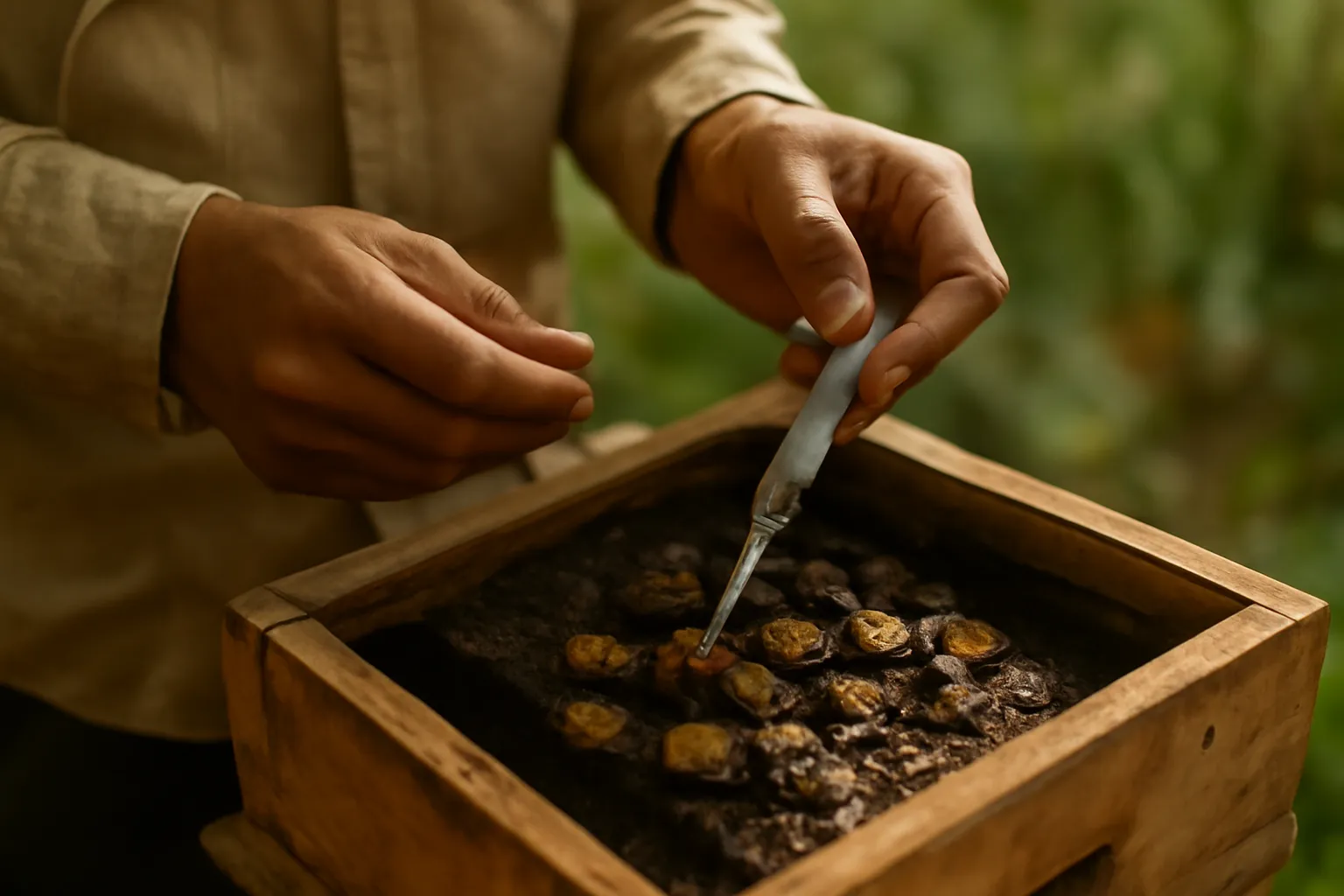
How to harvest stingless bee honey, step by step
Harvesting stingless bee honey has nothing in common with spinning frames. There are no combs to extract, only pots to open one at a time. It is slower, and also lower risk if the order is right.
Before opening the lid
A clean large syringe or a food-grade suction tube, a rinsed and thoroughly dried glass jar, a fine probe to pierce pots, a dry cloth. Everything must be bone dry — a single drop of water is the seed of a fermented batch. Wash hands, and use no perfume or hand cream.
Step 1: open gently and wait
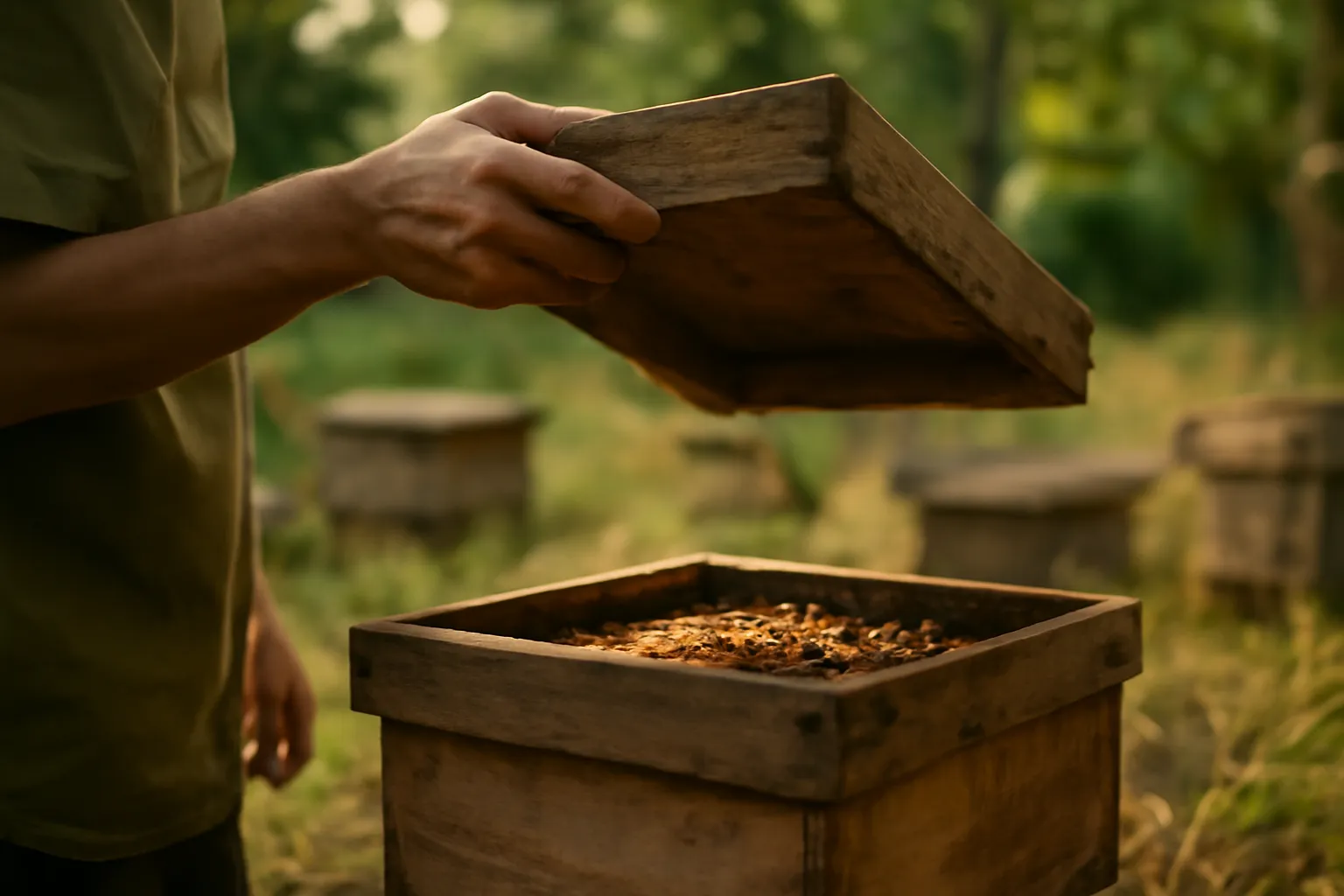
Ease the lid off slowly and pause for half a minute so the colony settles before you work. A sharp opening alarms them and puts bees all over your hands.
Step 2: identify the three zones
Inside there are three distinct things. The brood mass — darker, layered, in the middle. Pollen pots — rounded, orange, usually around the brood. Honey pots — larger, more translucent, usually at the edges and above. Only the third may be touched.
Step 3: pierce and draw
Pierce each honey pot and draw the honey with the syringe, transferring into the jar. Do not press, do not tip the whole box. Work through it in about fifteen minutes — the longer the box is open, the worse.
Step 4: leave some behind
Leave at least a third of the honey pots. That is the colony's reserve for the lean season. Taking everything is the harvest style that gets paid for the following dry season.
Step 5: close up and record
Replace the lid and wipe away any honey spilled on the outside of the box — spilled honey is a signal that summons ants. Note the date and amount for that colony. Over a few years that record shows which colonies are worth propagating.
Never touch
- The brood mass — damaging it can cost the colony.
- Pollen pots — that is the protein supply for larvae.
- The wax tube at the entrance — that is the guard post.
Frequently asked
Should the honey be filtered?
Strain through a fine mesh to remove wax fragments, but do not over-filter and never heat it. Heat destroys the enzymes, which is the most valuable part.
Will bees crawl on my hands?
Yes, but they cannot sting. Tie hair back and work slowly.
How soon can I harvest again?
Several months at least, and only once the pots have refilled. Harvesting to a fixed schedule regardless of colony condition is the fastest way to weaken it.
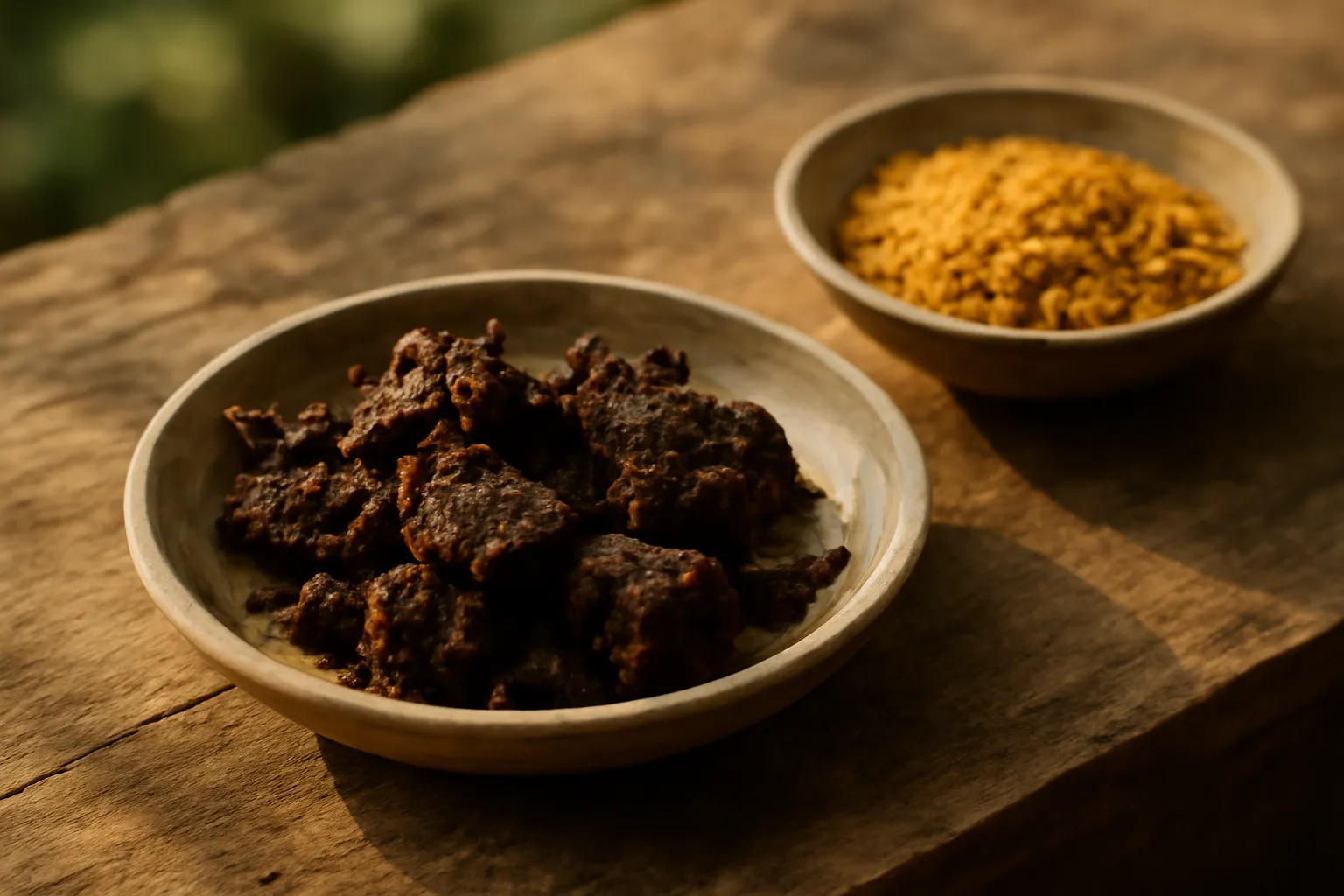
Wax and pollen: two things discarded without reason
Besides honey, a stingless bee nest yields resin-blended wax and pollen. What to do with each, and what to leave alone.
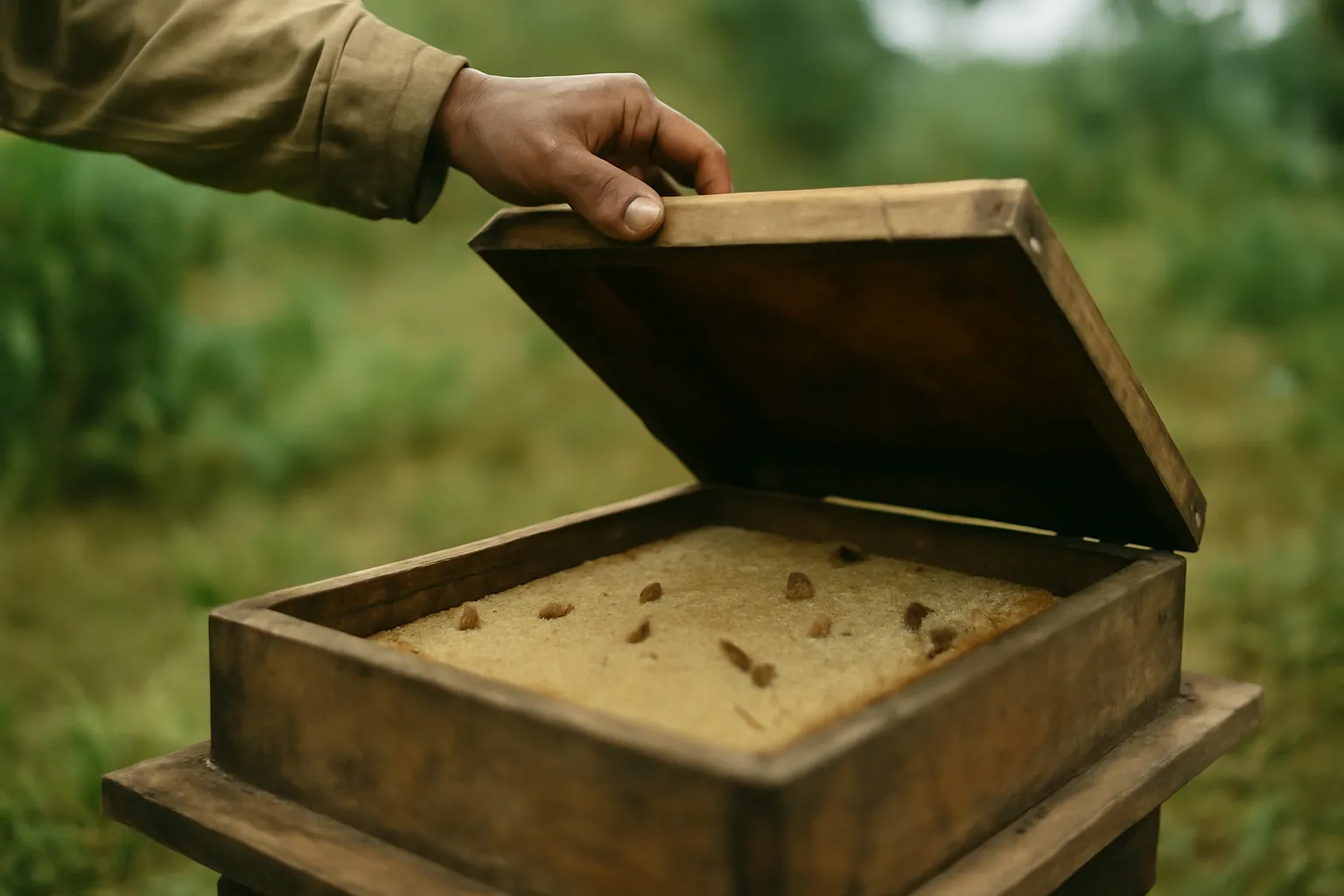
A colony declines after harvest: four causes and how to recover it
Post-harvest decline nearly always has a specific cause. Caught early, a colony recovers within a season.

What a colony actually yields, and how to reset expectations
Yield figures are routinely inflated when colonies are sold. Realistic numbers by colony age, season and site.
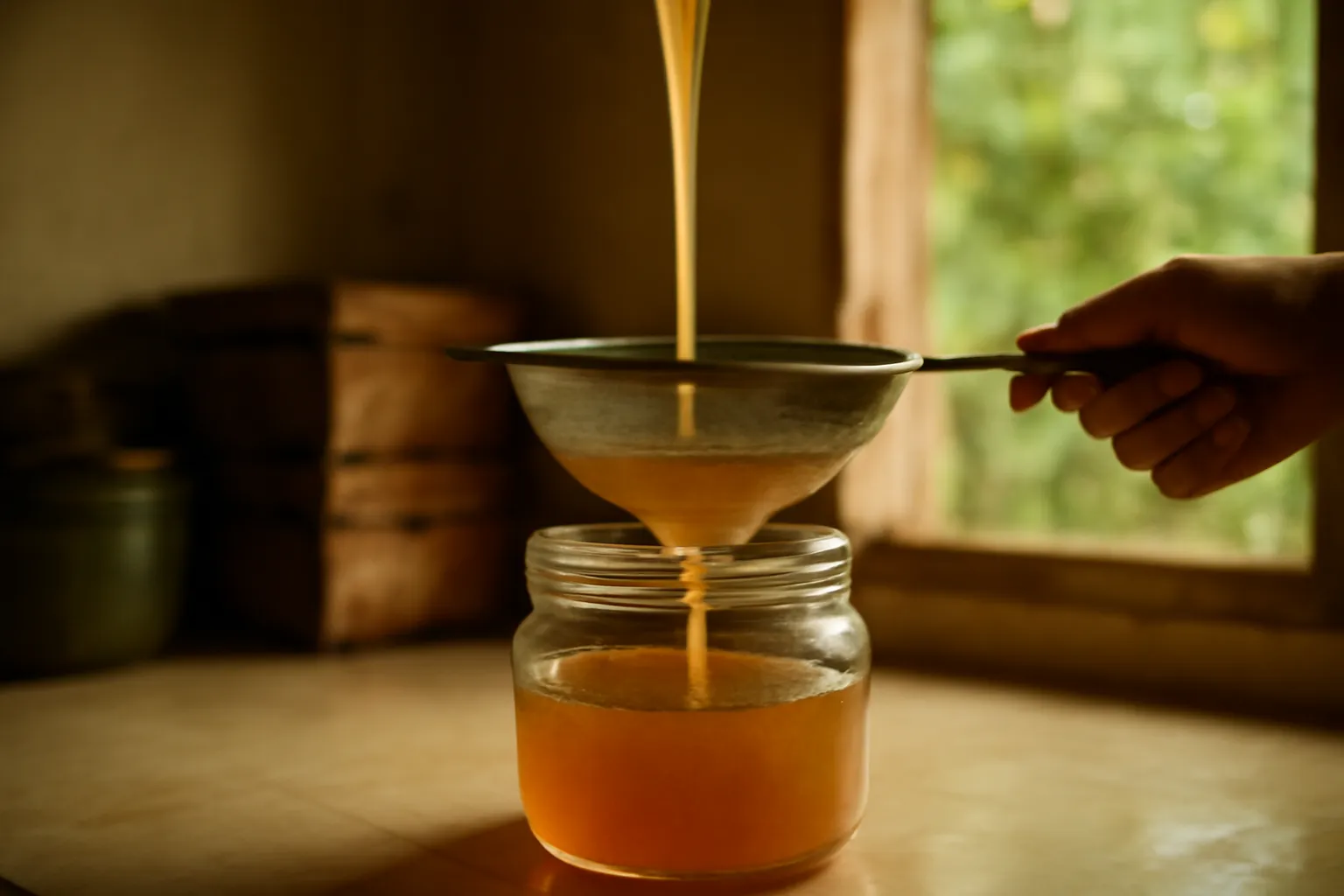
Straining, bottling and storing after the harvest
High moisture means what happens after the harvest decides how long the honey keeps. For households and for sellers.
When a colony is ready to be harvested
Harvesting a season too early costs the colony. Four signs it is ready, and the signs that mean wait.
 ›
×
›
×
A single-origin stingless bee honey from our own apiary in Trang Bang, Tay Ninh. Harvested and bottled by batch, traceable to the colony.
Vietnamese stingless bee honey, built for export
© 2026 Aron Bee. All rights reserved. · Copyright · OD-1C4F-F69A